
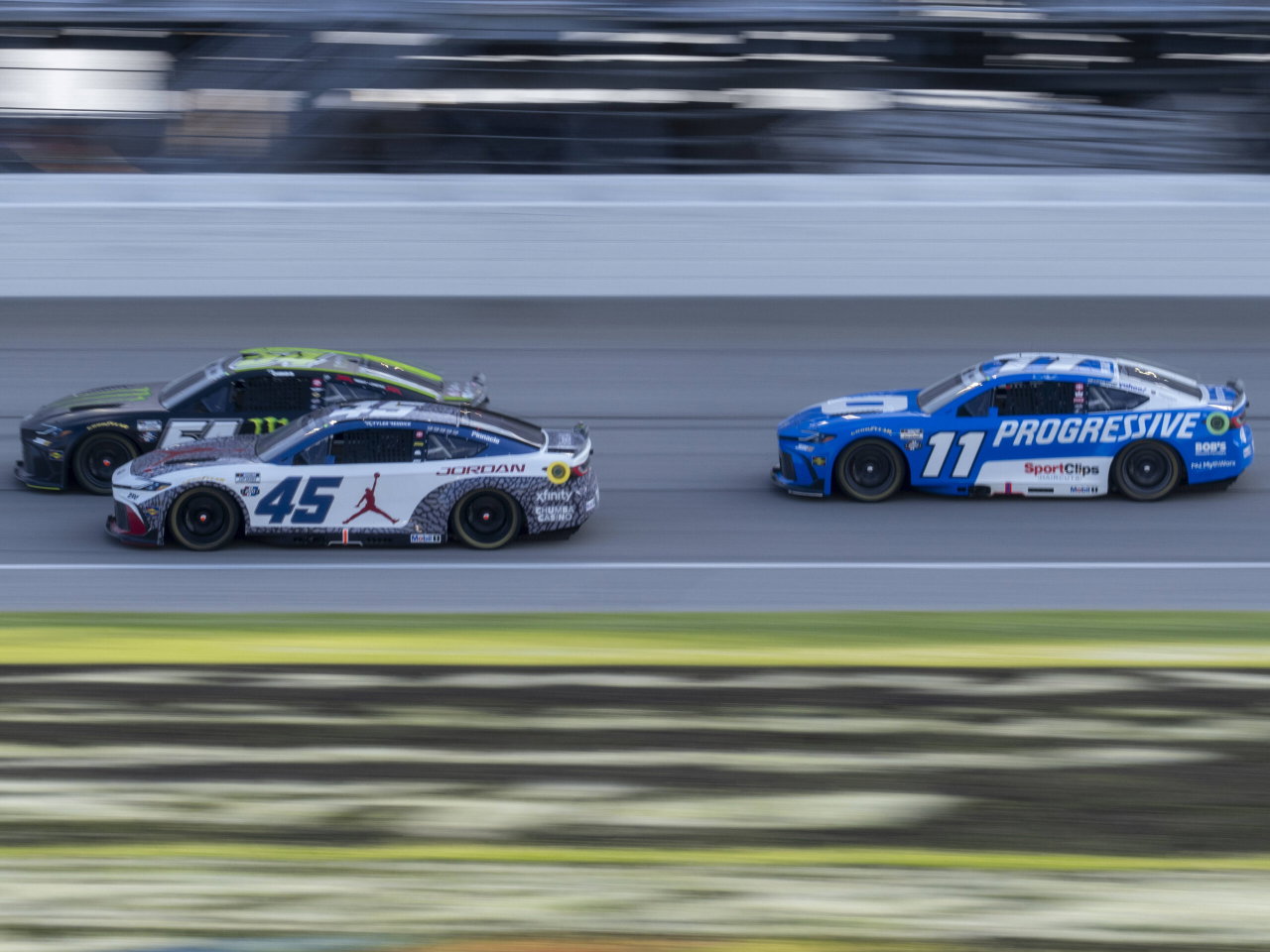
The yellow flag waved just 236 times across the 2026 NASCAR Cup Series season, a total that only one year since 2001 has beaten. On its own, the figure is a footnote. Then a television analyst who still races trucks on weekends set it beside a very different chapter of the sport’s history, and a stat-sheet curiosity became a debate about what NASCAR may have traded away.
Watch What’s Trending Now!
“Want to know the funniest thing? The most watched season in NASCAR history was 2005. Coincidence?” Parker Kligerman, the TV analyst and part-time Truck Series driver, reacted to NASCAR Insights’ latest caution chart on X.
The chart traces Cup Series cautions back to 2001. Only 2012, with 216, produced fewer than 2026, and this year’s total landed 34 below the average of the four previous Next Gen seasons.
Kligerman’s year of choice logged 373, or 137 more than 2026, roughly ten yellows a race against about 6.6 now. The rest of the mid-2000s ran hot too, with 346 in 2006 and 343 in 2007.
His post stopped short of spelling out a theory, but the implication was clear: the chaos of that era may have been part of the draw. The ratings at least line up. Speedway Motorsports’ annual report to the SEC credited NASCAR‘s 2005 season with record Cup ratings and an average of 8.5 million viewers per race. That does not prove cautions drove the audience, but it explains why the comparison landed.
Was Jeff Gordon the Biggest Victim of NASCAR’s Format Changes?
Fans were quick to weigh in, though some warned against reading the raw totals too literally. Stage cautions did not exist in 2005, one commenter noted. Stage racing now guarantees two scheduled yellows a race, which by simple math means roughly 72 of 2026’s 236 were planned rather than earned.
One fan questioned whether the 2005 figure was an entirely fair comparison, writing:
“I’d have to go and look but the 2005 number is probably inflated by the amount of cautions in the Levigated Charlotte races.
No stage cautions then either. Just bumpers that didnt align well and 900hp engines that would eat themselves at will without warning.And baddass racing”
The same discussion also brought out a more technical explanation of how NASCAR’s racing environment has changed over the years. Another fan wrote:
“This chart shows the nerfing of the team’s sandbox, not necessarily pure driving difficultly. No more 9k+ rpms blowing motors, experimental suspension/body packages,
sim helps avoid problems before they even unload for the weekend. Also short track cautions have been decimated”
The comment points to the disappearance of mechanical unpredictability and the growing role of simulation technology in modern racing. Teams can now identify potential problems before arriving at the track, while fewer experimental packages and more standardized equipment have changed the challenges they face.
Another fan added a perspective on what made the older cars difficult to handle:
“Turns out watching cars that are hard to drive appeal to the masses”
Tires got their own mention. One fan noted:
“This was also year two of reducing downforce and softening tires. Watch Auto Club, Bristol, etc. and there were quite a few end of run blown tires that year.”
The argument is not new. NASCAR’s 2016 rules package trimmed roughly 25 percent of the downforce by shortening the spoiler and front splitter, a change drivers had lobbied for through the previous season.
Dale Earnhardt Jr. said he loved that the cars were harder to drive. Yet the package’s Atlanta debut produced just three yellows, a reminder that harder cars do not automatically mean more cautions.
The Next Gen era followed the same script. When the car debuted at Auto Club Speedway in 2022, five cars spun during a single 15-minute practice session, and Brad Keselowski said the drivers had gotten what they asked for.
Yellows have since thinned out. NASCAR Insights noted on April 30 that 2026 had produced the fewest cautions through ten races since 2012, after a count of 42 through seven races, the fewest at that point since 2018. That same post also cautioned that Texas, which averages 14 yellows a race in the Next Gen era, could still test the trend.
More recent voices have pushed the same theme. In September 2024, after a lackluster Bristol race, Chris Gabehart, then Denny Hamlin’s crew chief, posted on X that natural cautions should be common at short tracks because the cars are hard to drive for the world’s best.
Earlier this year, Dale Jr. relished the carnage of the All-Star Race at Dover, arguing on his podcast that the Next Gen car is overengineered, with brakes that are simply too good.
Nobody is seriously asking for wrecks for their own sake. What fans and drivers keep describing is a car that demands more from the person behind the wheel and leaves room for mistakes, tire management, and genuine surprise.
Fewer yellows also do not automatically mean worse racing, since reliability, race procedures and how NASCAR manages competition all shape the 2026 total.
Still, Kligerman’s post has reopened a bigger question about NASCAR’s identity. The sport has made real gains in safety and technology, and nobody wants to give those back.
The challenge now is finding a balance between a dependable, well-engineered race car and the raw, unpredictable competition that made earlier generations so memorable, and the debate shows no sign of going away soon.