
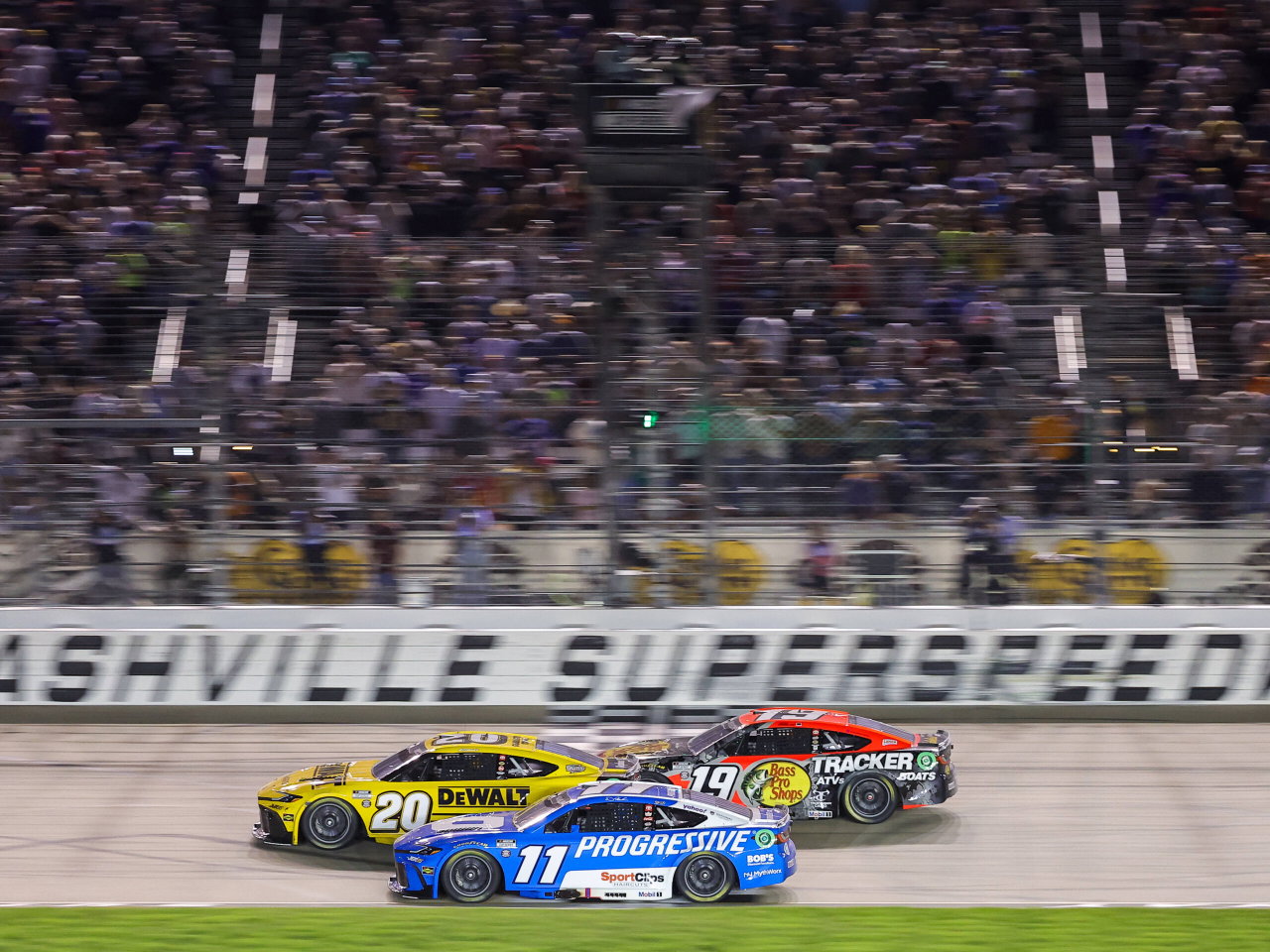
For five seasons, the Next Gen car has faced a familiar complaint from drivers and fans: there simply isn’t enough horsepower. The 670-horsepower intermediate package has drawn criticism for limiting driver input, while calls for more power have continued despite NASCAR’s gradual adjustments. With another season approaching, the sanctioning body now has a chance to address one of the biggest talking points surrounding its current car.
Watch What’s Trending Now!
But horsepower is only part of the story. NASCAR’s 2027 rulebook, distributed to teams on Friday, November 20, also revisits qualifying procedures, championship eligibility, and some of the sport’s most debated racing regulations. Jeff Gluck highlighted the significant changes in an update on X, beginning with the development fans have wanted to see.
“Starting at the Coke 600, NASCAR is increasing horsepower to 750 for intermediate tracks (has been 670 since the Next Gen car debuted, up from the infamous 550 package),” Gluck wrote on X. “The All-Star Race (North Wilkesboro) will go from 750 hp (current number for short tracks and road courses) to 800 hp. If it goes well, NASCAR says it may move to 800 hp for all short tracks and road courses starting at the Bristol Night Race in August.”
The intermediate-track increase will take effect at Charlotte’s Coca-Cola 600 on May 30, bringing the package from 670 to 750 horsepower. The more significant experiment arrives at North Wilkesboro, where NASCAR will evaluate 800 horsepower during the All-Star Race on May 23.
Officials and engine builders will assess race quality and engine performance before deciding whether to extend that package to short tracks and road courses beginning with Bristol in August.
Which Racetrack Deserves a Spot Back on the Cup Series Schedule?
The approach reflects NASCAR’s desire to give drivers more power without overlooking engine reliability. More horsepower should put greater emphasis on throttle control and tire management, potentially creating more opportunities for drivers to make a difference.
NASCAR is also removing splitter stuffers at short tracks and road courses and eliminating minimum damper-length restrictions, giving teams additional freedom with their setups.
The sporting regulations are receiving similar attention, particularly when weather disrupts qualifying.
“Confirmed owner points will replace The Metric if there’s a qualifying rainout at all races except Daytona 500,” Gluck added. “Superspeedway qualifying moves to one round only, and NASCAR will have a qualifying-only setup for Daytona and Talladega in an effort to see 200 mph laps in quali.”
The Metric, introduced in 2020, combined the previous race result and current owner standings to determine starting positions when qualifying could not be completed. Its latest formula gave the previous race 70 percent weight, and owner points 30 percent.
After qualifying was canceled at four of the first six Chase races in 2026, the system came under renewed scrutiny. NASCAR will now rely on current owner points, except for the Daytona 500, removing the previous race result from the calculation.
Superspeedway qualifying will also lose its two-round format, with drivers completing one timed round instead. NASCAR is developing a separate qualifying configuration for Daytona and Talladega, targeting speeds above 200 mph through increased horsepower and a narrower spoiler. The change is specific to qualifying, meaning the superspeedway race package will remain largely unchanged.
NASCAR is also tightening championship rules and clarifying enforcement at the sport’s biggest tracks.
“If a driver has an unapproved absence in the Chase (aka no waiver), they lose all their points gained in the Chase (points reset to 2,000),” Gluck added. “Double yellow line rule for superspeedways is more specific now: ‘NASCAR defines beneath the double painted lines as follows: When the vehicle’s left side tires are beneath the left line of the inside double painted lines that separate the apron from the racing surface.’”
The absence provision applies before the Chase as well. A driver or team owner missing a race without NASCAR approval will enter the championship reset with 2,000 points, while an unapproved absence during the Chase resets their total to the same baseline.
The rule makes obtaining a waiver particularly important in cases involving injuries, suspensions, or other circumstances.
The yellow-line clarification follows the controversy surrounding Kyle Larson’s winning move at Talladega. NASCAR has now specified when a car’s left-side tires are considered beneath the inside line. It has also clarified that a driver can be black-flagged for forcing another competitor below the double yellow lines to prevent a pass, giving officials clearer grounds for enforcement.
Wet-weather procedures complete the major changes Gluck identified.
“Officially put the language in about wet weather tires (they changed the policy this summer to put it in teams’ hands when to put wet weather tires on once the race has begun),” Gluck wrote.
Once NASCAR declares wet-weather conditions after a race begins, crew chiefs will decide whether to use treaded wet-weather tires or slicks. Officials still determine when conditions warrant the declaration, but the tire decision moves to the teams. The 2027 rulebook formally incorporates the policy NASCAR introduced in September.
The horsepower increase will naturally command the most attention, but NASCAR is making a broader statement with this overhaul. It is giving teams more technical freedom while tightening rules where consistency matters. Whether the additional power delivers the racing improvement fans have demanded will become clearer once the new packages hit the track.