Imago
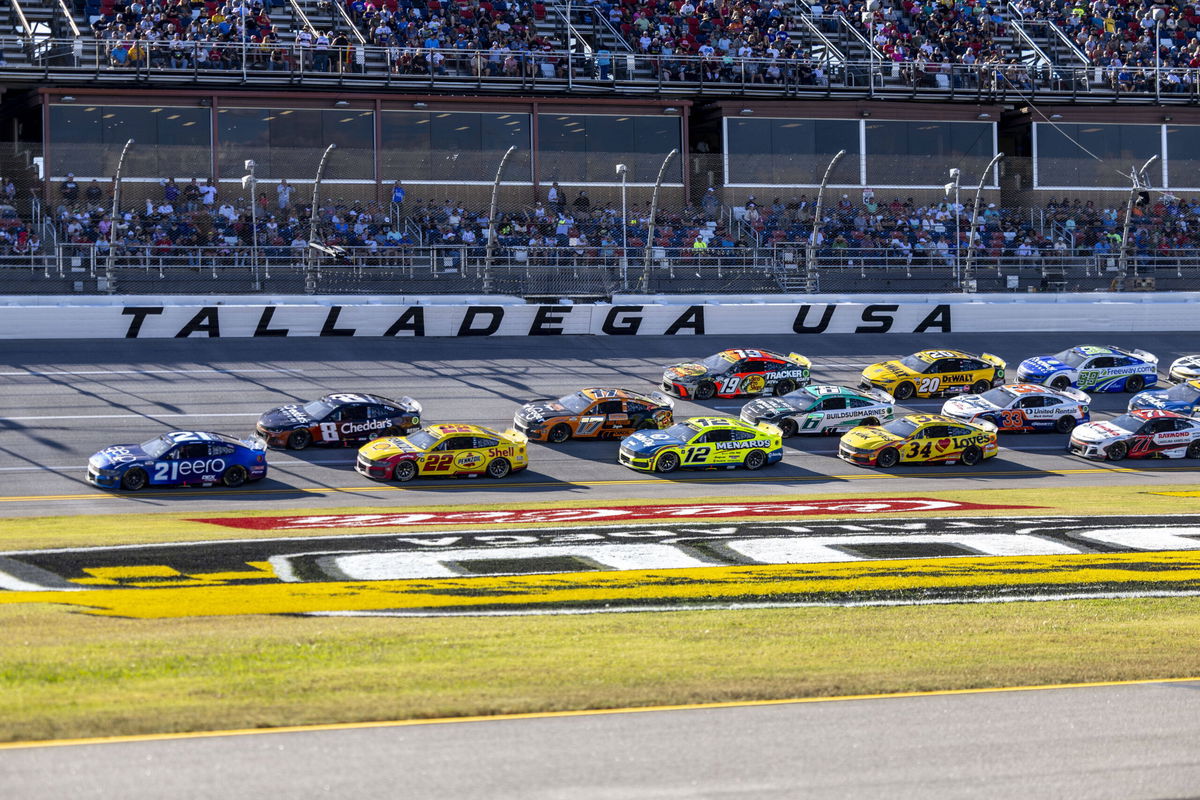
NASCAR, Motorsport, USA NASCAR Cup Series Playoff Race at Talladega Oct 19, 2025 Talladega, Alabama, USA NASCAR Cup Series driver Josh Berry 21 leads Kyle Busch 8 and Joey Logano 22 during stage two of the YellaWood 500 at Talladega Superspeedway. Talladega Talladega Superspeedway Alabama USA, EDITORIAL USE ONLY PUBLICATIONxINxGERxSUIxAUTxONLY Copyright: xVashaxHuntx 20251019_rwe_hd1_0187
Imago
NASCAR, Motorsport, USA NASCAR Cup Series Playoff Race at Talladega Oct 19, 2025 Talladega, Alabama, USA NASCAR Cup Series driver Josh Berry 21 leads Kyle Busch 8 and Joey Logano 22 during stage two of the YellaWood 500 at Talladega Superspeedway. Talladega Talladega Superspeedway Alabama USA, EDITORIAL USE ONLY PUBLICATIONxINxGERxSUIxAUTxONLY Copyright: xVashaxHuntx 20251019_rwe_hd1_0187
NASCAR is bringing more power to short tracks, which are less than 1.5 miles in length. They will do so by revamping the engine of the current-gen Cup Series to produce 750 HP. This new addition will be featured from the 2026 season and is hoping to increase the stakes at short tracks. On January 14, 2026, a crucial test was conducted to confirm the effects and viability of this change, but unfortunately, it didn’t sound too convincing.
Mike Forde and Nate Ryan dissected the reality of the 2026 HP change during their podcast, Hauler Talk. Ultimately, their conclusion didn’t sound very good for the current racing scenario. Here’s everything you need to know about the latest test at the North Wilkesboro Speedway.
NASCAR test at North Wilkesboro Speedway fails to impress drivers
NASCAR mentioned the 750HP package long ago. Back in October 2025, Brad Keselowski had first given the spoiler, and Steve O’Donnell confirmed its arrival at the short tracks. There was a minor test in Bristol and later on, a tire test in November. But during those tests, only three drivers were allowed to run the new 750HP package. The latest test at North Wilkesboro Speedway is ultimately the first real proof of concept for NASCAR. And here’s why it didn’t seem to serve its purpose at first glance.
Talking about the test, Mike Forde revealed, “So there are 15 charter teams. Each one was represented in the test. Not surprising, most of them said that they couldn’t feel much of a difference in the morning.”
It is the first alarm bell for NASCAR. The problem on short tracks is that the drivers get bunched up in packs. The shorter length prohibits taking risky maneuvers, and fans end up missing the racing action. As a result, NASCAR wanted to increase the car’s power. A very direct consequence of the same would be the fact that the drivers will need to be more careful.

Imago
NORTH WILKESBORO, NC – MAY 21: Josh Berry 48 Hendrick Motorsports Ally Chevrolet leads Ty Gibbs 54 Joe Gibbs Racing Monster Energy Toyota during the running of the NASCAR, Motorsport, USA Cup Series All-Star Open on May 21, 2023 at North Wilkesboro Speedway in North Wilkesboro, NC. Photo by Jeff Robinson/Icon Sportswire AUTO: MAY 21 NASCAR Cup Series All-Star Race EDITORIAL USE ONLY Icon230521647
Image Credits – Imago
The throttle control is a very important skill in NASCAR, and slight mistakes can end up spinning you out. With more power at your hands, you, as a driver, would need to skillfully increase or decrease the throttle output. This way, the shorter tracks will also feature more racing action owing to the fact that they are cramped and more prone to pileups. The drivers will use the throttle control to gain an edge over the others by putting in better and faster laps.
So if the cars are riskier to drive, why are drivers so calm and collected and do not feel much of a difference?
As a matter of fact, an increase from the basic 670 HP to 750 HP is a minor difference. A NASCAR vehicle is made for power, and it is a very heavy vehicle. This factor, coupled with the grip that these cars produce, makes the cars rather stable and less prone to spinouts with an increase in horsepower. On paper, the 80 HP increase looks like a big deal, but in reality, it only works when you are driving a Miata or a compact car. For NASCAR, the vehicle itself is resistant to such power.
To provide more challenge, NASCAR has also tried changing the camber. It will directly affect the ability of the vehicle to steer without consequences. The camber changes are supposed to make wheeling the wheel towards the turn more difficult. But, while NASCAR drivers may feel less difference, it is not like they do not understand the probable effects later on in the season.
Aside from the insiders, the drivers have also given their inputs.
NASCAR drivers predict 750 horsepower package’s future
There were 15 drivers from each chartered team during the organization test. The testing was in no manner similar to the real racing conditions or the usual 36-40 driver grid that a NASCAR race features. As a result, drivers may not have experienced the full effect of this new package. Ricky Stenhouse Jr., in particular, was optimistic about this new change and felt like it would help his team bridge the gap to the competition.
“The more horsepower, the better, yes. If we can continue in that direction, I do think Goodyear is doing a good job of bringing us tires that wear out and continuing to evolve them. I think all of us drivers and teams are on board with that. Pairing that with NASCAR adding horsepower, I think everything is moving in the right direction to get us even better racing.”

Imago
NORTH WILKESBORO, NC – MAY 19: Chase Elliott 9 Hendrick Motorsports NAPA Auto Parts Chevrolet enters his race car prior to practice for the NASCAR, Motorsport, USA Cup Series All-Star Race on May 19, 2023 at North Wilkesboro Speedway in North Wilkesboro, NC. Photo by Jeff Robinson/Icon Sportswire AUTO: MAY 19 NASCAR Cup Series All-Star Race EDITORIAL USE ONLY Icon230519826| Image credits: Imago
A new tire compound that wears out faster is a better idea for a car that produces more horsepower. It will force the drivers to calculate the real-time impact of these variables and drive accordingly. Chase Elliott echoed in putting his thoughts about the tyre wear affecting racing.
“I would have to imagine, we come back here in the summer months, certainly it will be warmer than it is today. You combine that with a lot more cars being on the track, and I do think there will be wear. Obviously, more power will impact that as well. Hopefully, we keep inching up on making these long runs more of a challenge.”
So while there is no guarantee that the 750-horsepower package will bring drastic changes to racing on short tracks, there is also no guarantee that it will completely fail. Sure, NASCAR drivers are accustomed to powerful cars and racing them. But with factors like camber and tyre wear chipping their armor during the race, they are not infallible either.
What do you think about the newest NASCAR innovation for better racing on short tracks?