
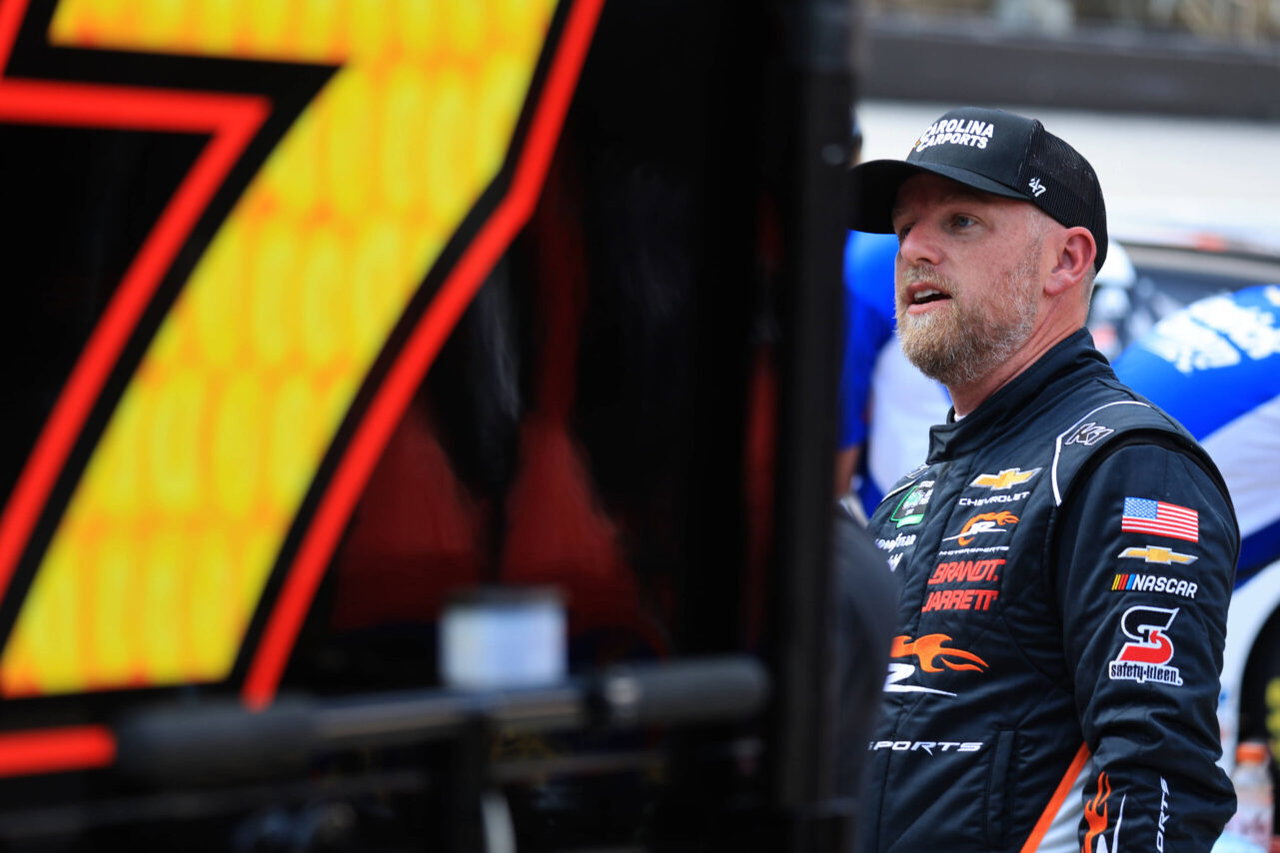
When Justin Allgaier won his first NASCAR championship in 2024, he did so without leading a single lap in the season finale at Phoenix Raceway. It took two overtime restarts and a second-place finish for the Illinois native to finally get his hands on the trophy. Two years later, there was considerably less suspense surrounding his championship credentials.
Allgaier and the No. 7 JR Motorsports team had spent much of the season building a massive points advantage over their rivals. Yet, when an insider sat down to recognize the year’s best performers, they couldn’t quite agree on how much credit Allgaier deserved.
“I found it interesting, however, that while the 7 won Premier Team, Justin Allgaier did not win Premier Driver of the Year,” Eric Estepp said while discussing the Grand National Bash results.
The winner was Carson Kvapil, who had half as many victories as Allgaier and finished third in the NASCAR O’Reilly Auto Parts Series standings. Estepp was among those who voted at the Grand National Bash, and he wanted to clear something up about his relationship with Allgaier’s career.
“And I’ll say this because a lot of people think I don’t like Justin Allgaier because of my Hall of Fame take. I voted for Allgaier.”
Estepp had previously questioned Allgaier’s Hall of Fame credentials, but that debate didn’t influence his choice here. In fact, Allgaier had just put together arguably the finest season of his NASCAR career at 40. His six victories were a personal best, as were his 19 top-five finishes.
NASCAR’s decision to bring back the Chase in 2026 also offered Allgaier an opportunity he didn’t have the previous year. Rather than settling the championship among four contenders in a single race, the format rewarded performances across multiple races. That suited a driver whose greatest strength throughout his career has been consistently collecting points.
Allgaier won at six different racetracks, including Martinsville Speedway, Pocono Raceway and Nashville Superspeedway. He also earned $34,200 in race-winning incentive bonuses, more than any other driver in the series.
Naturally, when Andrew Overstreet’s No. 7 crew won Premier Team of the Year, Estepp expected similar recognition for the man driving the car. JR Motorsports also collected Premier Organization of the Year, but Kvapil’s individual award was a departure from what the championship standings suggested.
To understand why Carson Kvapil presented such a compelling alternative, however, one needs to go back to October 2025. The youngster was still competing for a championship when JR Motorsports revealed he wouldn’t return in a full-time capacity with the organization in 2026. Imagine entering the biggest race of your career without the security of a full-time seat for the following season.
Kvapil hadn’t won a NASCAR national series race at that point. His circumstances became considerably more complicated as he entered his second season.
“He bounced around between the 1, obviously, the 9 with a different crew chief. And then he did, I think, four races, four starts in the DGM No. 91,” Estepp explained.
Even within the same organization, changing teams means developing a working relationship with another crew chief. A driver must communicate what he needs from the car, while the crew must learn how he responds to adjustments. Kvapil had to navigate that process while competing against drivers with established teams.
Then came July 25 at Indianapolis Motor Speedway. After going winless through his first 63 career starts in the series, Kvapil finally reached Victory Lane. He followed that breakthrough with victories at Iowa Speedway and Martinsville, establishing himself as a genuine championship contender.
From that perspective, his Grand National Bash honor makes considerably more sense. But NASCAR encountered a similar debate over how to measure a driver’s season just twelve months earlier.
Connor Zilisch had won ten races for JR Motorsports in 2025, setting a series record for a rookie. Yet Jesse Love left Phoenix with the championship after recording just two victories throughout the season. Allgaier, incidentally, led a race-high 83 laps in that finale before losing his advantage during a late round of pit stops.
JR Motorsports had three championship contenders that evening and watched a Richard Childress Racing driver take home the trophy. The result illustrated why the most impressive individual performance over an entire year doesn’t necessarily produce a championship.
The Grand National Bash presented almost the reverse of that situation. This time, the championship winner also had the most victories, yet another driver received the individual honor.
“You can make a strong argument for Carson Kvapil, but I found it interesting that despite winning six races and winning the championship, Justin Allgaier did not win Premier Driver. His team, however, did get their flowers.”
Of course, the Grand National Bash is separate from NASCAR’s official championship awards. Allgaier had already received his championship recognition at the November 10 NASCAR Awards ceremony in Miami.
What remains interesting about Estepp’s argument is how differently expectations can shape perceptions of two drivers within the same organization. Kvapil exceeded expectations under difficult circumstances, while Allgaier raised the standard of what could reasonably be expected of him.
The veteran spent years trying to establish himself as a championship-winning driver. Now, even winning a career-best six races and a second championship apparently isn’t enough to make him the unanimous standout.