
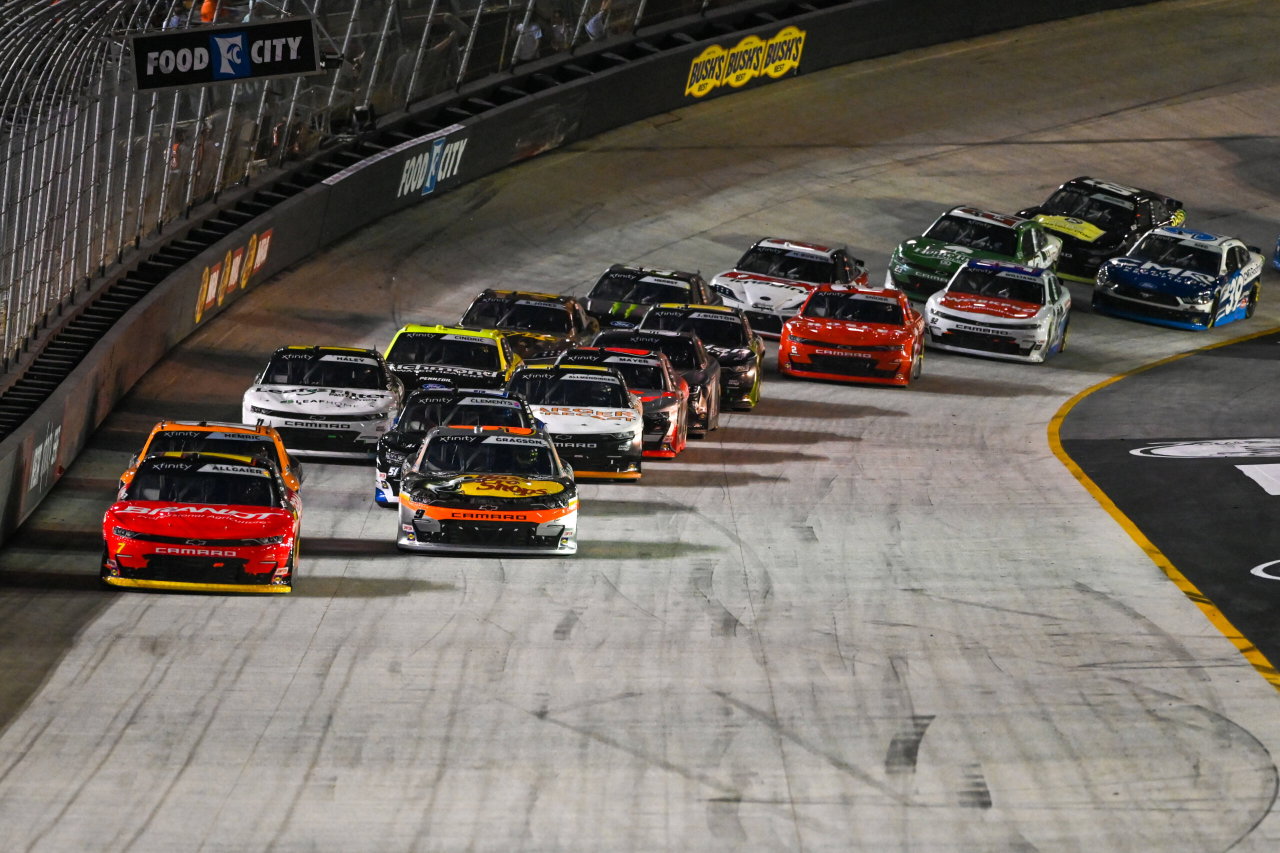
NASCAR has spent the past few years trying to put itself in places and on screens where it had not been before. It raced through downtown Chicago, went to Mexico City, turned Naval Base Coronado into a Cup Series venue. They moved parts of its schedule onto Prime Video and TNT Sports, and built shows around younger drivers rather than only around race results. In 2026, the sport also changed its championship format again, bringing back The Chase after more than a decade of elimination-style playoffs. There is now a steady push toward streaming, creators, new markets and personalities.
Watch What’s Trending Now!
There is a good reason for all of it. NASCAR needs people in their 20s and 30s to start caring about the sport before the current generation of fans gets older. It needs viewers who discover a driver on YouTube instead of waiting for Sunday afternoon television. It needs younger customers for sponsors, younger attendees for races, and enough new families entering the sport.
But NASCAR has another audience that is easy to overlook because it does not need to be convinced to watch. These are the fans who have already spent time doing everything a sports league hopes its customers will do. They bought tickets and traveled for races. They camped at tracks, and bought jackets with drivers’ names on the back. They watched even when their favorite driver was running 25th, and most poignantly, they passed the sport from one generation to another.
So the real issue is not whether NASCAR should modernize. It absolutely should. The question is whether NASCAR can keep chasing its next audience without making the audience it already has feel like an inconvenience.
The younger fan is not a marketing fantasy
NASCAR’s push into newer media has some useful evidence in its support. The sport’s 2026 media rights deal splits Cup coverage among FOX Sports, NBC Sports, Amazon’s Prime Video and TNT Sports, giving NASCAR a broader distribution model than it had under its previous television arrangements. Prime Video had five regular-season Cup races, while TNT Sports and USA Sports handled later portions of the schedule.
The streaming numbers have given one especially interesting result. Through the first several Prime Video races of the 2026 season, the package averaged about 2.29 million viewers using Nielsen’s Big Data + Panel measurement. The same coverage has also skewed younger than NASCAR’s traditional linear audience.
That difference shows you more than a single ratings number. A streaming service can reach a person who would never sit down at 3 p.m. on a Sunday because they already live inside that platform. The race becomes one more piece of entertainment rather than a commitment that requires changing the television schedule.
NASCAR has pushed the same logic into its digital content. The second season of RISING, launched in August 2026, follows Connor Zilisch, Carson Hocevar and Brenden “Butterbean” Queen. NASCAR says the series is to show the personalities, pressure and ambitions behind the helmets, with episodes released through Xumo Play and later on YouTube.
That is smart. A young fan may not know what a points system means. They may not know the history of Darlington Raceway. They may not care that one driver has 30 more starts than another. They can still care about Connor Zilisch trying to set himself in the motorsport.
They can care about Carson Hocevar’s personality. They can care about a driver making a mistake, getting angry, repairing a relationship, or trying to save a season. That is how sports fandom usually starts. The rules come in much later.
Formula 1 has built something similar on a much larger scale. F1’s own 2026 figures show that 43% of its global fan base is under 35, while women make up 42% of the audience and three-quarters of new fans. The sport also reported strong growth in social video and its gaming ecosystem. NASCAR would be foolish not to notice. But there is an important distinction between growing an audience and replacing one.
NASCAR’s longtime fan is not the enemy
The easiest caricature of a traditional NASCAR fan is someone who hates every change. That person exists. They complain when NASCAR adds a street race. They complain when a race leaves a traditional network. They complain about the Next Gen car. They complain about the new championship format. They complain about younger drivers being given too much attention.
But building the entire old audience around that stereotype misses what many longtime fans actually care about. They care about continuity. They know the difference between a Dale Earnhardt race and a Jeff Gordon race. They remember when a driver stayed with one organization long enough for the team colors to become part of his identity. They know which short tracks matter. They have memories attached to particular corners, particular races and particular Sundays.
That is not resistance to change. That is the basic machinery of sports fandom. A person does not spend 25 years watching NASCAR because they enjoy novelty. They spend 25 years because the sport becomes part of their life. And that is precisely why some changes hit harder.
A new street race may be exciting to someone discovering NASCAR for the first time. A longtime fan may immediately wonder what disappeared to make room for it. The distinction is important because NASCAR itself says it wants to listen to that core audience.
When NASCAR announced its new 2026 Chase format, president Steve O’Donnell repeatedly emphasized that the sport wanted to “focus on our core fan base” and make the championship easier to understand. The new system eliminated round-by-round driver eliminations, removed “win, and you’re in,” returned to a 16-driver Chase, and kept one points system throughout the championship. In other words, NASCAR already recognizes that modernization has a limit. The issue is whether that lesson is being applied outside the points system.
The schedule is where fans feel the changes most
Nothing makes the old-versus-new tension clearer than the calendar. NASCAR has spent the last several seasons testing what goes on the modern schedule. Chicago became a street race, while Mexico City joined the Cup calendar in 2025. Also, Iowa returned to the Cup schedule and North Wilkesboro went from a nostalgic exhibition venue to a points-paying race in 2026. Naval Base Coronado joined the schedule as a completely new type of venue.
None of those ideas is automatically wrong. In fact, several have worked. The 2026 Cup race at North Wilkesboro drew a grandstand sellout for its first points-paying event at the track in 30 years. That matters because it shows the traditional crowd can still turn out in force when NASCAR gives it a reason to care.
At the same time, Chicago’s future illustrates the other side. After three years as a street race, NASCAR returned to Chicagoland Speedway’s oval in 2026. By August, the 2027 schedule had put Chicagoland back on the calendar again, while NASCAR said discussions over a possible future return to the downtown street course were still open.
That is not necessarily indecision. It is NASCAR trying to solve two different problems. One is exposure, and the other one is identity. Alas, there are only so many Cup dates. If NASCAR wants Mexico, Chicago, San Diego and another international market, those dates have to come from somewhere. That is when schedule decisions become personal for longtime fans.
That difference is easy for a league office to miss and very hard for a fan who has made a yearly trip to the same place for 20 years. NASCAR’s 2027 schedule, released in full on August 26, shows just how much experimentation has become part of the sport’s normal rhythm. Chicagoland remains, Iowa remains, Naval Base Coronado returns, and traditional venues such as Darlington, Bristol, Martinsville and Talladega are still central to the calendar. The balance is there, but do the fans see it that way?
The championship has become easier to explain. That says something about the last few years
For longtime fans, the title fight has been one of NASCAR’s biggest identity shifts. The sport went from season-long points to the Chase, then from the Chase to an elimination-style playoff, and now back to a modernized Chase. That is a lot of different answers to the same question: what should a NASCAR championship mean?
NASCAR’s 2026 answer is an interesting compromise. Sixteen drivers qualify on regular-season points. Their scores reset once. Everyone remains in the Chase for all 10 races. The regular-season champion gets a 25-point cushion, but the final champion is simply the driver who scores the most points across those last 10 races. The important part is why NASCAR says it made the change.
The sport wanted consistency to matter again. It also wanted winning to matter. It wanted something that a new fan could understand quickly. O’Donnell said the committee specifically considered whether the format could be explained in the time it takes to ride an elevator. That is a useful standard for the whole sport, not just the championship, because NASCAR can create drama without creating confusion.
In fact, the 2026 season has already offered evidence that consistency itself can be dramatic. Drivers have talked about becoming more protective of finishes and stage points because they know a bad result has a different cost under the Chase system. That is less flashy than a winner-take-all finale. But perhaps that is the point.
NASCAR has spent years assuming that more drama automatically means better television. Sometimes it only means more explanation. The longtime fan does not necessarily want things to stay the same. They want the result to still make sense.
The Next Gen car changed the look and feel of the competition
Then there is the racing itself. The Next Gen car was created to address genuine problems. NASCAR wanted lower costs, more parity, stronger manufacturer relevance and a platform that could be shared across teams. It did not set out to destroy the technical side of the sport. But standardization always has a tradeoff. When more of the car is controlled by common parts and common rules, there is less room for creativity. That can help smaller organizations compete. It can also make the sport feel less distinct to someone who grew up following those technical battles.
NASCAR has spent 2026 adjusting the package again. Short-track and road-course rules have been changed in search of more passing and better tire falloff. Superspeedway rules have been adjusted too, partly because officials wanted more opportunity to pass and less incentive for drivers to spend long stretches simply saving fuel. That constant adjustment is not proof the Next Gen idea failed. It is proof NASCAR is still trying to solve a difficult question. What does the sport want the racing to feel like? Because close racing is not automatically entertaining.
A 10-car pack can be visually exciting. So can a driver spending 100 laps building a gap because his crew found a better setup. Those are different forms of competition. NASCAR needs to be careful not to optimize only for what looks good in a television highlight. Its hardcore audience is often interested in why a car is fast. That curiosity is part of what made NASCAR different.
NASCAR actually has more personalities than people give it credit for
There is another strange part of this debate. People often say today’s NASCAR does not have stars. It does. The sport just distributes them differently.
Kyle Larson can talk about racing sprint cars and immediately reach a second audience outside stock cars. Tyler Reddick has become a regular name outside NASCAR because of his early-2026 winning streak. Carson Hocevar has built a fan base partly by being exactly the kind of driver older NASCAR marketing teams might have found difficult to package. Connor Zilisch is already attracting attention before completing his first full Cup season. The problem is not always a lack of personality. It is a lack of consistent storytelling.
That is why RISING matters more than another piece of promotional content. NASCAR is trying to show fans what these drivers are like before and after the green flag. Season 2 is explicitly around the lives and careers of younger stars. NASCAR has also experimented with creator partnerships and social-first programming to reach people who do not consume motorsports through traditional television.
That is exactly the direction it should take. Because Formula 1 did not build a younger American audience simply by moving races onto newer platforms. It made people care about the people inside the cars. The Nielsen research around Drive to Survive is telling here. Among U.S. viewers who watched the series and then became interested in F1, significant shares said the show made them fans, helped them understand the sport, and made them more engaged.
The useful lesson is not “NASCAR needs its own Drive to Survive.” It already has RISING. The lesson is that a new fan does not have to become a historian before becoming a fan. First give them someone to care about, and then give them reasons to learn the rest.
There is a business case for keeping the older fan happy too
This is probably the least glamorous part of the conversation, but it may be the most important. A demographic age chart does not tell a track operator who buys two tickets and a campsite. A social-media impression does not tell a sponsor who bought a premium merchandise package. A viral clip does not tell you whether somebody will drive six hours to attend a race. NASCAR needs those people too.
A 55-year-old fan who attends races every year, buys merchandise and watches every Cup event may be commercially more useful in the short term than a 23-year-old who watches a handful of clips. That does not make the younger fan unimportant. It means audience value is not the same thing as audience size.
This is where NASCAR has to resist a common trap in sports marketing: chasing the largest possible group while losing sight of the most committed group. The two groups need different things. For example, the younger fans need easy entry points. Older fans need reasons to stay invested. Neither of them is especially difficult to understand.
Look at it this way: a streaming race does not hurt the longtime fan if the broadcast is good. A street race does not hurt a traditional fan if their favorite track still matters. A new driver documentary does not diminish Dale Earnhardt’s legacy. Just like a modern championship format does not have to erase the importance of a season-long points battle. The danger comes when every change is marketed as proof that the old version was wrong.
The smartest move may be to change the packaging, not the product
NASCAR does not need to stop chasing new fans. Street races, streaming, creators, and younger drivers can all bring people into the sport. The smarter move is making sure those fans can also find the history that made NASCAR matter. A new Connor Zilisch fan should be able to discover Dale Earnhardt. Someone watching North Wilkesboro should understand why the track means so much to longtime fans.
That matters because NASCAR’s older audience is not simply resistant to change. Many of those fans have spent decades buying tickets, traveling to races, watching every Sunday and passing the sport down to their children. Their loyalty is an asset that cannot be recreated through a marketing campaign.
The sport will keep changing and progressing because it has to. The real test is whether each change adds something without taking away the connection fans already have. NASCAR can build new markets, new stars and new ways to watch while still protecting the history, rivalries and traditions that give the sport its identity. The goal should be simple: to make NASCAR easier to discover without making it harder to love.