
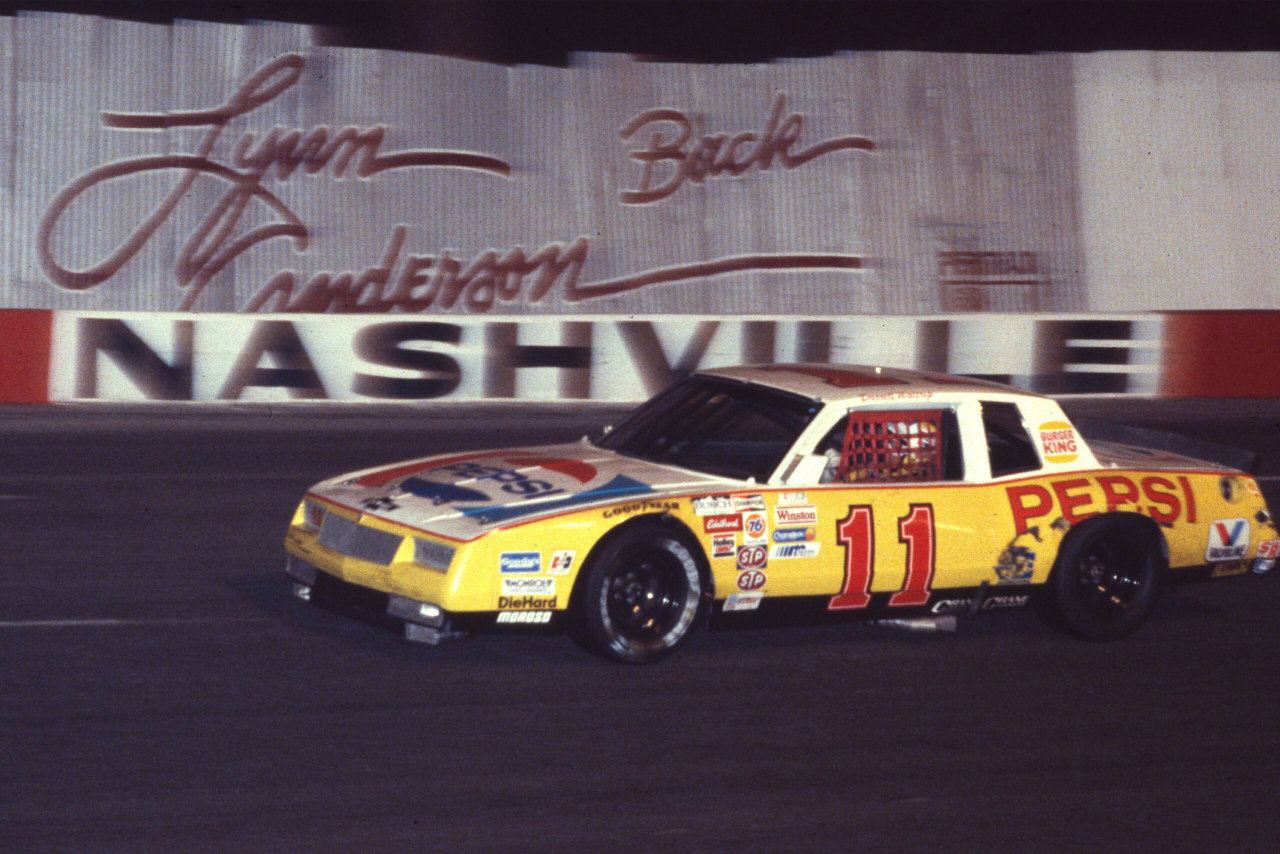
Picture the guy who built Texas Motor Speedway back in the nineties, standing on an empty stretch outside Fort Worth. His logic was simple: the land was cheap, close enough to a big city to draw crowds, but far enough out that nobody would bother him. That’s basically the playbook NASCAR used for every major track it ever built: Daytona, Charlotte, Kansas, Fontana, all of them. Find the empty edge of a growing city, drop a two-mile oval on it, and let the town grow around you at a safe distance.
Watch What’s Trending Now!
Here’s what they probably didn’t plan for: towns grow, and they don’t stop at a safe distance. Let’s clear up something people usually get wrong here. America isn’t running out of land. There’s still a ridiculous amount of open space in this country. What’s actually running out is much narrower than that: big, well-located, politically uncomplicated parcels near the cities that actually sell tickets. That’s a far smaller category than “empty land,” and it’s shrinking fast.
Think about what a Cup Series weekend actually needs from a piece of property. It’s not just a track and some grandstands. You need parking that can absorb tens of thousands of cars in one morning, camping fields, access roads built to clear a stadium’s worth of traffic before dark, plus utilities, emergency routes, garages, hospitality suites, fan zones, the works. And here’s the catch: almost all of that infrastructure sits idle 350 days a year, then gets hammered for one or two weekends.
Now compare that to what else could go on the same land. An apartment building collects rent every day of the year. A warehouse moves freight around the clock, seven days a week. A retail strip pulls in foot traffic all week, holidays included. A speedway, by comparison, is basically a part-time tenant sitting on full-time land. That math never used to matter, because nobody wanted the land badly enough to force the comparison. Now, in plenty of places, somebody does.
You can see exactly where that pressure is coming from just by looking at Sun Belt population numbers. Texas added 391,243 residents between 2024 and 2025 alone. Florida added 196,680. North Carolina grew by 145,907, Georgia by 98,540, South Carolina by 79,958, Arizona by 67,394, and Tennessee by 63,785. These aren’t quiet retirement markets creeping upward. They’re some of the fastest-growing regions in the country, and growth at that pace pulls every type of developer toward the same parcels a speedway might be sitting on.
Industrial real estate is chasing those same spots even harder than housing. CBRE counted 38 U.S. industrial leases of at least a million square feet in the first half of 2026 alone, more than double the 16 signed over the same period a year earlier. The Inland Empire alone accounted for 14 of the 100 largest leases nationwide, covering 12.6 million square feet. NASCAR doesn’t need every track under this kind of pressure for it to matter. It only takes a handful of them sitting on land that starts looking irresistible to someone with a much bigger checkbook. And that’s already happening.
Fontana is the cautionary tale, and it already finished playing out
If you want proof this isn’t some future hypothetical, look at what used to be Auto Club Speedway in Fontana, California. The story has already finished playing out, and the ending isn’t subtle.
The original property covered roughly 522 acres. A San Bernardino County filing tied to developer Hillwood’s plans carves out about 433 acres of that for up to 6.6 million square feet of high-cube logistics and e-commerce space, with another 98 acres set aside for support parking and 12 more for general commercial and parking use. Read that back slowly. That’s the wholesale conversion of a NASCAR superspeedway into a freight distribution hub, and it tells you exactly how much the competing land use has grown in the Inland Empire, one of the busiest logistics corridors in the country.
Here’s what actually stings about it, though. Tracks have closed before, and racing has survived just fine. What stings is that the land underneath it turned out to be worth more as a warehouse district than as a racetrack, full stop. Fontana spent years as part of the growth story out there. Now those same 433 acres belong to the region’s logistics story instead, and nobody’s mistaking those two futures for the same thing.
To be fair, NASCAR hasn’t walked away from Southern California entirely. CEO Steve O’Donnell said during a September 4, 2026 AMA that NASCAR still holds a real chunk of acreage at Fontana and is looking at other ways to keep serving that market. Still, the relationship between the sport and that property has fundamentally changed shape. Fontana proves something uncomfortable: a track can become vulnerable long before anyone decides racing itself has lost its appeal. Sometimes the land just develops a rival purpose too lucrative to turn down, and that’s the whole ballgame.
Nashville hasn’t lost yet, and that’s what makes it worth watching
Nashville is the more interesting fight, honestly, because unlike Fontana, nothing has actually been decided. This one’s still live.
The Fairgrounds Speedway is far from some forgotten lot waiting for a developer to stumble onto it. It’s already sitting inside a much bigger redevelopment that’s underway right now. The Fairgrounds campus includes GEODIS Park, the Expo Center, Fair Park, and a growing footprint of mixed-use development. The city has poured serious money into roads, pedestrian connections, utilities and drainage around the site. According to Nashville’s Sports Authority, all of that investment was designed to knit the Fairgrounds into the surrounding neighborhoods instead of leaving it as a fenced-off island that the rest of the city has to drive around.
The scale of that transformation is hard to overstate. Nashville’s current strategic plan lists 46 acres of public recreational space at Fair Park, a 132,000-square-foot Expo Center, and $41.3 million in additional infrastructure funding. It also notes that 445 Park Commons, the first of three planned mixed-use blocks, opened back in 2024 with residential and retail space already leased up. The Speedway sits right in the middle of all that momentum, which is exactly why the fight over it has gotten so loud.
And it’s a real fight now, not a zoning footnote. A 2026 ballot campaign is pushing to change the city charter so that auto racing is no longer a required use at the Fairgrounds, and to replace that requirement with affordable or workforce housing instead. That’s a full land-use argument about what the city owes its residents versus what it owes its history, not just a noise complaint dressed up as policy. Supporters point to the housing shortage, the need for green space, environmental restoration, strained infrastructure, traffic, and the sheer speed of growth in the surrounding neighborhoods. The people defending the track argue the historic Speedway is a legitimate part of the Fairgrounds identity and that motorsports can keep earning its place there without blocking everything else the site is trying to become.
Here’s the twist that keeps this from being a clean racing-versus-housing story, though, and it’s the part most coverage skips. Nashville’s own planning records show the city once seriously considered a roughly $100 million investment from Bristol Motor Speedway and the Cooper administration to renovate the track, add grandstands, and upgrade the surrounding infrastructure. The Fair Board actually approved that plan back in 2023. It just never made it to Metro Council for a final vote. The O’Connell administration is still weighing its options for what happens next.
That detail matters more than it looks like at first glance. Nashville isn’t actually choosing between two doors, racing or housing. There’s a third door nobody’s talking about enough: racing surviving as one working piece of a much bigger, denser, more valuable campus. The real question Nashville is wrestling with isn’t whether it wants a racetrack. It’s what an increasingly valuable slice of urban land owes the city around it, and whether motorsports can still earn a seat at that table.
Nashville also proves the doom-and-gloom version of this story isn’t automatic
Here’s the part that should make NASCAR fans breathe a little easier, and it’s sitting just outside the same city that’s causing all the anxiety.
Nashville Superspeedway proves growth doesn’t have to be the enemy. It sits outside the dense urban core, has solid highway access, and has spent years coexisting peacefully with serious industrial development right next door. The former Superspeedway property is tied to Speedway Industrial Park, a roughly 1,400-acre logistics and distribution project with room for an estimated 14 million square feet of industrial space. The site connects to I-840, with links out to I-40 and I-24, and already counts FedEx and GEODIS among its major logistics tenants.
Yet Nashville Superspeedway keeps hosting NASCAR races. Nobody’s fighting to shut it down. Nobody’s holding a ballot campaign over it. That single fact quietly wrecks the assumption that development always shoves racetracks out the door. The real issue was never development itself. It’s whether the racing facility stays valuable enough to justify sharing its neighborhood with warehouses, hotels, or housing. A track can survive next to all of that if the whole property, taken as a package, generates enough economic and civic value to keep the racing part around. For a lot of NASCAR’s footprint, that’s probably a far more realistic future than pretending the land nearby will stay untouched forever.
Chicago figured out you don’t have to own the land to compete for it
Chicago is the strangest case of the three, because NASCAR never bought hundreds of downtown acres in the first place. All it ever needed was temporary control of the streets.
The Chicago Street Race ran from 2023 through 2025 on a temporary course wrapped around Grant Park and the surrounding downtown blocks. That created an entirely different flavor of land dispute, built around road closures, spectator zones, security perimeters and traffic control instead of permanent ownership.
And the economics genuinely worked. The 2024 race generated a reported $128 million in economic impact, supported 865 jobs, and produced 38,095 hotel room nights. More than half of the 53,063 unique attendees said the race was the main reason they came to Chicago at all, and over 11 percent said it was their first trip to the city, period. Those numbers back a legitimate economic argument for keeping the event around.
But cities run their own math too. Street closures, parking restrictions, noise, and traffic disruption all factor into whether the trade-off is worth it, no matter how good the tourism numbers look. NASCAR ended up pausing the street race for 2026, and in August 2026 the sanctioning body confirmed it wouldn’t return to Grant Park in 2027 either, citing a lack of time to complete the necessary work, though the door was left open for some future return.
Here’s the part that actually matters, though. NASCAR didn’t disappear from Chicago as a market. Chicagoland Speedway came back in 2026 after a seven-year absence, and the 1.5-mile track is staying on the 2027 schedule. NASCAR called the 2026 Cup race there a sellout, and noted the crowd looked noticeably different from the one that had shown up downtown for the street race. Julie Giese, NASCAR’s vice president of market development and strategic scheduling, said that split suggested the Chicago market might actually be big enough to support both events running at once.
That’s a real shift in thinking, worth sitting with for a second. NASCAR figured out it didn’t need downtown Chicago specifically to hold onto the market. It could go back to a facility where the parking, infrastructure, and entire event footprint already existed and worked. Even so, don’t mistake this for the land problem disappearing. It just relocated farther from the skyline.
A racetrack is a genuinely strange piece of real estate, and that’s the whole problem
Here’s where the economics stop being abstract. Take Texas Motor Speedway. The facility sits on roughly 1,500 acres, and about 660 of those acres are devoted purely to parking. That land isn’t there because the racing surface needs it. It’s there because the entire event, tailgating included, requires a physical ecosystem most people never think about.
That’s the hidden footprint underneath every Cup weekend. A modern facility needs the track, the grandstands, the garages, sure. But it also needs parking fields, camping space, access roads, utilities, emergency routes, fan areas, and enough breathing room to absorb a crowd that shows up in a tight window and vanishes just as fast. The more expensive the land around that footprint gets, the harder it becomes to treat it as permanently available just because it’s always been sitting there.
That’s also why you can’t relocate a track the way you’d relocate a warehouse. A replacement facility needs zoning approval, environmental review, road upgrades, utilities, emergency planning, financing, nearby hotels and restaurants, and genuine community buy-in. It needs a market big enough to support it and infrastructure that can actually handle a major event without falling apart.
Then there’s the one thing no amount of money can manufacture: history. You cannot rebuild Darlington somewhere else and call it Darlington. Martinsville’s whole identity is tied to its location and its past. Bristol is defined by its physical setting in a way no new facility could replicate. Talladega’s scale is part of what makes Talladega, Talladega. Daytona is basically inseparable from NASCAR’s own origin story. Once a place like that is gone, building something similar down the road doesn’t bring back what was actually lost.
NASCAR is already adapting, and it’s smarter than people give it credit for
Give the sport some credit here, because it isn’t just standing around waiting for the land to disappear. NASCAR has spent the last several years testing venues that skip the traditional oval-on-hundreds-of-acres model entirely.
The LA Memorial Coliseum hosted a temporary half-mile track inside an existing stadium. Chicago used city streets instead of building anything permanent at all. In 2026, NASCAR pushed even further with Naval Base Coronado, running the Cup Series on a temporary 3.4-mile course through an active military installation. NASCAR has already locked in a return to Coronado for 2027, and there’s been real discussion about rotating future events to other military bases starting in 2028. Ben Kennedy has said the Coronado race could become a blueprint for more temporary courses down the line.
That’s a genuinely smart hedge. NASCAR gets to stage a marquee event without buying and permanently dedicating another massive chunk of land to a conventional speedway. But don’t mistake temporary racing for a free pass. Streets still need closing. Barriers still need installing. Grandstands, security, pedestrian routes, emergency access, traffic management, all of it still has to be built from scratch every single time. It isn’t solving the land problem so much as trading it for a logistics problem, and Chicago already showed exactly how messy that trade can get.
The smartest tracks aren’t just hosting races anymore
The strongest long-term play probably isn’t building more speedways at all. It’s making the ones NASCAR already owns useful on the days there’s no race happening.
Daytona International Speedway is the best example of this. ONE DAYTONA, the mixed-use development sitting right across from the track, blends retail, dining, entertainment, hotels, and residential space into one package. The whole concept rests on a simple idea: the land around a speedway can generate money and foot traffic year-round instead of sitting dormant until the next race weekend rolls around. Kansas Speedway is running a similar playbook through Village West, a large mixed-use sports and entertainment district built around the track and other nearby venues.
Homestead-Miami Speedway is taking a slightly different route, investing directly in the facility itself with upgrades to the entrance, the midway, the hospitality areas, and the overall fan experience. NASCAR is keeping it as the championship finale rather than treating the property like some outdated relic waiting to be repurposed by somebody else.
None of this means every track needs an apartment complex bolted onto it. It means a racetrack becomes a lot easier to defend when it’s one piece of a bigger economic ecosystem instead of standing alone as a part-time tenant on full-time land. A track that hosts concerts, festivals, amateur racing, driving experiences, corporate events, restaurants, and hotels supports the development around it instead of getting cast as the land that development eventually has to replace. That flips the entire conversation from how many race weekends happen here to what this place contributes the other three hundred and fifty days, and that second question is a much stronger position to be arguing from.
This was never really a land problem. It’s a value problem wearing a land problem’s clothes
Here’s the part that makes this whole situation more complicated than “developers are winning and NASCAR is losing,” and it’s worth sitting with. Cities genuinely need housing. They need better roads, industrial capacity, schools, parks. Communities have legitimate, reasonable concerns about traffic and noise near a facility that dumps fifty thousand cars onto local roads twice a year. At the same time, NASCAR needs enormous facilities that are expensive to run and disruptive by design during major events. Neither side here is simply wrong.
The actual question, every time, is whether a given racing facility generates enough economic, cultural, and civic value to justify keeping that land dedicated to motorsports instead of something else. That value shows up in tourism dollars, hotel stays, local jobs, restaurant traffic, sponsorship revenue, television exposure, community events, and the kind of regional identity a historic track provides that a warehouse never will. A racetrack doesn’t need to hit the highest possible real estate return to still be worth defending. It just needs to prove it’s pulling its weight.
Nashville is the clearest live test of that question right now. The Fairgrounds is already becoming a mixed-use urban campus, and the city has spent real money tying the Speedway into the Expo Center, GEODIS Park, Fair Park, and the surrounding neighborhoods. The city’s own planning documents describe the Speedway as one piece of that larger ecosystem, not something bolted onto the side of it. What’s still unresolved is whether racing keeps its slice of that pie or gets voted out of the picture entirely.
Put the three cities side by side and you get three different endings to roughly the same story. Fontana already has its answer: most of a 522-acre footprint got redirected almost entirely toward logistics and commercial use, and racing lost outright. Nashville’s answer is still being written, with the land genuinely contested between racing, housing, recreation, and broader redevelopment. Chicago never put ownership on the table at all, so its fight is different in kind, a yearly negotiation over whether handing over valuable public space is worth what the city gets back.
Different cities, different fights, same underlying truth. NASCAR’s old formula for finding land is getting harder to repeat with every passing year. The sport can redesign its cars, rework its schedule, overhaul the playoff format, the broadcast deal, even the entire style of venue it races at. What it cannot do, no matter how much money it throws at the problem, is manufacture another piece of well-located American land out of thin air.
That might be the single most important real estate fact hanging over NASCAR’s future right now. The biggest long-term threat to the sport’s track network was never really about fans losing interest or the racing falling out of favor. It’s that the ground underneath some of these facilities is becoming too valuable, too contested, or too politically loaded to stay a racetrack much longer.
The sport grew up in an era when land was easy to hand over for racing, no questions asked. Holding onto it now means NASCAR has to prove something it never really had to prove before: that a speedway isn’t just occupying valuable ground, but actually creating enough value to have earned the right to keep it.