
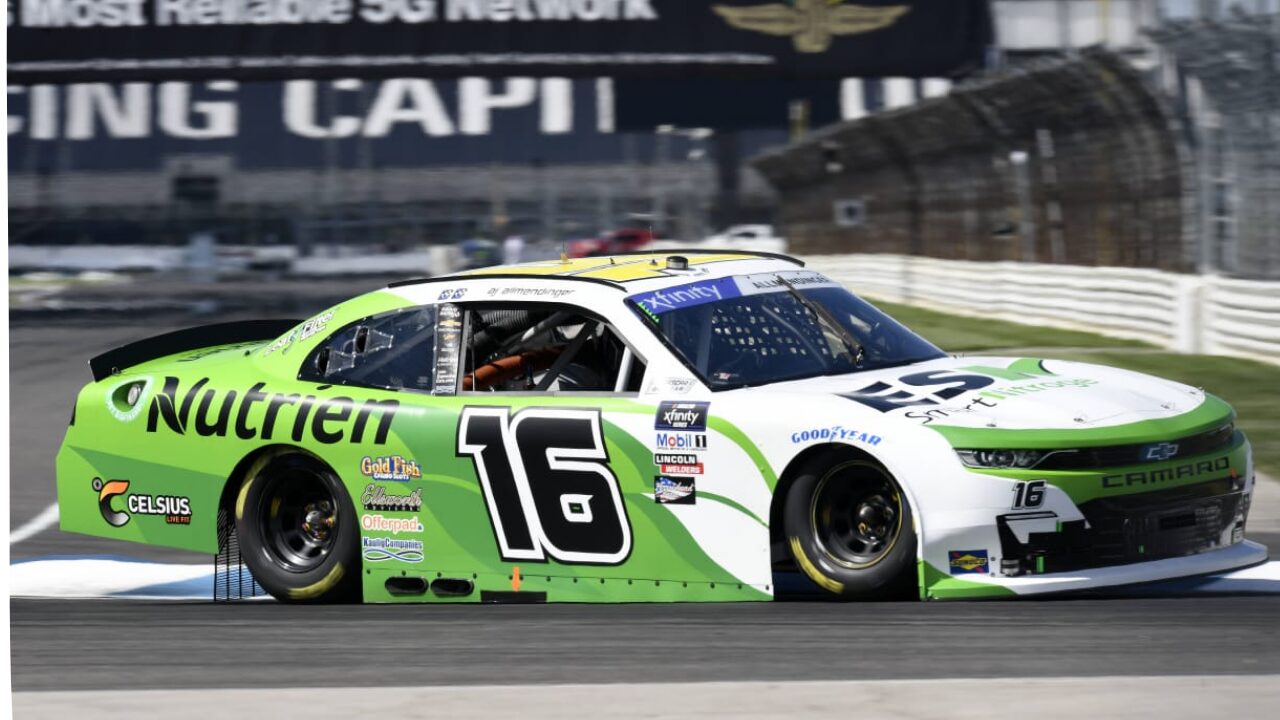
Kaulig Racing showed up at Indianapolis Motor Speedway for the Brickyard 400 without manufacturer support, without simulator data, and without any of the preparation that the top teams take for granted. Then AJ Allmendinger went out and qualified ninth. That did not happen by accident. NASCAR gave them a lifeline, and it made an immediate difference.
Watch What’s Trending Now!
During Goodyear’s official tire test at IMS, NASCAR let Kaulig Racing and the Haas Factory Team run laps alongside the test session. Just as teams that needed track time and had no other way to get it. Allmendinger was honest about what that meant going into race weekend.
“We got to come out here and run laps and try things. Anytime we can run laps and try things, even on simulation, I think there’s a certain extent of it’s still simulation. So you don’t know if that’s reality.”
Ninth in qualifying was the reality check that confirmed the laps were worth something. To understand why NASCAR stepped in, you have to understand what Kaulig is actually dealing with right now.
At the start of 2026, Kaulig Racing partnered up with Ram, a Stellantis brand, to compete in the Craftsman Truck Series. They also shut down their O’Reilly Series operation to focus on their new linkup with Ram. In response, Chevrolet pulled the plug on manufacturer support, and the alliance that Kaulig once had with RCR became null and void.
“I knew as soon as we signed that deal (with Ram), we were going to be put on our own little island. I knew we were going to sit out here by ourselves, and we were going to need a bunch of rafts to be able to keep this afloat,” Kaulig Racing Chief Executive Officer Chris Rice said. But Allmendinger struggled on the track and only bagged three top 10 results, which came on road courses. So they needed something to get their oval program back on track.
Kaulig is positioning itself to be the flagship team when Dodge returns to the Cup Series, which is targeted for 2027 or 2028. Until that happens, they will have to see this slump through.
At a track like Indianapolis, that gap is particularly brutal. The flat, square corners of IMS demand very specific mechanical setup work. The big teams solve that problem virtually before the trucks are even loaded. Kaulig had no virtual option.
The arrangement had firm limits. The manufacturer-selected teams were running experimental Goodyear compounds as part of the official test. Kaulig didn’t have access to the Goodyear tires, but the track time allowed them to make changes to their setup and build some data for simulation ahead of the crown jewel race.
NASCAR has the authority to grant this kind of track time outside normal testing rules, and it used that authority as a deliberate equalizer. The reasoning is not complicated. Hendrick, Gibbs, and Penske get picked for official tire tests throughout the season because manufacturers choose their top programs. Letting an unbacked team collect basic handling data on control tires costs the big teams nothing.
What Kaulig learned in that session was simple but valuable. How their car reacted to IMS specifically, how the chassis handled those flat corners, what adjustments gave them grip. The kind of information big teams already have sitting in a computer file somewhere. For Kaulig it was new, and it was enough.
Allmendinger started ninth. For a team running on fumes in a manufacturer no-man’s land, that result tells the whole story.