
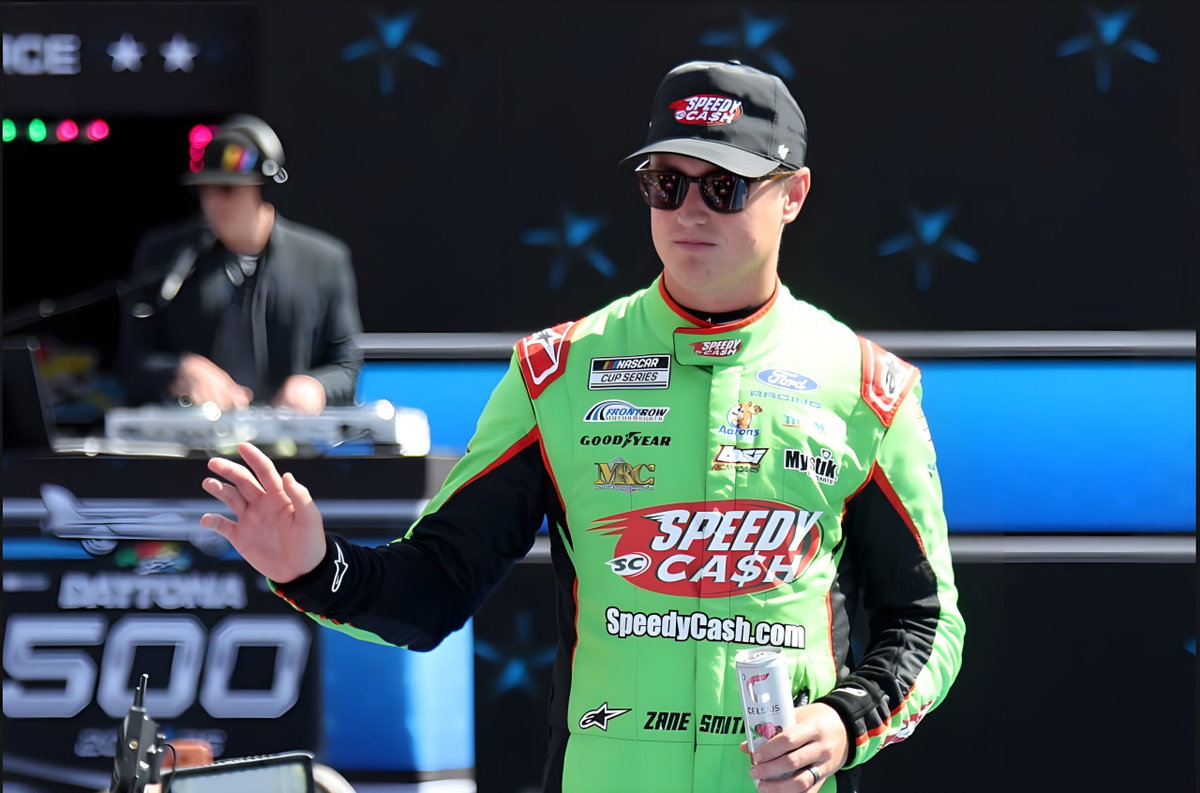
Zane Smith was furious with Carson Hocevar, and the checkered flag did little to cool him down. After their cars made contact at Phoenix Raceway, Smith drove his No. 38 Ford into the rear of Hocevar’s No. 77 Chevrolet on the cooldown lap. But there was a catch: Ross Chastain had triggered the original contact. Smith was not interested in that explanation. Now, former Hendrick Motorsports crew chief Steve Letarte has weighed in, and his take leaves NASCAR with a difficult decision.
Watch What’s Trending Now!
“On board with Zane Smith, he takes a big shot at the 77 of Carson Hocevar. I think to understand what happened, we have to go back earlier in the race. Going down into Turn 3, you’re going to see the 77 get a shot from the 1 of Chastain. Up the track he goes, and he catches the 38.”
The replay provides important context. Chastain hit Hocevar entering Turn 3, sending the Chevrolet up the track and into Smith. The contact also involved Josh Berry, and all three drivers lost positions. Smith eventually finished 15th, while Hocevar came home 12th.
Smith had reason to be frustrated, but his response came after the race. When told Chastain had initiated the incident, Smith reportedly replied, “I don’t give a f***.” His decision to hit Hocevar afterward turned a racing disagreement into a question about NASCAR’s handling of retaliation.
“What’s your thought about the after-checkered-flag incident? It’s something you see a lot. We saw it last week with Stenhouse and McDowell. Almost every week, when you’re in that 15th-to-20th range, you see people door-slamming after the race and yelling at each other. It was almost a weekly deal. Now, you never see one quite as big as that. That was a big hit.”
Letarte’s comparison is important. Ricky Stenhouse Jr. and Michael McDowell also clashed after the Bank of America 400 at Charlotte Motor Speedway. NASCAR reviewed their confrontation but issued neither driver a penalty. That decision now complicates any attempt to punish Smith.
“So, I’m of the opinion, after what I saw at Charlotte, that this retaliation from Zane, or displeasure from Zane toward Hocevar, shouldn’t be a penalty because it wasn’t a penalty a week ago.”
Letarte is not defending the hit itself. He is questioning whether NASCAR can punish Smith after allowing a similar confrontation to go unpunished. Officials need to explain why one incident crosses the line while another does not.
However, consistency cannot mean allowing drivers to settle scores with their cars. The cooldown lap brings drivers back toward pit road, where crew members and officials could be exposed to unnecessary danger.
“I also think, though, we’re getting to the point where NASCAR needs to set some boundaries, and I don’t think the best way to do that is with a penalty. I think it’s no penalty, but then set the boundary and say, ‘Hey, guys, we don’t want this,’ because when does it end up on pit road? When do you hit somebody who has his belt unhooked?”
Letarte wants NASCAR to establish a clear rule against this behavior, even if Smith escapes punishment this time. Yet the history between these two drivers makes the situation harder to dismiss.
Zane Smith and Hocevar have already drawn NASCAR’s attention
Their problems go back to Chicagoland Speedway, where contact between the two ended in a crash. NASCAR addressed the situation by speaking with Smith at Atlanta the following week about his interactions with Hocevar.
“One more layer, though, is the history between Hocevar and Zane Smith. If we go back to Chicagoland, we have the 38 get into the 77, they go up, and they wreck. NASCAR sat Zane Smith down in Atlanta the next week and talked specifically about that issue and his interaction with the 77.”
That earlier conversation matters because NASCAR had already intervened. Yet the tension resurfaced at Phoenix, with the latest contact coming after the finish. Officials must now decide whether another warning would be enough or whether Smith’s actions warrant a different response.
“I don’t know if that will factor in, but it’ll be interesting to see if that conversation with Zane Smith a couple of months ago will change NASCAR’s opinion of what happened here.”
NASCAR now faces two competing concerns. Penalizing Smith could raise questions about the Charlotte precedent, while taking no action could weaken its previous warning. Letarte favors drawing the line without issuing a penalty, but the repeated clashes make that approach harder to justify. If NASCAR wants drivers to leave their grudges off the cooldown lap, it needs to make clear where frustration ends and unacceptable retaliation begins.