For most of its existence, the Superstar Racing Experience (SRX) never quite felt like a real challenger to NASCAR. It was fun, different, and packed with recognizable drivers — but it always had the vibe of a summer exhibition instead of a full-blown motorsports rival. After just three seasons, the series shut down quietly after 2024, and most fans assumed that was the end of it. But thanks to the ongoing charter lawsuit, SRX is suddenly back in the spotlight and for reasons nobody expected.


This week in court, NASCAR President Steve O’Donnell made a statement that stunned everyone following the case. While testifying, he said NASCAR had bought SRX — and even hinted the series might return. Motorsport reporter Matt Weaver posted the comments online, and within minutes, fans were reacting.
Watch What’s Trending Now!
There was just one problem: that claim didn’t match the publicly known facts. Weaver quickly clarified that SRX’s physical equipment was sold to GMS Racing last year — not NASCAR. And according to documents already available, SRX’s intellectual property (the brand, rights, name, etc.) was never part of that sale. This means NASCAR doesn’t officially own SRX — at least not on paper.
That mismatch has now become one of the most talked-about moments of the trial.
Court filings show that NASCAR executives were paying close attention to SRX while it was still running. Internal texts and strategy documents revealed they viewed the series as a possible threat, not just another racing league. Some discussions even focused on how to control participation, track access, and influence through NASCAR’s charter and sanctioning system.
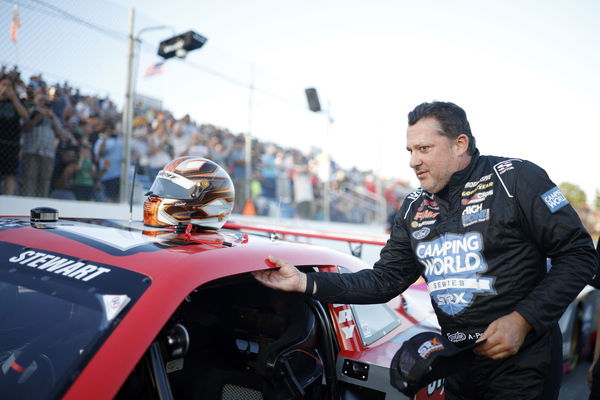
Getty
SOUTH BOSTON, VIRGINIA – JUNE 25: Tony Stewart #14 climbs into his car prior to the Camping World Superstar Racing Experience event at South Boston Speedway on June 25, 2022 in South Boston, Virginia. (Photo by Jared Tilton/SRX/Getty Images)
Multiple reports from The Athletic and Sports Business Journal back this up. According to those outlets, NASCAR explored ways to prevent Cup Series drivers and owners from competing in SRX without facing consequences, a move the plaintiffs argue is part of a broader pattern of restricting competition.
And that’s where SRX now fits into the trial.
Lawyers for 23XI Racing and Front Row Motorsports say NASCAR has used its power to control the racing landscape, limit new business, and keep competitors — or potential competitors in check. SRX, which once looked like a harmless side-project, is now being used as an example of that behavior.
So was Steve O’Donnell’s comment simply a mistake? A loose interpretation? Or something more intentional? Nobody knows yet.
But one thing is clear: SRX isn’t just a forgotten racing experiment anymore. In this courtroom, it has become evidence. Another piece in a much bigger fight over who really controls the future of American stock-car racing.
And the fans, especially on X, are already calling out the inconsistency, and they’re not letting it go.
Fans call out O’Donnell’s SRX slip as a lie
“That’s the first I’ve heard of SRX coming back unless he’s referring to Ray Evernham’s vintage IROC racing.”
That reaction hit the nail on the head. There’s zero public record of SRX firing up again in 2025. The cars and gear went to GMS Race Cars in September for track days and private stuff. If O’Donnell meant a full comeback, the facts say otherwise.
“Any way for the teams to fact-check this in front of the jury?”
Absolutely. The plaintiffs have been stuffing the record with emails, texts, and contracts that show exactly how NASCAR treated SRX like a ticking bomb. The GMS sale is public knowledge, and if O’Donnell’s words don’t match the paper trail, the jury gets to decide who’s telling the truth.
“Just more talking out of his axx, hoping nobody calls him on it. If they do, he will say he doesn’t know or can’t remember.”
That’s the frustration talking, and it’s hard to blame folks. O’Donnell’s testimony came with texts where he and Steve Phelps talked about putting a “knife” in SRX. Now he’s saying NASCAR bought it? The mismatch between stand talk and old messages is the kind of thing that makes juries lean in.
“Does Smoke know? @TonyStewart.”
Tony Stewart built SRX from the ground up, so yeah, he knows. The trial exhibits keep bringing his name up as the guy who tried to give fans something fresh, only to run into charter clauses and track deals that boxed him out. Stewart’s story is the perfect example of what the plaintiffs say NASCAR does to anything that smells like competition.
“They need SRX now to be less an anticompetitive monopoly. Seriously we need Tony Stewart to testify after RCR.”
Spot on. SRX is the smoking gun in this case, showing how NASCAR used rules to keep it small. If Stewart takes the stand, he could walk the jury through exactly how a “goodwill” clause in charters stopped big owners from helping out, and how track contracts shut the door on venues like Speedway Motorsports properties. With Richard Childress already in the mix, adding Stewart would turn the plaintiffs’ side into a wall of proof.
SRX didn’t get bought by NASCAR; it got choked out by contracts and exclusivity rules. The trial is pulling those strings into the light, and every time an executive slips like that, it makes the monopoly argument feel less like a theory and more like history.