Imago
From Twitter
Imago
From Twitter
NASCAR is finally reworking its long-criticized playoff system, but the bigger question still hangs in the air: will it be enough to win back the core fans the sport has spent the last decade pushing away? As frustration over the existing format boiled back to the surface, NASCAR was forced to make a call for the 2026 season. And while fans waited to see if their voices would truly be heard, the sport chose its own path, leaving President Steve O’Donnell to step forward and explain why.
Watch What’s Trending Now!
Speaking on the official NASCAR YouTube channel, the championship format announcement gripped the fan base. And Steve O’Donnell wasn’t playing around while revealing the reworked version of the playoffs.
“At the end of the day, it’s growing the fan base, but it’s not just chasing new fans,” O’Donnell said. “We need to be with the folks who brought us to the dance, make sure they believe in us, where we’re going. New fans will come along because they’re going to see that this is a cool sport to be around.”
That candid admission from the NASCAR president signals a major shift in how the series plans to approach its championship format. For years, a large portion of the NASCAR community has been openly frustrated with the playoff system that has dominated the sport since 2014.
Many longtime fans felt that the elimination rounds and win-and-you’re-in quirks turned what should be a season-long test of consistency into a series of artificial checkpoints, where one bad race could undo months of effort and unpredictability could overshadow true performance. That frustration intensified following the 2025 Championship Weekend at Phoenix Raceway, where late cautions and winner-take-all stakes once again determined titles in ways that left season-long dominance unrewarded.


Longstanding complaints led fans to demand a return to a traditional points championship, but the new format appears to be a compromise that not everyone wanted.
Imago
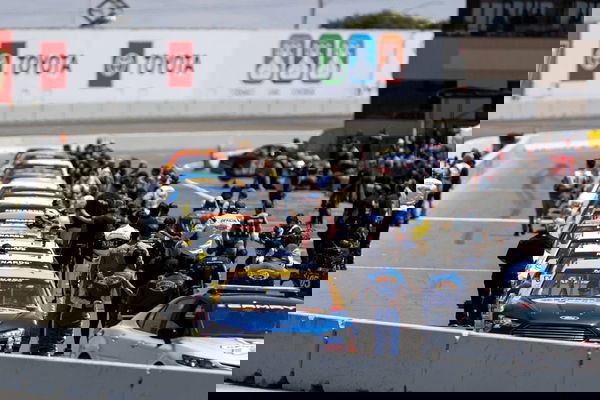
SONOMA, CA – JUNE 05: Drivers and teams listen to the National Anthem before the ARCA Menards Series West – General Tire 200 race on June 5, 2021 at Sonoma Raceway in Sonoma CA. Photo by Bob Kupbens/Sonoma Raceway via Icon Sportswire AUTO: JUN 05 NASCAR, Motorsport, USA ARCA Menards Series West – General Tire 200 Icon21060505
NASCAR has reworked its postseason for 2026, returning to a modernized version of the historic Chase format that many fans once loved.
So, what does this return to the Chase actually look like?
Under the new structure, the top 16 drivers will be determined by regular-season points rather than automatic race wins. Elimination rounds are gone, and the championship will be decided by cumulative points over a 10-race Chase. The driver with the most points after the season finale at Homestead-Miami Speedway on Nov. 8 will be crowned champion.
This approach removes some of the more controversial aspects of the previous system while still keeping a postseason-style climax that rewards consistency and performance across the entire year. NASCAR will also officially drop the term “playoffs,” returning to “The Chase” as the accepted name for the postseason, with “postseason” used interchangeably.
O’Donnell is also focused on the future, aiming to attract new fans.
Wanting to expand NASCAR to newcomers seems to be his main goal, and he has also acknowledged that there are still vocal factions on both sides of the debate.
“Just looking at both of those, there are a lot of fans, yes, there are a lot of vocal fans on social media,” said O’Donnell. “Those aren’t all of our fans, and there are a lot of fans who like Playoffs or liked a Playoff format as well. So we felt like this was a great balance.”
That balance was shaped in part by how the old format played out across all three national series in 2025. In the Cup Series, Denny Hamlin led 208 of 319 laps at Phoenix and entered overtime as the race leader, only to lose the championship after a late caution reshuffled the finish. Kyle Larson claimed the title despite not leading a single lap in the finale. Similar outcomes followed in the Xfinity and Truck Series, further fueling fan backlash.
While O’Donnell presented the change as a balanced compromise, NASCAR Hall of Famer Mark Martin, a vocal critic of the old system, offered a more candid look at the passionate debates that led to this moment.
Mark Martin credits yelling for bringing the Chase format back
Mark Martin, who has pretty much been the voice of the core fans of NASCAR, can finally kick his feet up.
His persistent push for change has paid off. The NASCAR Hall of Famer was on hand Monday as president Steve O’Donnell announced the end of the 3-3-3-1 playoff format, bringing back an updated version of the former Chase.
O’Donnell called Martin “the first guy in the room to stand up and say, ‘I want to go back to full season points.’” He added, “There were a lot of folks who wanted to throw Mark out of the room initially, but what Mark did was caught as a position where there was the right balance and the balance between those who would like to play off and those who like the full season points. And we believe we’ve struck that balance. We’ve got the best of both worlds where every race matters.”
The new Chase format resembles the system used from 2004 to 2013. The 16-driver playoff field will now be set based on points accumulated throughout the regular season, moving away from the ‘win-and-you’re-in’ system, with race wins earning 55 points, up from 40.
Reflecting on the change, Martin couldn’t help but joke.
“Well, the fans were yelling at me, ‘We want full-season points.’ So I yelled even louder and almost got thrown out, as Steve said. I think that this is the most perfect compromise that you could ever ask for,” he said.
When the chase begins, points will reset. The new structure eliminates the sudden-death nature of the previous playoffs. By resetting points with a tiered seeding (2100 for the leader, 2075 for second), the system rewards regular-season success while ensuring the 10-race Chase remains a competitive battle, not a lottery.
While the return to a Chase-style format is a clear concession to its traditionalist base, NASCAR is betting that this hybrid model can satisfy old-school loyalists without sacrificing the drama needed to capture a new generation of fans. The 2026 season will be the ultimate test of that gamble.
Related Newsletters