
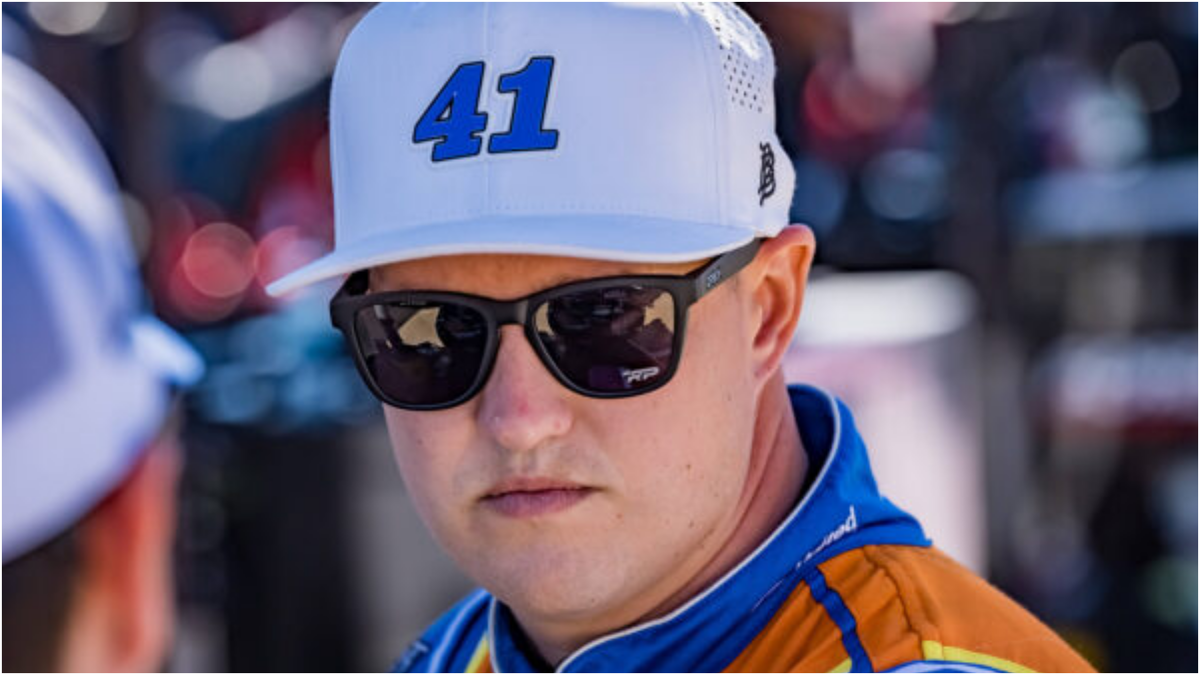
“What a f***ing idiot that kid is. He’s so lucky his car is so fast… Alright, when I get to that 54, I’m done with him.” This is what Ryan Preece said on the radio before making contact with the No. 54 Camry at Texas Motor Speedway. Ty Gibbs spun out and crashed, and what followed next was a big decision by NASCAR. The sanctioning body fined him $50,000 and also docked 25 driver points. RFK Racing, in hopes of trying to overturn this decision, appealed, but the final outcome wasn’t in their favor.
Watch What’s Trending Now!
The National Motorsports Appeals Panel upheld behavioral penalties against driver Ryan Preece. This means that apart from the $50,000 fine, he will also give up those 25 precious driver points. What makes the outcome so controversial is that the appeals panel openly admitted that neither side could definitively prove its case through data.
“Although not a unanimous decision, NASCAR and RFK Racing presented competing interpretations of common data. Neither side clearly proved their point, but Mr. Preece’s comments showed that he chose to not cut his competitor any breaks,” a statement shared by NASCAR following the appeals hearing read. In the end, neither NASCAR nor RFK Racing’s data arguments could sway the three-panel members’ opinion.
The sanctioning body leaned on three things: SMT telemetry data, video footage, and Preece’s own radio comments. Meanwhile, RFK Racing, though it didn’t deny the contact happened, put forth the entire defense around intent.


The National Motorsports Appeals Panel today heard and considered an appeal of a behavioral penalty issued on May 5, 2026 to driver Ryan Preece in the NASCAR Cup Series. Upon hearing the testimony, the decisions of the National Motorsports Appeals Panel are: 1. That the Show more
The team argued NASCAR’s own telemetry data didn’t show Preece making a deliberate steering move to hook Gibbs into the wall. According to RFK, this was hard racing at a fast intermediate track where slight contact can turn the wrong way and fast. And they expressed their displeasure with the ruling too.
“We stand by Ryan Preece and believe our argument was fair, sound, and without question. We appreciate the forum provided by NASCAR to both provide detailed evidence and defend our stance through thoughtful data and digital evidence.”
This isn’t the end of the road for RFK and Preece, as they can exercise the option of making a final appeal, although in RFK Racing’s statement there was no indication as such.
However, given how points decide the fate of the drivers in the Chase format, it won’t seem unlikely for RFK Racing to opt for the final appeal. After the Coca-Cola 600, Preece holds the 16th and the final Chase position, right on the bubble, which makes the 25-point deduction a big deal for the driver and the team. In fact, veterans like Dale Jr. were quick to call out this penalty call by NASCAR.
Like Preece, Kyle Busch also had a similar incident on the track. In his case, John Hunter Nemechek was also racing pretty aggressively, which led to the final outcome of the #42 car crashing into the wall. Dale Jr. clearly felt that neither incident warranted a penalty decision by NASCAR. “I didn’t think either one would get penalized. If you’re not going to penalize Kyle, I don’t think you can penalize Preece. I was really, really surprised by this decision.”
But now that the appeals panel has decided to stay firm on NASCAR’s call, the fans lost their cool and asked for more clarity.
NASCAR fans left stunned by appeals process against Ryan Preece
Fans weren’t confused because Preece got penalized. They were confused because the panel openly admitted the data itself never clearly proved intent. One fan wrote, “Whatever happened to due process? They admitted the evidence was basically even.”
Another took a jibe at NASCAR’s wording instead. “I didn’t know a driver was obligated to give his peers any breaks.”
That became the big sticking point. Because in NASCAR, drivers are constantly told to race at “100 percent.” Nobody gives breaks. That’s literally the culture of the sport. So when the Appeals Panel used that phrase as part of its reasoning, fans immediately saw a contradiction.
“Cutting breaks goes against your 100% rule,” one person posted. Others thought NASCAR accidentally made its own case look weaker by trying to explain it publicly.
That’s where this got messy. RFK spent the hearing arguing that the SMT data didn’t show intentional steering input. NASCAR argued the opposite, saying Preece never lifted the throttle or tried avoiding Gibbs. In the end, the panel basically ruled the data battle a draw.
So the deciding factor became Preece’s radio. That opened the door to another debate fans have been hammering NASCAR over for years: consistently doing it.
A lot of people quickly pointed to Kyle Busch. During that same Texas weekend, Busch had an aggressive incident with John Hunter Nemechek that NASCAR reviewed but never penalized. RFK reportedly brought that up too.
The difference? Busch didn’t have radio audio saying he was “done” with somebody beforehand. That’s why many fans walked away believing Preece got punished as much for talking as he did for driving.
“Now every driver should be penalized if they race hard,” one frustrated fan wrote. “This sport is becoming a joke.” Another fan compared it to Formula 1, “So we’re F1 now?” No contact, no personality, no hard racing?”
RFK Racing can still take the case one level higher to NASCAR’s Final Appeals Officer. But after this ruling, the bigger story may not even be Ryan Preece anymore. It’s the fact that NASCAR admitted the data itself was debatable and still found a way to punish him anyway.