
USA Today via Reuters
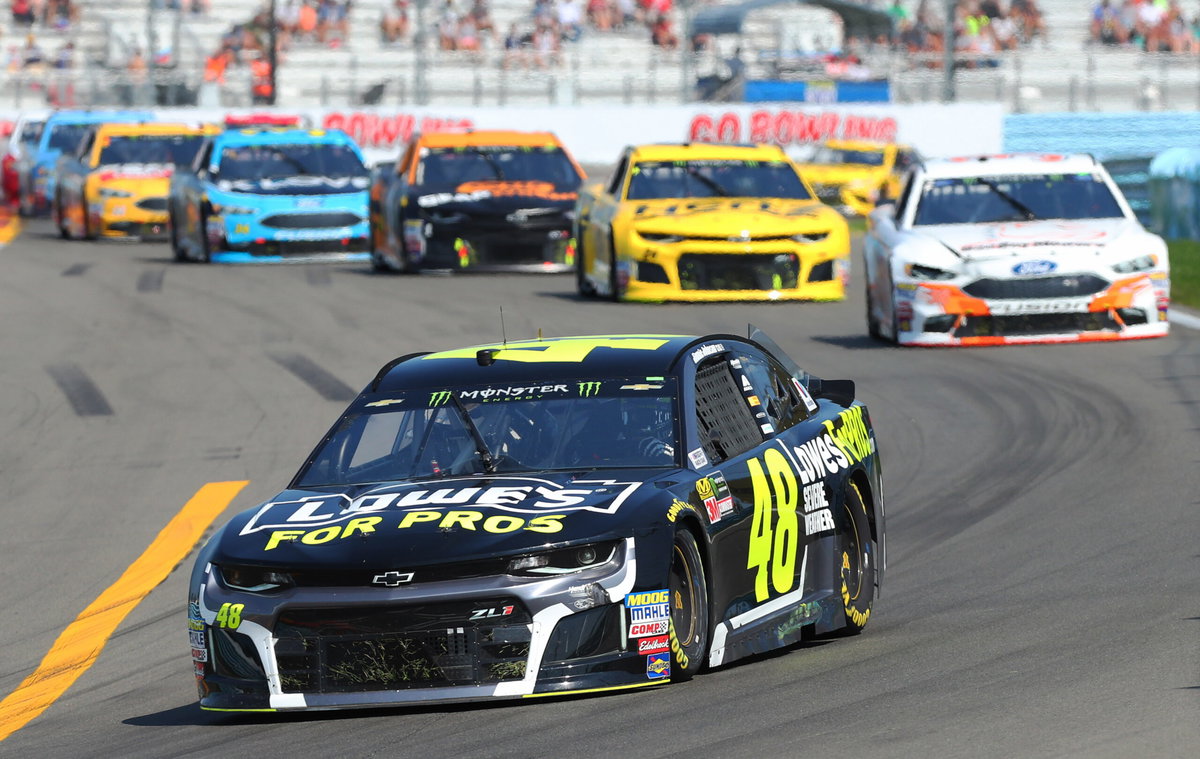
Aug 5, 2018; Watkins Glen, NY, USA; Monster Energy NASCAR Cup Series driver Jimmie Johnson (48) during the Go Bowling at The Glen at Watkins Glen International. Monster Energy NASCAR Cup Series driver Chase Elliott (9) won the race. Mandatory Credit: Kevin Hoffman-USA TODAY Sports
USA Today via Reuters
Aug 5, 2018; Watkins Glen, NY, USA; Monster Energy NASCAR Cup Series driver Jimmie Johnson (48) during the Go Bowling at The Glen at Watkins Glen International. Monster Energy NASCAR Cup Series driver Chase Elliott (9) won the race. Mandatory Credit: Kevin Hoffman-USA TODAY Sports
“I’m committed to advancing the International Hot Rod Association with a racer-first mindset and a clear vision for long-term growth,” Leah Martin said as she was appointed president of the International Hot Rod Association last December. Never would she have imagined that while speaking about long-term stability and rebuilding the organization’s future, just six months later, she would be removed from her position.
Watch What’s Trending Now!
The fallout escalated dramatically during the Cocoa Beach event weekend when she was abruptly removed from her position as president of the International Hot Rod Association. The timing alone stunned many inside the sport, especially considering Martin had only stepped into the role six months earlier. Her appointment itself had been historic.
Martin became the first woman ever to lead a major American motorsports sanctioning body, and initially, there was genuine optimism surrounding the direction of the IHRA. The organization expanded into offshore racing promotion, promised racers money and prize payouts, and aggressively tried to re-establish itself as a serious player across multiple motorsports disciplines. Early signs appeared encouraging, too.
The first three IHRA events of the season reportedly produced strong fleet numbers that exceeded previous benchmarks at each venue. The Thunder On the Beach offshore powerboat event in Cocoa Beach drew 89 registered entries, viewed by many as proof that the organization still could generate momentum despite years of instability. The organization had also attempted to build credibility quickly by unveiling an ambitious 2026 Offshore Series National Championship schedule featuring a reported $2 million purse, tow money incentives, and national television coverage as part of its broader expansion plans.
One of the key figures brought in during that push was Tommy Thomassie, whom Martin personally recruited as Executive Vice President and Director of Powerboating. At the time, Martin openly described Thomassie as her “first instinct and first choice,” praising his sponsorship experience, motorsports background, and role in helping grow Pro Class 1 racing. IHRA owner Darryl Cuttell also publicly emphasized that building a strong executive leadership structure across all racing disciplines had been one of the organization’s top priorities.
IHRA FALLOUT CONTINUES:
IHRA president Leah Martin was removed from her position during an event weekend in Cocoa Beach.
The move reportedly caused operational delays at the event. pic.twitter.com/g3yjAE1wtt
— Aaron ‘AJ’ England (@TracksideAJ) May 18, 2026
“The International Hot Rod Association and Leah Martin have parted ways effective immediately,” new IHRA president Tommy Thomassie wrote in a text message. “The organization appreciates her efforts and contributions over the past several months and looks forward to continuing to build on its momentum across all disciplines.”
Martin herself responded emotionally. “I’m at a loss for words, I have poured my heart and soul into this sport at the cost of time with my family. I wish it all the best.”
At the same time, reports from recent events suggested operational issues had been building for weeks. There were complaints about unexplained schedule delays, compressed event windows, and reportedly strict handling of media and photographer credentials on-site.
The situation intensified further after Martin’s husband, Justin Martin, reportedly learned of her firing moments before the start of a Super V and Extreme race. According to reports, he instructed the pace boat to return to pit road before disembarking himself, creating a major delay because the trip from the pits back to the racecourse takes roughly 15 minutes.
The firing also resurfaced earlier tensions surrounding IHRA’s offshore safety structure, which had already become a major talking point within the powerboat racing community this year. Concerns had previously been raised publicly by offshore rescue personnel and safety veterans over issues involving chain of command, staffing authority, rescue governance, and the organization’s proposed safety framework.
A lengthy public rebuttal from attorney Michael Allweiss, who represented SSR Safety & Rescue and had prior involvement in offshore racing governance, accused IHRA leadership of creating unclear command structures and attempting to centralize operational authority without properly aligning accountability. The criticism specifically referenced discussions involving Leah Martin, Tommy Thomassie, and newly appointed IHRA Safety Director Justin Martin.
The dispute centered largely around offshore rescue oversight, staffing control, diver qualifications, and whether the proposed structure placed too much responsibility on rescue personnel without granting corresponding operational authority. The public disagreement quickly became one of the biggest controversies surrounding IHRA’s offshore expansion efforts earlier this season.
Now, instead of discussing growing participation numbers and rebuilding momentum, the IHRA once again finds itself battling questions about leadership stability, organizational structure, and whether the sanctioning body can finally avoid another internal collapse.
The earlier fallout
The turmoil surrounding the International Hot Rod Association did not suddenly begin with Leah Martin. In fact, the organization had already been dealing with a wave of internal instability long before the latest leadership shakeup unfolded in Cocoa Beach. Just two months ago, two major IHRA executives were abruptly dismissed.
Chief Operating Officer Scott Woodruff and Vice President of Advertising Brett Underwood were both relieved of their duties under circumstances that immediately raised eyebrows throughout the racing community. Reports circulating at the time claimed the firings happened through a phone call and even a text message, with screenshots from the exchanges quickly making rounds online.
In Woodruff’s case, the firing became especially controversial after he revealed that IHRA owner Darryl Cuttell allegedly terminated him through a one-word text message that simply read: “FIRED.” The longtime motorsports executive later said there had been no warning signs, no formal discussion beforehand, and no follow-up explanation after the message was sent.
Woodruff, who brought more than 30 years of experience across drag racing operations, sponsorships, and NHRA competition to the role, had been viewed by many inside the industry as one of the key hires meant to help restore IHRA’s credibility. During a later interview, he claimed he had recently raised concerns internally about operational strain, customer service challenges, and the organization taking on too many racing disciplines too quickly.
His comments also reflected broader concerns already quietly circulating around the sport at the time. While many praised Cuttell’s willingness to aggressively invest in motorsports through facility purchases, expanded prize purses, offshore racing acquisitions, and new series launches, critics increasingly questioned whether the organization’s infrastructure was growing fast enough to realistically support that expansion.
In response, IHRA promoted Doug Foley Jr. into the Chief Operating Officer role. Foley Jr., a second-generation racer deeply familiar with drag racing circles, was tasked with stabilizing day-to-day racing operations as the sanctioning body attempted to keep its growing ambitions under control.
But the fallout reportedly spread beyond executive offices. Only days after those firings, several individuals attending the NHRA event in Gainesville anonymously claimed the internal disruption was already affecting vendors, contractors, and media partners tied to IHRA operations.
One individual reportedly said they were terminated through a short email with little explanation. Another vendor alleged they were still owed roughly $2,500 for services already completed. Meanwhile, a motorsports reporter claimed his public relations firm had not yet received payment connected to IHRA-related projects.
Complicating matters further was the earlier departure of Tommy Thomassie himself. Less than 100 days after being appointed Executive Vice President and Director of Powerboating, Thomassie resigned from the role following IHRA’s opening offshore event in St. Petersburg. At the time, he cited a “split in collective vision and execution” while still praising the work done to launch the series under tight timelines.
Despite his resignation, Thomassie had still acknowledged that the organization managed to successfully stage the St. Petersburg race from “ground zero in two and a half months,” with 65 boats competing and substantial prize money distributed across the field. Leah Martin publicly thanked him following the resignation and stated that IHRA remained focused on improving safety, professionalism, and long-term growth within offshore racing.
Woodruff himself also acknowledged that some operational progress had been made during the early stages of the rebuild. He pointed to improved race efficiency, stronger event execution, and the organization’s successful effort to help bring Atlanta Dragway back from redevelopment plans as one of the moments that reminded him why people inside the sport initially believed in IHRA’s revival project.
Those stories only intensified growing concerns about the organization’s stability. Over the past year alone, the IHRA has experienced a staggering amount of turnover among senior leadership. Woodruff and Underwood joined an already lengthy list of high-profile exits that includes former presidents Rich Schaeffer, Kenny Nowling, and Josh Peake, along with marketing specialist Christian Byrd.
The instability has also started fueling larger questions about whether the organization’s increasingly aggressive expansion strategy may be contributing to the internal turbulence. Alongside drag racing, IHRA has rapidly expanded into offshore powerboat racing, grassroots stock car competition, facility acquisitions, and large-scale redevelopment projects, all within a relatively short timeframe.
At this point, the bigger issue facing IHRA may no longer be attracting racers or growing event participation. Instead, it is whether the organization can finally establish enough consistency behind closed doors to stop the cycle of leadership drama from overshadowing the racing itself.
Written by

Edited by

Aatreyi Sarkar