Imago
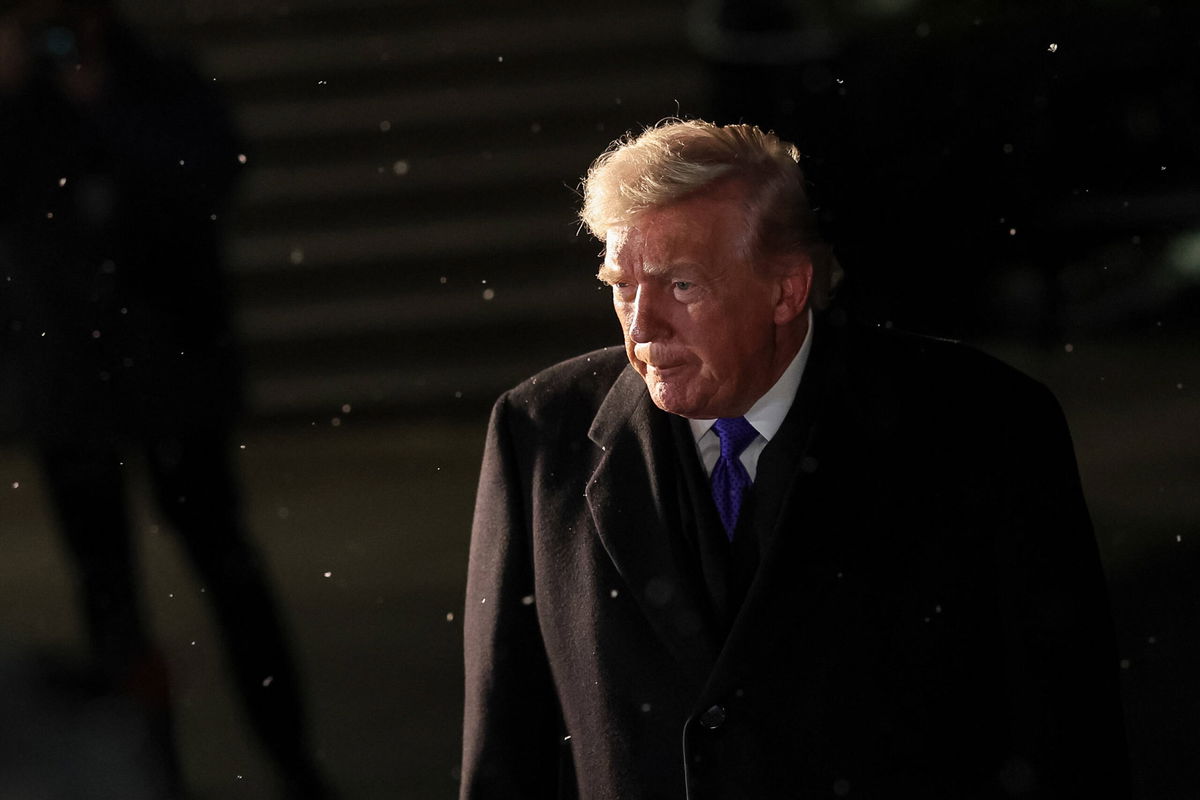
US President Donald Trump February 6 U.S. President Donald Trump walks to Marine One on the South Lawn of the White House on February 6, 2026, in Washington DC, before departing for a weekend trip to Palm Beach, Florida. Washington District Of Columbia United States Copyright: xMehmetxEserx
Imago
US President Donald Trump February 6 U.S. President Donald Trump walks to Marine One on the South Lawn of the White House on February 6, 2026, in Washington DC, before departing for a weekend trip to Palm Beach, Florida. Washington District Of Columbia United States Copyright: xMehmetxEserx
The recent conflict in the Middle East has claimed a new victim: NASCAR. Since the onset of the war, fuel prices have increased in international markets. With the season having just started, rising fuel costs are forcing teams to adapt or risk being squeezed out due to financial constraints. Kaulig Racing’s new CEO has highlighted this pressing issue, aiming to draw nationwide attention to the critical challenges facing the sport.
Watch What’s Trending Now!
CEO’s Twitter statement: A call for nationwide attention
Kaulig Racing’s new CEO, Chris Rice, took to Twitter to highlight the issues that newer NASCAR teams are facing due to rising fuel costs.
He pointed out, “Fuel prices are killing us. The rise in diesel costs is forcing us to rethink every aspect of our strategy, from how we travel to how we race. This is all costing us a bit more than anticipated.”
Kaulig Racing president Chris Rice: “Yes, the fuel prices have really put a huge hit into our budget. … We have to budget for everything and we’ve already torn up more fenders this year than we expected to too. But the fuel prices are rough right now.” https://t.co/AgJFhNPgZ2
— Adam Stern (@A_S12) April 2, 2026
The situation in the Middle East has certainly impacted fuel prices, but other operations in racing have also taken a hit.
“Ty Norris, our COO, always tells me that he’s never seen anyone keep track of every spoon and fork we buy, but I have to. Every dollar matters right now, especially when we’re dealing with higher costs in almost every department,” said Rice.
Combined with the racing costs, this conflict in the Middle East is now threatening to tear up America’s local circuits. Commenting on the same, Rice added, “We’ve already torn up more fenders than we anticipated this season, and now fuel is a major concern. The financial strain is real, and it’s hitting teams hard.”
Teams have now been left with no option but to improvise with adjustments being made across the board.
“Back in January, we spent a lot of money on fuel running parts here and there, doing this and that. Now we have a group text called the ‘traveling group text’ where we plan our trips accordingly,” Rice said. “We talk to our truck drivers to figure out how to optimize our routes. For example, do we really need to fill up all the way if we’re only heading to Rockingham? We look for places where fuel might be cheaper, trying to save every dollar we can.”
Imago
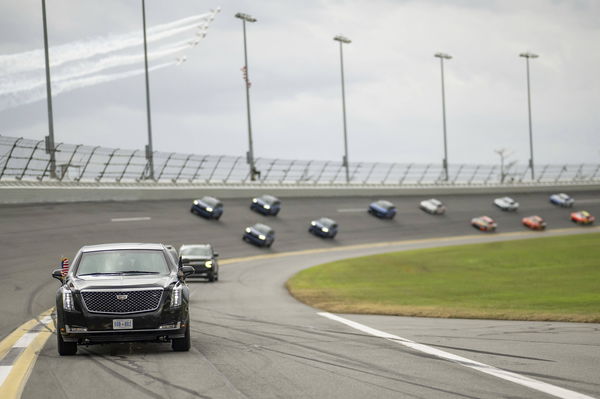
February 16, 2025, Daytona, Fl, United States: U.S President Donald Trump is driven around the track in the Presidential limousine for the pace lap, before the start of the NASCAR Daytona 500 race at Daytona International Speedway, February 16, 202,5 in Daytona Beach, Florida. Daytona United States – ZUMAp138 20250216_zaa_p138_040 Copyright: xDanielxTorok/WhitexHousex
Despite Donald Trump, President of the USA, confirming that the war is set to see an end soon, nothing can be guaranteed due to the political landscape of the world right now. Novice teams such as Kaulig Racing will find it hard unless swift adjustments are made. However, this does raise a question on there being need for a potential shift in strategy.
NASCAR has publicly committed to achieving net-zero operational emissions by 2035 as a part of its NASCAR IMPACT environmental strategy. Quickly adapting to renewable resources would not only allow NASCAR to abide by the 2035 deadline but it would also help reduce dependency on non-renewable fuels.
Finally, NASCAR partnerships with ABB and major automakers such as Chevrolet, Ford, and Toyota could also be taken into account, where a 2024 agreement stipulates that all stakeholders would debut an electric race car prototype to test future racing platforms.
This is a great move, as combining it with NASCAR’s push to shift to 100 percent renewable energy sourcing would reduce the dependency on fuel.
These changes, even though seemingly long-term, can quickly be adapted to limit the fallout of the fuel crisis. If all stakeholders, including politicians, could agree, NASCAR’s 2026 season would have a way to survive this situation.
Written by

Edited by

Godwin Issac Mathew