Imago
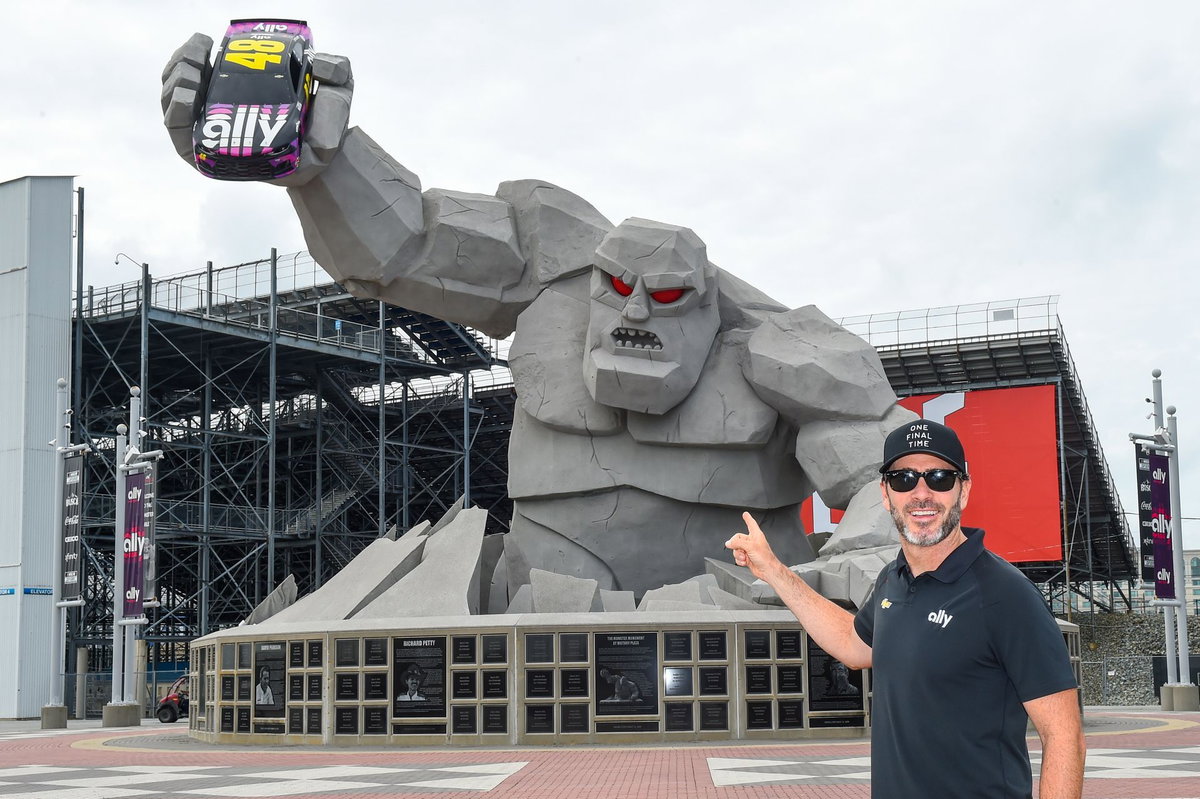
Via World Record Academy / Dover International Speedway
Imago
Via World Record Academy / Dover International Speedway
“Too complicated,” “pointless,” That was the general sentiment echoing across social media the moment NASCAR revealed its bold new All-Star Race overhaul for 2026. After moving the event from the fan-favorite North Wilkesboro Speedway to Dover Motor Speedway, tensions were already high. Then came the revamped format to further add to the fan frustration. Fans weren’t shy about voicing frustration, confusion, and nostalgia for the old-school format. But, amid the noise, Dover’s track president, Mike Tatoian, has finally stepped forward, breaking his silence to explain why the changes were made and why he believes fans will ultimately come around.
Watch What’s Trending Now!
Dover boss defends the new NASCAR All-Star Race format
Track president Mike Tatoian knows fans are frustrated. And he isn’t pretending otherwise. In fact, he says listening to those concerns is exactly why the format was pushed out earlier than usual.
“That [announcing the format] was important for us, and especially what we were hearing from our fans, because they wanted to know what it was. Were they going to see on Friday, Saturday, or Sunday, as it relates to the race weekend or for the All-Star Race.”
Top Stories





With that transparency in mind, NASCAR and Dover built a structure unlike any NASCAR All-Star Race event before it. For 2026, qualifying on May 16 becomes a headliner rather than a warm-up. Drivers will take a full lap at speed before diving into the Mechanix Wear Pit Crew Challenge, where each team performs a single four-tire stop.
The All-Star race format at @MonsterMile is here 🌟
Mike Tatoian, the President and General Manager of Dover, explains what went into developing the race format 👇 pic.twitter.com/p8TavxWmpo
— PRN (@PRNlive) February 26, 2026
There’s no fuel and, more importantly, no margin for error. Teams then race back to the line, with total elapsed time determining both qualifying order and Pit Crew Challenge rankings. The fastest crew earns first choice of pit stall for the main event.
The All-Star Open is gone entirely. Instead, qualifying feeds directly into Segment 1, a 75-lap shootout featuring the full field. Segment 2 mirrors the first. However, there is an inversion of the top 26 finishers, forcing fast cars to claw their way forward.
Finally, the format funnels into a 200-lap showdown featuring 26 drivers. Automatic locks include 2025–2026 race winners, full-time former champions, and a Fan Vote winner. The remaining spots go to drivers with the lowest combined finishes across the first two segments.
It’s bold. It’s different. And according to Tatoian, it’s exactly the kind of shake-up a NASCAR All-Star Race should deliver.
But why hasn’t the prize money changed?
For all the format changes, inversions, eliminations, and new qualifying twists, one thing about the All-Star Race remains untouched: the winner still pockets $1 million. It’s the same seven-figure headline that has defined the event for decades – one race, one night, one massive payout.
And despite being a non-points event, that kind of money still gets drivers fired up. Joey Logano said it best last year: “I’ve raced for championships, but I race for money. What’s wrong with that? It’s a big piece of it. We’re incentivized to go out there and win, and I don’t see what’s wrong with that. So this race presents that opportunity.”
But here’s the flip side: that $1 million hasn’t budged since 2003. In a world where costs have skyrocketed, technology has advanced, and NASCAR has expanded globally, many are asking why the prize money hasn’t kept up. Denny Hamlin didn’t sugarcoat it last year:
“Certainly, the purse could get updated with the times. If you don’t win, it really financially is not a great deal for us to come here. So, it’s a bit challenging as far as that’s concerned.”
And he has a point. Adjusted for inflation, that 2003 million-dollar prize should be worth around $1.7 million today. This means that the drivers are effectively racing for $700,000 less than their counterparts two decades ago. For a sport that’s constantly pushing innovation and entertainment value, the stagnant purse raises eyebrows.
Still, even with the financial questions swirling, the All-Star Race remains one of NASCAR’s most electric nights of the year. And no amount of backlash will stop the drivers from chasing that giant check and a moment of glory.
