
We have already seen how the old DVP rules affected Josh Berry at Kansas in 2024, when his damaged car was towed to the garage and ruled out despite his team believing it could continue. The damage was likely repairable, but needed a little push, as Berry was unable to drive his car back to pit road. Naturally, several drivers had raised their concerns about the rules before it was eventually changed last year in the Cup series.
Watch What’s Trending Now!
The same shift in DVP is now trickling down the lower ranks.
“With points being how they are now, we’ll often hear teams say ‘every point counts,’ and this helps them with that,” NASCAR’s Amanda Ellis said, addressing the changes for the Truck Series and the O’Reilly Auto Parts Series.
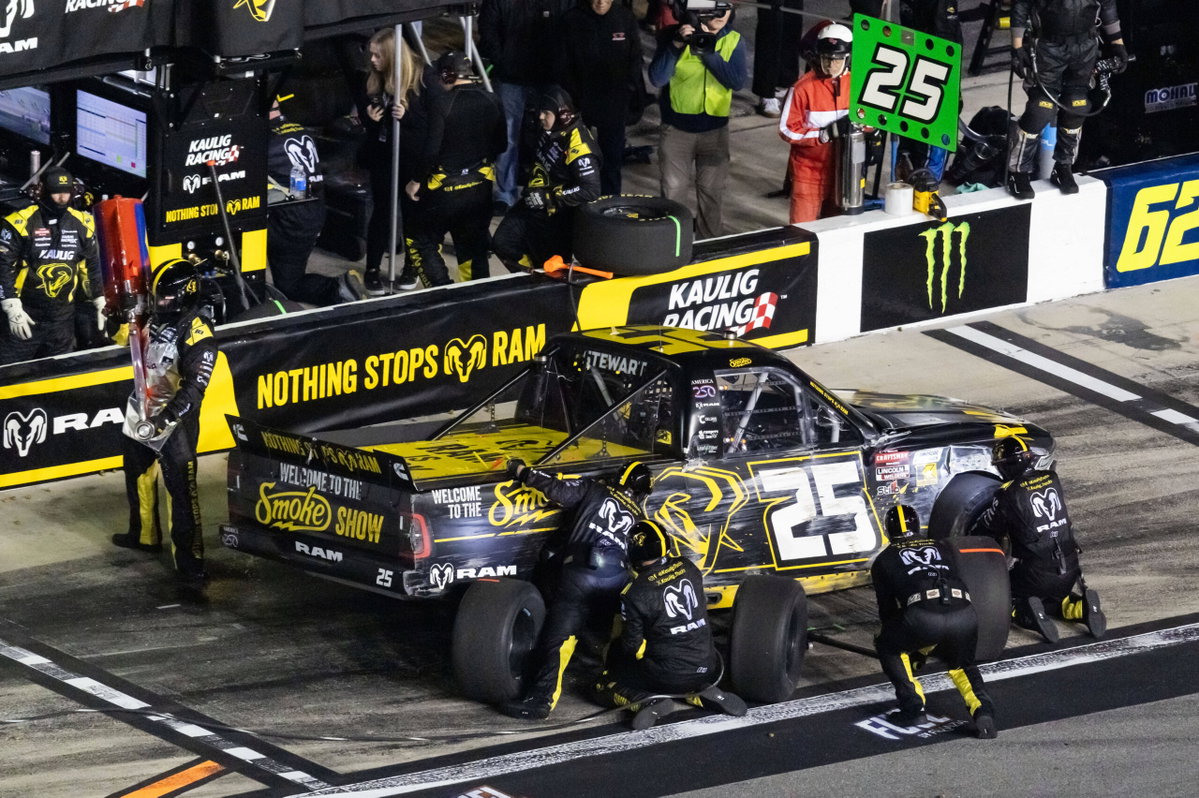
The change basically entails that vehicles that require to be towed to the garage following an incident would now be allowed to repair their cars behind the walls. This worked like clockwork for Cup drivers after the Chase format was reintroduced this year. Clearly, the O’Reilly Series and the Truck Series will be glad, especially now.
Under the previous playoff format, a single regular-season win was enough to push a driver into the postseason, with a safety net that softened the blows of DNFs in other races. But now, with the elimination of the automatic win-and-you ‘re-in playoff entry, every point finish carries weight it simply did not before.
“I think there have been continued conversations from the start of the season, and this felt like a good time to start that change,” Ellis added.
Imago
NASCAR, Motorsport, USA Truck Series – Fresh From Florida 250 Feb 13, 2026 Daytona Beach, Florida, USA The damaged truck of NASCAR Truck Series driver Tony Stewart 25 pits after crashing during the Fresh from Florida 250 at Daytona International Speedway. Daytona Beach Daytona International Speedway Florida USA, EDITORIAL USE ONLY PUBLICATIONxINxGERxSUIxAUTxONLY Copyright: xMarkxJ.xRebilasx 20260213_mjr_su5_069
The further specifics of the policy change include:
- NASCAR would provide a tow truck to the vehicle if it cannot move on the track because of a flat tire or other obstructions on the track.
- The repair time on pit road will be seven minutes (eight at Atlanta).
- Post that time limit, the vehicle would be sent to the garage to finish the repairs.
- Upon returning to the track, the vehicle would have one attempt of three consecutive laps to meet the minimum speed
NASCAR also had one of the stricter penalties in the Truck Series up until this point, where teams had essential practice minutes taken away after failing inspection in consecutive weeks: 10 minutes after a second straight failure, rising to 20 minutes if the failures continued into a third consecutive week. One can only imagine how that must have made single-Truck operations feel.
“What was happening was just an unintended consequence,” Ellis said. ‘The reasoning for those penalties was needed, and some structure and boundaries were put into place in the Truck Series around tech for all good reasons. But what was happening was you would potentially have a rookie driver who was getting practice time cut because of these penalties.”
Now, drawing from how things work in the Cup series again, if a team fails inspection in three consecutive races, it will be moved to the end of the tech line for the next race.
NASCAR’s week of making big decisions
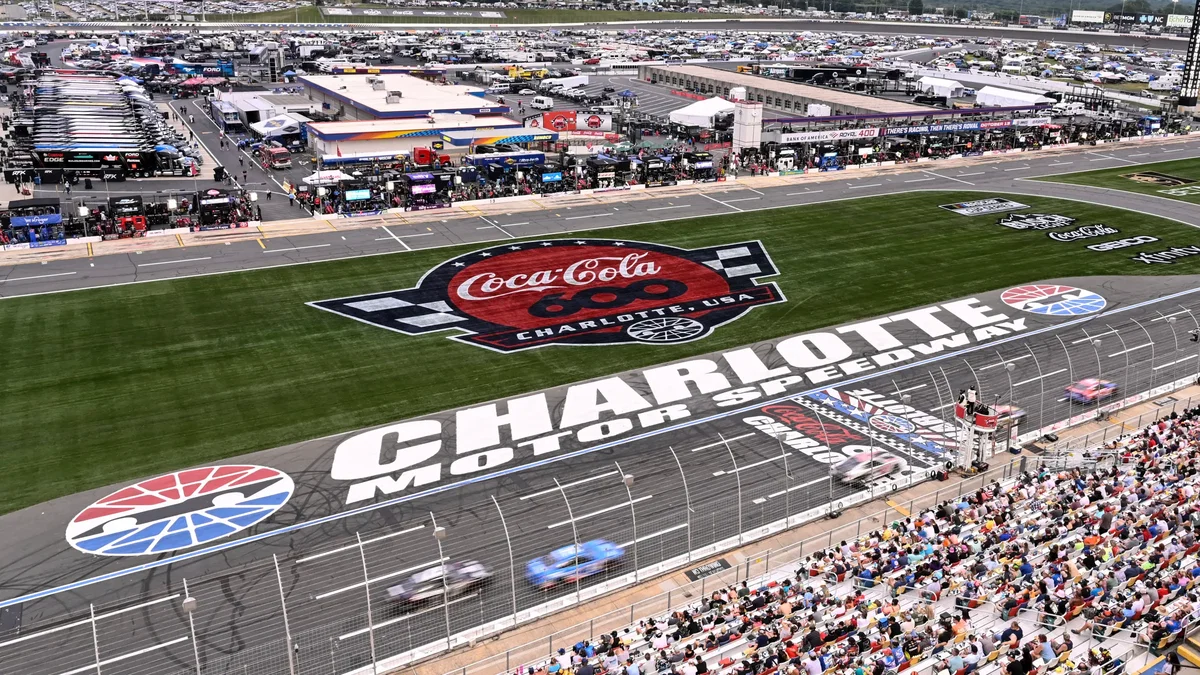
As we approach the Coca-Cola 600 at Charlotte Motor Speedway, NASCAR confirmed it will apply resin to the upper and middle portions of the 1.5-mile track to tackle the racing quality problem that has dogged the venue.
The track’s 24-degree banking, combined with the aerodynamic sensitivity of the Next-Gen car, funnels the field into a narrow preferred line. Drivers chase the same patch of grip lap after lap, which compresses the racing and limits the overtaking opportunities that make a 600-mile event compelling.
Resin is applied to the surface to lay down additional rubber from the tires, broadening the usable grip zone and, in theory, opening up more than one viable racing line.
“The whole point of resin is not exactly to make a new groove or have a more dominant groove. If you look at resins, a little bit different than track bite. So they’re both PJ1,” NASCAR official Mike Forde said on the Hauler Talk podcast.
Yes, there is a distinction as resin and track bite are related compounds from the same PJ1 product family, but resin is the longer-lasting formulation, designed to build a more durable rubber base rather than simply helping immediate grip.
But this is far from an experiment. The track has done this resin treatment before every Coca-Cola 600 since 2022, and the racing during that stretch has mostly been well-received, except for the first year.

Before everyone freaks out about the resin, Charlotte did this in 2022, 2023, 2024, and 2025.


On NASCAR Hauler Talk podcast: -resin in turns in Charlotte, middle/upper lanes -OReilly/trucks to have work area for DVP vehicles, can fix and come back, just as in Cup -No more losing practice time for consecutive first-time tech fails in trucks. Now last in line the next race.
The primary complaint regarding the use of resin came in 2022 when the race at Texas Motor Speedway saw several spins occurring in the resin-treated areas, causing doubts about whether resin actually makes the track grippier or does the opposite. This hasn’t been confirmed yet, as the main purpose of resin contradicts it, and NASCAR and track officials have blamed other reasons for such occurrences.
Since then, resin has been applied to the track on multiple occasions without similar loud criticism emerging. So the fact that resin makes racing artificial, which is voiced by some NASCAR fans, is clearly outweighed by the pros, as NASCAR officials continue using it.