
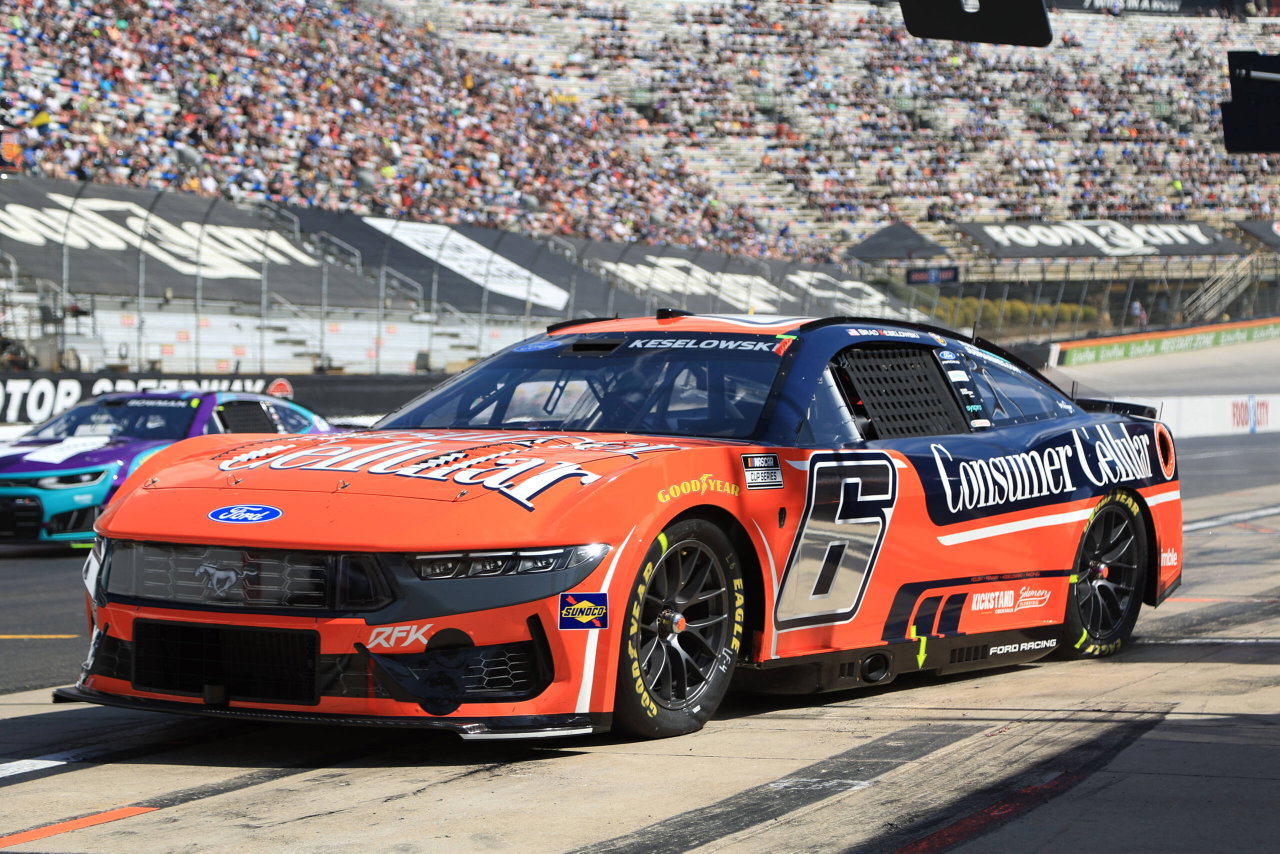
Everyone at Talladega was doing the same thing: waiting. Lap after lap, the field rolled along at the same patient pace, each driver trusting the car in front to blink first. The rhythm was so steady it felt rehearsed, and the race everyone came to see seemed on hold. Nobody pushed, nobody panicked, and almost nobody noticed that RFK drivers up front had begun to treat waiting as a choice rather than a rule. That was about to change.
Watch What’s Trending Now!
“It was so RFK, they got to the front there, they slowed the pack down to run in 60-second laps, 60-second laps, and then all of a sudden they said, ‘Okay, we’re gonna go,’ and they took off and nobody else took off,” Petty said on the latest episode of PRN’s Fast Talk Podcast.
“And then by the time I think everybody else figured out what they were doing, they were gone, man. Yeah, it’s too late. And they came around, and, you know, the whole point of fuel saving and doing all this stuff and running longer is so you spend less time on pit road.”
Kyle Petty was talking about Brad Keselowski, Chris Buescher and Ryan Preece, the three RFK Racing drivers who turned a sleepy opening stage into a private race. In a sport defined by packs, they had found the one move nobody else was ready to answer.
Fuel saving has become a familiar part of superspeedway racing, often forcing drivers to sacrifice speed to stretch their mileage, and much of the field had settled into that routine during the opening stage. The three RFK drivers began the same way.
Then they took control of the tempo. What made the move work was how quickly they committed to it: rather than wait for anyone else to raise the pace, the three Fords accelerated together and pulled away.
The payoff was complete. RFK swept the top three positions in the stage, with Buescher taking the win ahead of Ryan Preece and Brad Keselowski. A coordinated three-car effort had exploited a field that was prioritizing fuel mileage over speed.
Few things are harder at Talladega than breaking away from a pack, which is why teamwork matters so much. Cars running together can push one another through the air, while a driver separated from the pack loses that assistance. By accelerating as a group, RFK’s drivers kept their advantage intact while the rest of the field was left trying to organize a response.
That is where Petty found the irony. Fuel saving is meant to cut the time drivers spend on pit road, yet RFK built such a substantial lead that the team could afford to give some of it back.
“They drove so far away they could have spent an extra lap on pit road filling up with fuel,” Petty said.
That was what made the tactic stand out. The team accepted the cost of running harder in exchange for track position and a cushion that could absorb extra time at the fuel pumps. Instead of following the approach most of the field had adopted, RFK forced its rivals to react to a strategy they had not anticipated.
The early success did not carry through for the entire organization. Buescher and Keselowski were caught in a late multi-car crash, finishing 32nd and 24th, respectively, while Preece ended the race in 13th. Petty acknowledged the drop-off, and credited Buescher in the same breath.
“And what it did now, later, they weren’t as much of a factor, although Chris Buescher is an incredible speedway racer. I believe put himself in position,” Petty said.
Kyle Petty’s real frustration with racing at Talladega
Even so, the move impressed Petty partly because it exposed the limits of the approach the rest of the field was following. He was far less enthusiastic about the slow pace that had made the breakaway possible.
“But what a stroke. I mean, they just drove off and left everybody and made everybody just look like, ‘Well, what are we doing here?’ You know, those three guys are racing, and we’re not racing. We’re just riding around,” he said.
His frustration was not aimed at the team for capitalizing. It was aimed at a racing environment in which conserving fuel can matter more than pushing for an advantage. The veteran has repeatedly voiced his dislike of fuel saving, and Talladega gave him another reason to say so.
“I hate fuel saving. I’ve said it here before, I just hate it,” Petty said.
His objection comes down to what fans expect from superspeedway racing. Talladega is known for tight packs, drafting battles and constant changes in position. When drivers spend long stretches lifting off the throttle to conserve fuel, the racing can become less aggressive than the setting would suggest.
Kyle Petty’s reaction captured both sides of the moment: admiration for a team that made the most of its opportunity, and frustration with the tactics that allowed it to stand out so dramatically. RFK’s move was a masterstroke, but the larger question is whether NASCAR’s current approach to fuel mileage encourages the kind of racing fans want to see.