
USA Today via Reuters
Oct 8, 2023; Concord, North Carolina, USA; Cars crowd into turn four after a restart during the Bank of America Roval 400 at Charlotte Motor Speedway Road Course. Mandatory Credit: Jim Dedmon-USA TODAY Sports
USA Today via Reuters
Oct 8, 2023; Concord, North Carolina, USA; Cars crowd into turn four after a restart during the Bank of America Roval 400 at Charlotte Motor Speedway Road Course. Mandatory Credit: Jim Dedmon-USA TODAY Sports
It’s no secret that NASCAR has been struggling with its short-track package. The lack of passing opportunities, with tire wear being a major factor, combined with cars performing more or less the same has resulted in dwindling numbers in attendance and viewership. Many options that are one mile or less don’t meet the industry standards, forcing the sanctioning body to shift from what was once a staple, not just in the Cup Series but in racing as a whole, to road courses and big tracks.


According to NASCAR Executive VP Ben Kennedy, they have been working with the University of Nebraska to assess the viability of new facilities, which may explain why the organization has slowly pivoted from what was once the foundation of the stock car racing calendar.
Watch What’s Trending Now!
Short-track venues remain interested in hosting NASCAR races
Recently, the Truck Series added three road courses in Lime Rock Park, Watkins Glen, and Charlotte Motor Speedway to its calendar, prompting fans to ask the all-important question, ‘What about short tracks?’
While there are plenty of venues that are one mile or less and are interested in hosting NASCAR races, their eligibility remains a big question mark. If the SRX, ASA, and CARS Tour are anything to go by, NASCAR has a variety of short-track options to choose from. However, NASCAR has outsourced the decision-making process of assessing the viability of these facilities and integrating them into its schedule.
According to NASCAR Executive Vice President Ben Kennedy, their collaboration with the University of Nebraska may have something to do with the lack of short tracks on the calendar.
Responding to a question by Sportsnaut, Kennedy said, “Typically, who we’ll work with is University of Nebraska, some of our internal experts, to assess the viability of the market, the location, but importantly the quality of the facility, as well. A big part of that is what the quality of the facility looks like both outside the track as well as inside the track and in the competition areas. We’ll assess it. We’ll work with University of Nebraska. They’ll give us recommendations. We’ll typically share that with the track. If it makes sense at that point, we’ll continue to take a step forward.”
USA Today via Reuters
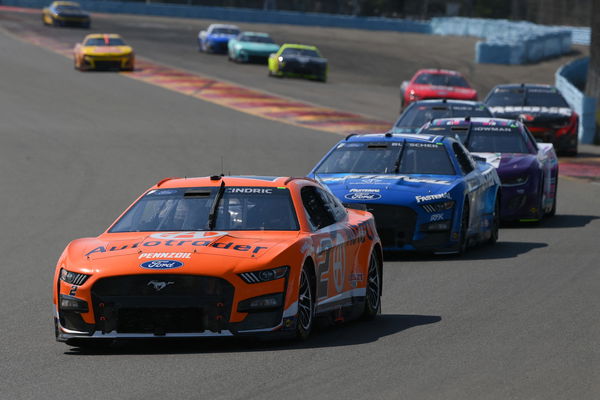
Aug 20, 2023; Watkins Glen, New York, USA; NASCAR Cup Series driver Austin Cindric (2) leads a group of cars during the Go Bowling at The Glen at Watkins Glen International. Mandatory Credit: Rich Barnes-USA TODAY Sports
Short tracks across the country are working hard to meet NASCAR’s demands.
- South Boston Speedway has lobbied for a NASCAR date and recently installed SAFER barriers, while Berlin Raceway in Michigan has upgraded its hospitality and hosted high-profile events.
- Five Flags Speedway, known for the Snowball Derby, has demonstrated its capability to host 20,000 fans.
Yet, these efforts might not be enough to secure a spot on the NASCAR calendar. Potential venues must pay a sanctioning fee or secure a title sponsor. With interest in short-track racing dwindling and sponsorships hard to come by, many tracks are eyeing opportunities like the All-Star Race or the non-points Clash. These events could help generate crucial resources and prove their value as future hosts for short-track races.
Why did NASCAR steer away from short tracks?
NASCAR’s inaugural 1949 season included seven short tracks in its eight-race schedule, all of them dirt tracks, including iconic venues like North Wilkesboro and Martinsville Speedway.
- By 1959, 40 out of 44 races were on tracks a mile or less in length, solidifying short tracks as staples in the NASCAR schedule.
- By 1969, 37 out of 54 races were held on short tracks, reinforcing their status as the ‘Bread & Butter’ of stock car racing. So, what changed?
Later, in the mid-90s, NASCAR began shifting focus towards intermediate tracks, leading the sport away from its short-track roots. North Wilkesboro Speedway, for example, was left abandoned for 26 years, reflecting this change in direction. While short tracks like South Boston Speedway and Hickory Motor Speedway remained important in grassroots racing, they lost prominence in NASCAR’s top series.
Coming to the current scenario, just four years ago, tracks like Martinsville and Bristol Motor Speedway were fan favorites, with exciting racing in the Xfinity and Truck Series.
However, the Next-Gen car has posed challenges for short-track racing. For NASCAR to address these issues, it may need to look at adjustments to the car itself rather than changing the tracks. Short-track racing is a key part of NASCAR’s history, and keeping it in the mix could help preserve the sport’s identity.
Written by

Edited by

Shivali Nathta