
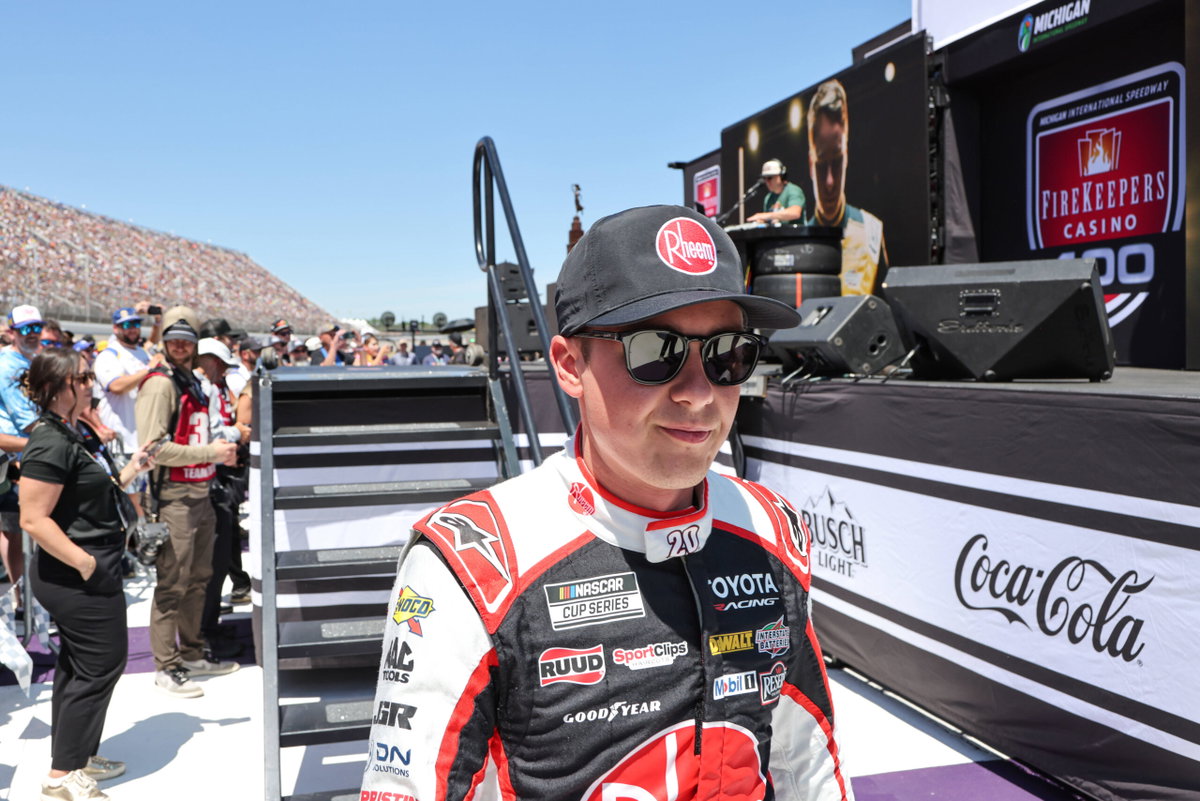
Christopher Bell arrived at Homestead with a championship within reach, but the finale demanded more than the speed that had carried him there. The Joe Gibbs Racing driver was one of only two competitors still in contention for the 2026 Cup Series title, giving the No. 20 team a chance to cap a consistently strong season with NASCAR’s biggest prize. Bell had shown enough pace to believe a strong finish was possible, but a difficult final stage left him searching for answers after the race.
Watch What’s Trending Now!
“I don’t know, that stage three restart at the top row, spun our tires, lost a bunch of positions, and just never really got going good after that. So, thankfully, we had the yellow and got a good restart to end up in the top five. But all in all, I’m really proud of our 20 group, and we’ll try to do one spot better,” Christopher Bell said in a post-race interview.
Bell’s frustration came down to a restart that changed the course of his Homestead race. The Joe Gibbs Racing driver believed his No. 20 Toyota was in a strong position earlier in the afternoon, particularly while the track was hot and slick. He expected the car to become even stronger as temperatures dropped, but the final stage did not unfold as he anticipated.
Bell had shown that the speed was there. He started sixth and finished third in Stage 1, collecting valuable points while Kyle Larson secured the championship with his fourth-place stage finish. Bell also made his presence felt in the second stage. After Tyler Reddick briefly took control on the restart, Bell crossed over his Toyota teammate on Lap 94 and moved into the lead. He eventually finished second in the stage behind Denny Hamlin, giving the No. 20 team another strong result.
The picture changed once the race entered its final stage. Bell had been encouraged by how the car handled in the daytime heat, believing the cooler conditions would give him an opportunity to push harder. However, the restart from the top row proved costly. The No. 20 spun its tires, and Bell surrendered several positions just as the battle for the win began to take shape.
He struggled to regain the same rhythm afterward. A late caution eventually gave him another opportunity to improve his position, and a strong restart helped him climb back into the top five. Bell crossed the finish line fourth, behind Ryan Blaney, Reddick and William Byron. He also ended the afternoon with 46 laps led, evidence that the team had been capable of challenging for the win before the final-stage setback.
There was still a significant consolation for Bell. He finished second in the 2026 championship standings, seven points ahead of Hamlin. Larson had already clinched the title during Stage 1, but Bell’s fourth-place finish in the race helped him preserve his position as the season’s championship runner-up. It was a strong result for a driver who had spent much of the year fighting at the front, even if the finale left him wanting more.
In many ways, Homestead and his final standing reflected a recurring theme in Bell’s 2026 campaign. He had accumulated seven second-place finishes by August, tying Harry Gant’s 1981 record for the most runner-up results in a season without a win. Phoenix, Charlotte, Nashville, Chicagoland, Atlanta, Indianapolis and Iowa all brought opportunities that ended just short of Victory Lane. Bell eventually broke through with a Southern 500 victory at Darlington, but those earlier near misses remained a defining part of his season.
That history made the Homestead result particularly familiar. Bell had the pace to contend, led laps and finished among the top five, but another opportunity to close out a race slipped away. Still, his consistency carried him to second in the championship. As he looks toward 2027, Bell knows the No. 20 team has a competitive foundation. The next step is converting more of those strong performances into wins.