
Being a rookie is special. After years of grinding it out in the development scene and fighting their way up the ladder, drivers have finally made it to NASCAR. They finally have a chance to show the national series what they are made of, and until 2024, these drivers literally stood out. Rookie stripes appeared across the rear bumpers of all cars in the Cup, Xfinity, and Truck Series. But from 2025 onward, NASCAR deemed them “unnecessary.”
Watch What’s Trending Now!
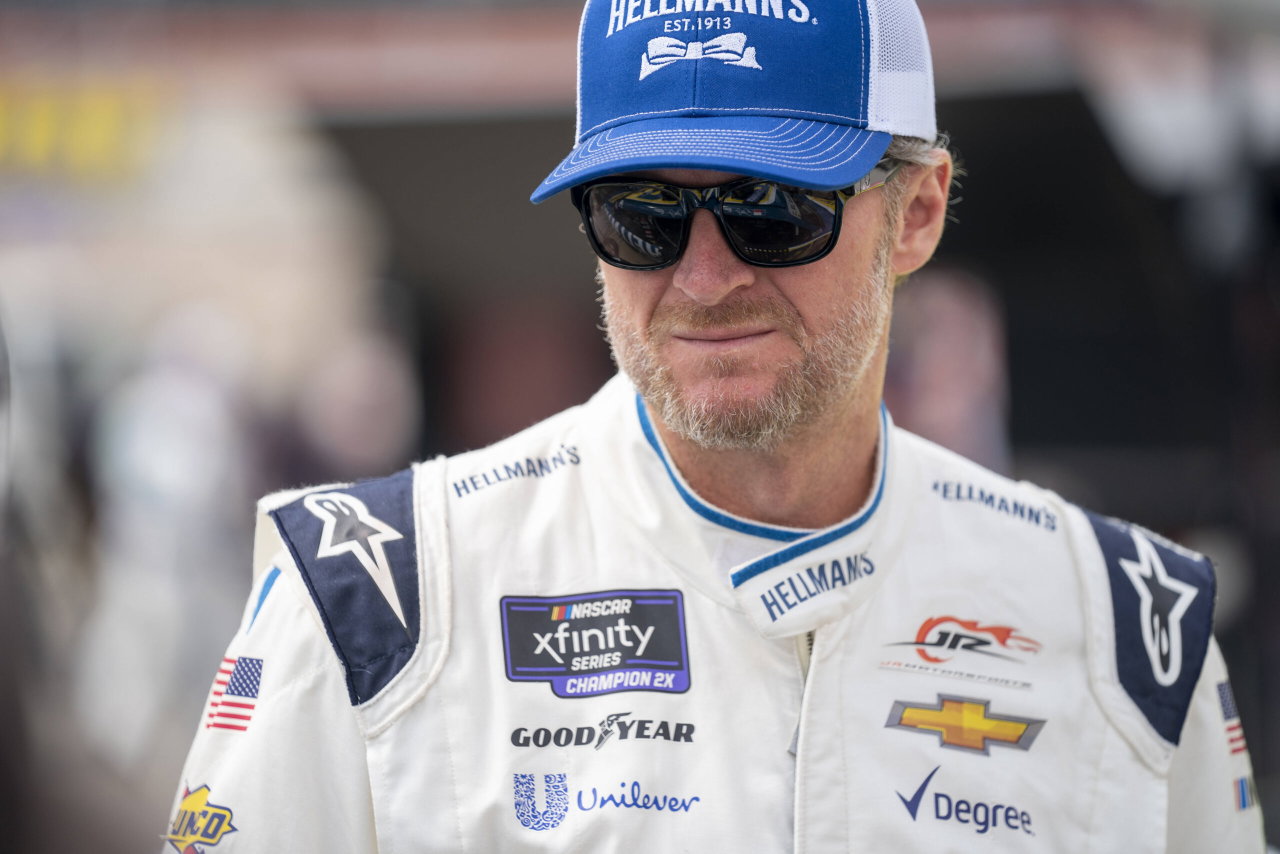
Dale Earnhardt Jr. had rookie stripes on his car when he made his debut in 1999. On a recent episode of The Dale Jr. Download podcast, the Hall of Famer voiced his frustration on its removal.
“I never understood the decision to get rid of that. If we really want Rookie of the Year to matter, let’s put a banner on the windshield. Even if it ain’t a bumper sticker, it’s a banner on the windshield, fine, but something that’s an identifier for that particular driver on the racetrack and for the fan at home. It’s not for, you know, it’s also a little bit for the drivers and competitors on the track.” Dale Jr. said on the Dale Jr. Download podcast.
For decades, those two bright yellow rectangles served as an immediate identifier. The practice dates back at least to the early 1960s. A Greenville, South Carolina, newspaper article covering the 1963 Daytona 500 already referenced yellow bumper strips, confirming the tradition’s deep roots. In NASCAR’s earlier eras, the stripes helped identify rookie drivers in fields that often included a large number of newcomers.
“You would go to Daytona, you would go to some of these races back in the sixties, seventies and eighties, there’d be a s*** ton of f******* rookies out there, especially in the Busch [now O’Reilly] Series, and you needed to know to be careful around them, because a lot of these guys had never run on a big track like this,” he explained.
The sanctioning body, however, felt that drivers racing at the highest level no longer needed any kind of “identifying marks” on their cars. The stripes were originally added as a safety measure, especially for superspeedway races like Daytona and Talladega, where cars run tightly packed at nearly 200 mph, requiring drivers to have complete trust in those around them. For rookies who lacked experience at this level, the stripes served as a warning to more seasoned drivers to give them a little extra room.
As far as NASCAR is concerned, if a driver is out there, they ought to be treated like everyone else. Bubba Wallace, who made his Cup Series debut in 2017, explained on an earlier episode of Bussin with the Boys, that when veterans saw those stripes on the back of someone’s car, they would consciously choose not to work with them. They weren’t getting any help in the draft, regardless of how fast their car was.
Wallace’s comments show that the stripes were more than just a visual marker. They could affect how veterans raced around a rookie while also helping fans easily identify the new drivers in the field. And with the stripes now gone, Dale Jr.’s concerns go beyond what happens on the track and raise another question about how NASCAR recognizes its rookies.
Dale Jr. also addressed his views on the Rookie of the Year award
Just before discussing the stripes, Dale Jr. also shared his thoughts on NASCAR’s updated Rookie of the Year rules. NASCAR now limits Cup Series candidates to no more than 12 prior starts before the season in which they officially apply for the award. The same rule applies to the O’Reilly Series and Craftsman Truck Series.
That rule directly affects Corey Heim. The 2025 Truck Series champion has already made 15 Cup starts while running a part-time schedule for 23XI Racing, picking up multiple victories along the way. With more Cup starts expected in 2026, Heim will not be eligible for Rookie of the Year when he moves into a full-time Cup seat in 2027.
He also did not apply for the award during his partial 2026 schedule. The situation has sparked debate over whether the current system properly recognizes emerging drivers or simply enforces a rigid start limit.
Dale Jr. has a different view. He questioned whether anyone would really object to Heim winning Rookie of the Year based on his performance this season. In his view, the answer is no. Since the award has traditionally been tied to points and race results, Dale Jr. believes strong on-track performance should carry more weight than a strict start limit.
Veteran drivers like Brad Keselowski have recalled choosing extra race starts over preserving their Rookie of the Year eligibility because they valued the additional track time.
However, the questions surrounding Rookie of the Year eligibility point to a larger desire to keep NASCAR’s methods of recognizing new talent both visible and meaningful.