
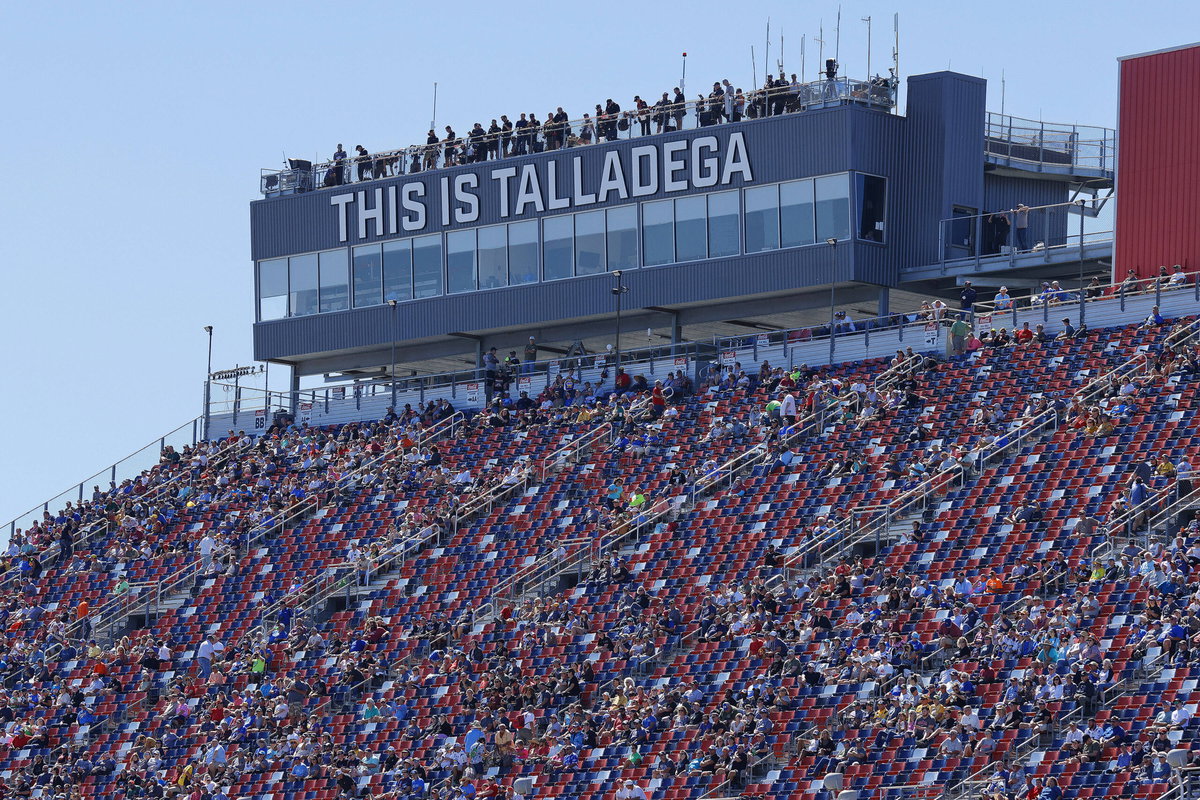
At Talladega Superspeedway, three cars once pulled away from the field because they were willing to do something their rivals were trying to avoid: race.
Watch What’s Trending Now!
Ryan Preece, Brad Keselowski and Chris Buescher pushed together while much of the field saved fuel. Their move helped Buescher win the opening stage of the October 25 YellaWood 500. It also exposed a problem NASCAR has struggled to fix. When saving fuel becomes the sensible way to compete, drivers can spend a race managing their tanks instead of fighting for positions. Former Cup Series crew chief Cole Pearn has had enough of that calculation. His proposed solution is as old-school as it gets.
“Speedway races should be called with one crew chief with a radio, clipboard and a calculator. No engineers, no internet, cell blockers up. No way the racing won’t be improved. Also saves money and time on this stupid ass races.”
Pearn posted those words on X as a suggestion, but there is a reason his opinion carries weight. He won the 2017 Cup Series championship with Martin Truex Jr. at Furniture Row Racing, building a reputation as one of the sport’s sharpest crew chiefs. He understands how teams use information to gain an advantage. Now, he wants NASCAR to take some of that information away.
NASCAR changed the cars, but the teams kept finding reasons to save fuel.
The frustration makes more sense when you look at what NASCAR has already tried. Superspeedway races are supposed to bring the field together, with cars running close enough to draft behind one another and make moves for the lead. Yet that same pack racing creates a tactical problem. One bad decision can leave a driver trapped in traffic, while a well-timed pit stop can change the entire running order.
Fuel saving adds another layer. Drivers lift off the throttle early, coast through parts of the track and try to make their fuel last longer. That can help them avoid an extra pit stop or gain positions when others need fuel. The catch is that everyone trying the same strategy can slow the race down.
NASCAR shortened the final two stages at Talladega in April to reduce the incentive to conserve fuel. It also introduced a revised superspeedway package for Daytona International Speedway in August, reducing engine output from 510 to 465 horsepower and cutting the rear spoiler from seven inches to four. For Talladega, the spoiler was reduced further to 3.5 inches.
The changes were intended to improve passing and give drivers more control over their cars. But the opening stage at Talladega showed why changing the hardware cannot solve every problem. Preece, Keselowski and Buescher found speed by working together, while the larger pack focused on stretching its fuel.
That is where Pearn’s proposal gets interesting. He is not asking NASCAR to give drivers more horsepower or another aerodynamic adjustment. He wants to change the way teams make decisions during the race.
Pearn wants to take the computers out of the conversation
A modern Cup Series crew chief does much more than tell a driver when to pit. Engineers study data, teams monitor fuel use, and specialists help calculate the best strategy. Radio communication keeps that information flowing while the race unfolds. These tools can make the difference between winning and losing, so no team can simply ignore them when their rivals are using every advantage available.
Pearn’s idea would strip that process back to one crew chief, a radio, a clipboard and a calculator. Without engineers or internet access, teams would have less information to work with. Blocking cell signals would go even further, although NASCAR would face obvious practical questions about enforcing such a rule at a major sporting event.
There is another complication. A crew chief does not need a computer to understand that saving fuel might improve a driver’s chances. Even with a clipboard, the same incentives would remain. If conserving fuel helps a team gain track position, removing its engineers will not automatically make running flat out the smarter choice.
Still, Pearn’s point goes beyond the equipment. NASCAR can keep adjusting spoilers, horsepower and stage lengths, but teams will continue exploiting whatever rules offer them an advantage. His proposal challenges the growing amount of information shaping decisions that fans would rather see settled on the track.
The finish at Talladega offered a reminder of what the sport can deliver. Kyle Larson fought back through the field and beat William Byron by 0.041 seconds, earning his first Talladega victory. The closing laps gave fans the battle they came to watch, even after the earlier fuel-saving debate.
Pearn’s overhaul is unlikely to arrive in its literal form. Yet his criticism leaves NASCAR with a difficult question: if teams keep finding reasons not to race at full speed, should the sport keep changing the cars, or start changing the rules that reward them for holding back?