
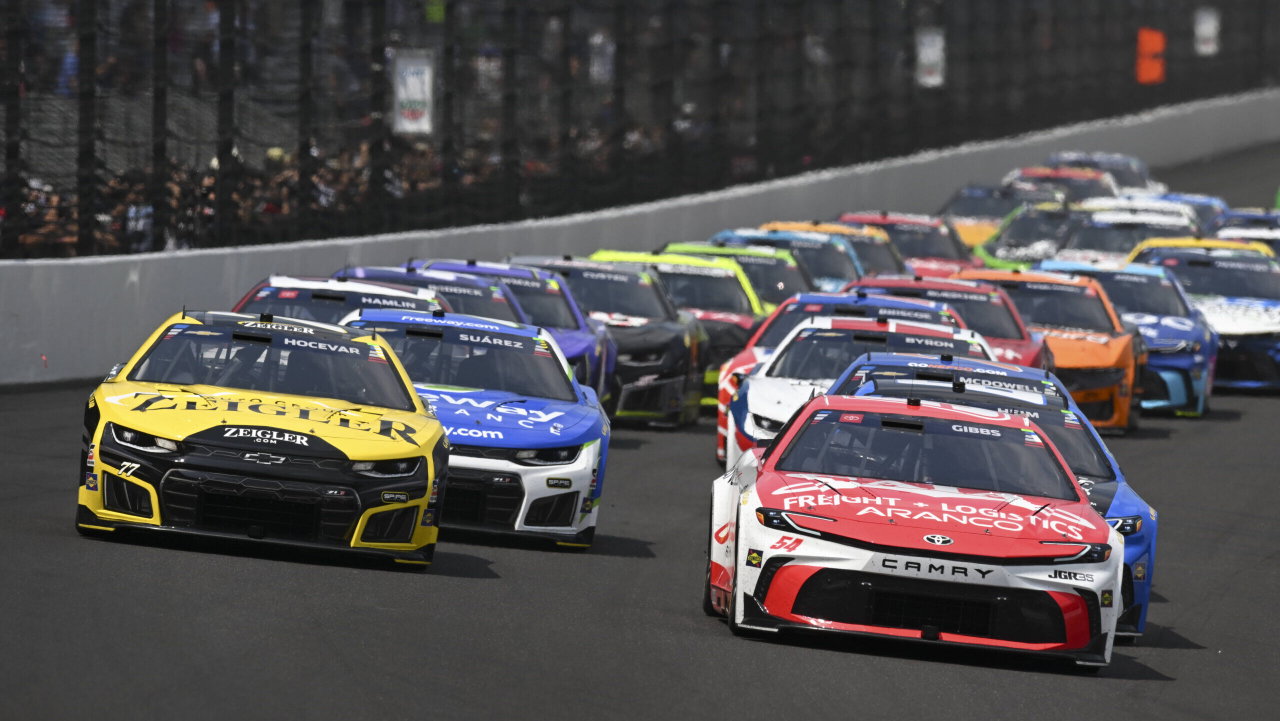
Horsepower is back at the center of the NASCAR conversation. Ahead of the regular-season finale at Daytona International Speedway on August 29, NASCAR announced changes to its superspeedway package, reducing engine output from 510 to 465 horsepower while lowering the rear spoiler from seven inches to four. The sanctioning body believes the tweaks will improve the racing. But at the same time, they’ve also reignited one of the sport’s longest-running debates.
Watch What’s Trending Now!
Former Cup Series driver Jeremy Mayfield feels that every reduction in horsepower is a reminder of how far NASCAR has drifted from the engineering freedom that once defined its golden era. Veteran hauler Darrell Andrews shared a blunt message during a recent conversation with them.
“They’ve got it to where there’s no incentive for these motor tuners, these motor builders to build a faster product,” Andrews said on FIVE WIDE Sports’ YouTube channel.
“I can’t even comprehend how much, if they let us still run big blocks as we did back in the day, right? How much horsepower they’d be getting out of them. Look at the horsepower they get out of these little small blocks, right? I can’t even imagine.”
Mayfield didn’t disagree. Reflecting on decades of rule changes, he argued that NASCAR’s gradual shift toward standardized race cars has taken away much of what once separated manufacturers and teams. From the introduction of the Car of Tomorrow, used in the Cup Series between 2008 and 2012, to the modern Next Gen platform, introduced in 2022, he believes NASCAR has moved toward a package where the sport, rather than the likes of Ford, Toyota, and Chevrolet, controls the performance variables.
Innovation has been the biggest casualty, according to both Mayfield and Andrews, who spent 33 years working as a NASCAR hauler. Engine builders were constantly searching for extra horsepower, while teams closely guarded whatever advantages they discovered.
“We had a lot of cool stuff that year that we’ve worked hard to get,” Mayfield recalled on the same show.
Their frustration comes from just how much NASCAR’s horsepower philosophy has changed over the last decade. Back in 2013 and 2014, Cup Series cars regularly produced between 850 and 900 horsepower. NASCAR then began slowly dialing the engines back in an effort to create closer racing, eventually settling on 670 horsepower for most tracks and 510 horsepower at superspeedways. Now, however, NASCAR appears to be changing direction once again.
The sanctioning body said that a 750-horsepower engine package would be used for Cup Series races on road courses and oval tracks shorter than 1.5 miles starting in 2026. According to reports, engine manufacturers and NASCAR decided that 750 horsepower was the greatest feasible limit without necessitating costly redesigns or raising serious durability issues.
After years of requests for increased power in the Next Gen car from drivers, teams, and fans, the boost was made. NASCAR believes the extra horsepower will make drivers work the throttle more, put a bigger emphasis on tire wear, and create more passing opportunities.
However, those modifications highlight a more important issue for Mayfield. He believes NASCAR reached its competitive peak when teams enjoyed greater engineering freedom.
“Then they let them build the motors. Then we got up to 900 horsepower… that was about ’98, ’99, 2000, 2001, 2002,” Mayfield said. “Man, that was the peak of the sport right there. That’s when it was the best.”
Whether 750 horsepower makes the racing better will only become clear next season. But for Mayfield and Andrews, they simply miss the days when teams and engine builders had more freedom to chase speed on their own