
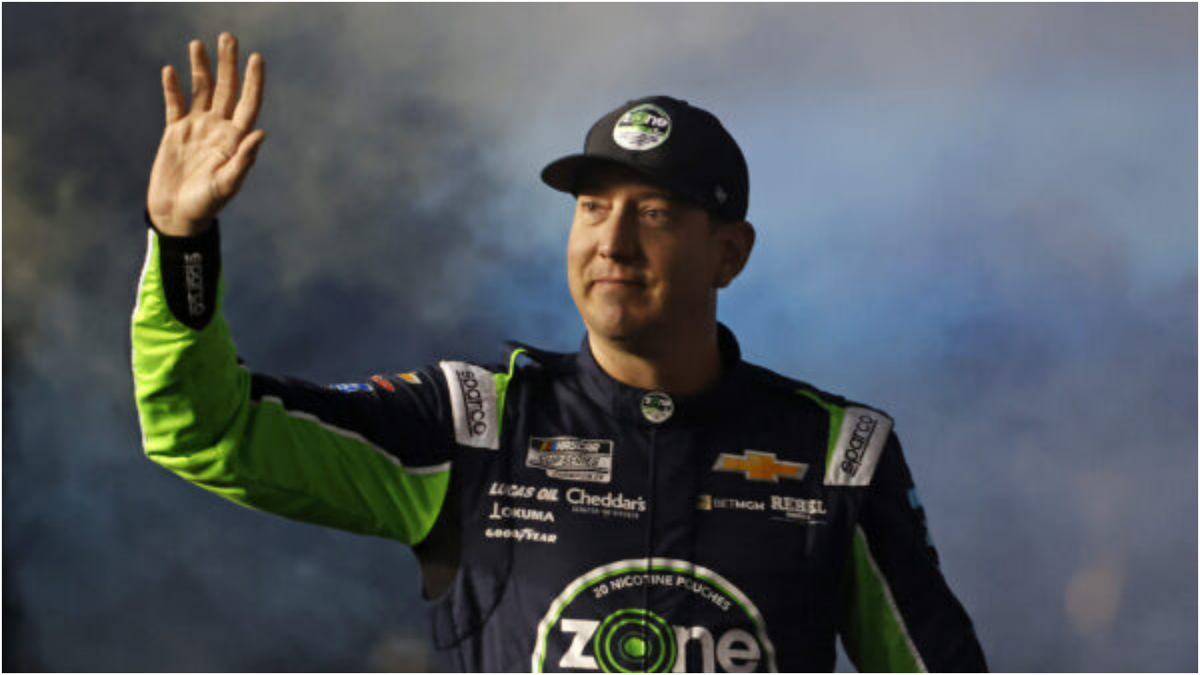
Kyle Busch’s death on May 21, 2026, was a grim reminder of the risks the drivers take to pursue their racing dreams. Yet, for all the risks involved, it is the only time that they truly feel alive. It is a feeling they will chase at all costs, sparking a difficult debate across the motorsports world: why is it so impossible for drivers to just walk away when their health is failing?
Watch What’s Trending Now!
Bubba Wallace recently opened up about that exact mindset. Looking back on the tragedy, Wallace said he completely understands why Busch refused to step away from the track, and in the process, he offered a look into how modern drivers are wired.
“No one’s ever getting in my car unless I’m dead. It’s literally got to be death,” Bubba Wallace told ESPN.
He immediately acknowledged the reality of that stubbornness. “And I’m not bragging about that,” Wallace continued. “It drives my wife up a wall. I don’t care to know what’s wrong with me. If I can still compete, then let’s go.”
Racing is more than just a career for many drivers. They have chased it their whole lives. They spend their early years learning how to operate a car, grow up on racetracks, and ultimately base their whole identity on competing.
Because of this, stepping away is far more difficult than just choosing to retire. Bubba Wallace knew that mindset because he had experienced it himself. Even when his body was telling him otherwise, there have been times in his own career when racing has taken precedence over everything else.
Wallace competed in the 2010 Drive for Diversity Combine in Virginia while battling swine flu in an attempt to secure a NASCAR opportunity. He spent race day isolated inside a motor home until the last possible moment before getting behind the wheel.
Bubba Wallace learned something about himself from the encounter that has stuck with him.
“I honestly can’t even say I was miserable inside the car, because when I got in the car, I felt fine. I did what I needed to do. But before that, it was horrible. For some reason, you feel better in the car.”
This kind of thinking contributes to the explanation of why drivers are able to make choices that are nearly hard to comprehend from the outside. Bubba Wallace has even acknowledged that he has seldom sought medical care and claimed that he hasn’t visited a doctor in about ten years.
For him, feeling capable of competing can outweigh the instinct to step away and recover. And there have been plenty such cases in NASCAR.
In 1984, Ricky Rudd gave one of the most memorable exhibitions of toughness in sports history. Rudd had rib injuries, a concussion, and significant swelling around his eyes during a devastating Busch Clash incident at Daytona. For the Daytona 500, his swollen eyes had to be taped open.
Rudd finished seventh in the Daytona 500 despite the injuries. One week later, still dealing with the effects, he returned to Richmond and won.
Things were different back then, and there was no escaping the brunt of a hard crash or a freak accident. Thanks to modern technology and innovation in safety standard, these risks are mitigated, but not completely.
That instinct did not go away for Bubba Wallace when Kyle Busch passed away. If anything, it showed how closely a driver’s persona can become entwined with racing. For competitors who have spent their entire lives chasing the next lap, the hardest question may not be whether they are willing to race through adversity.
Maybe they don’t know how and when to stop.