
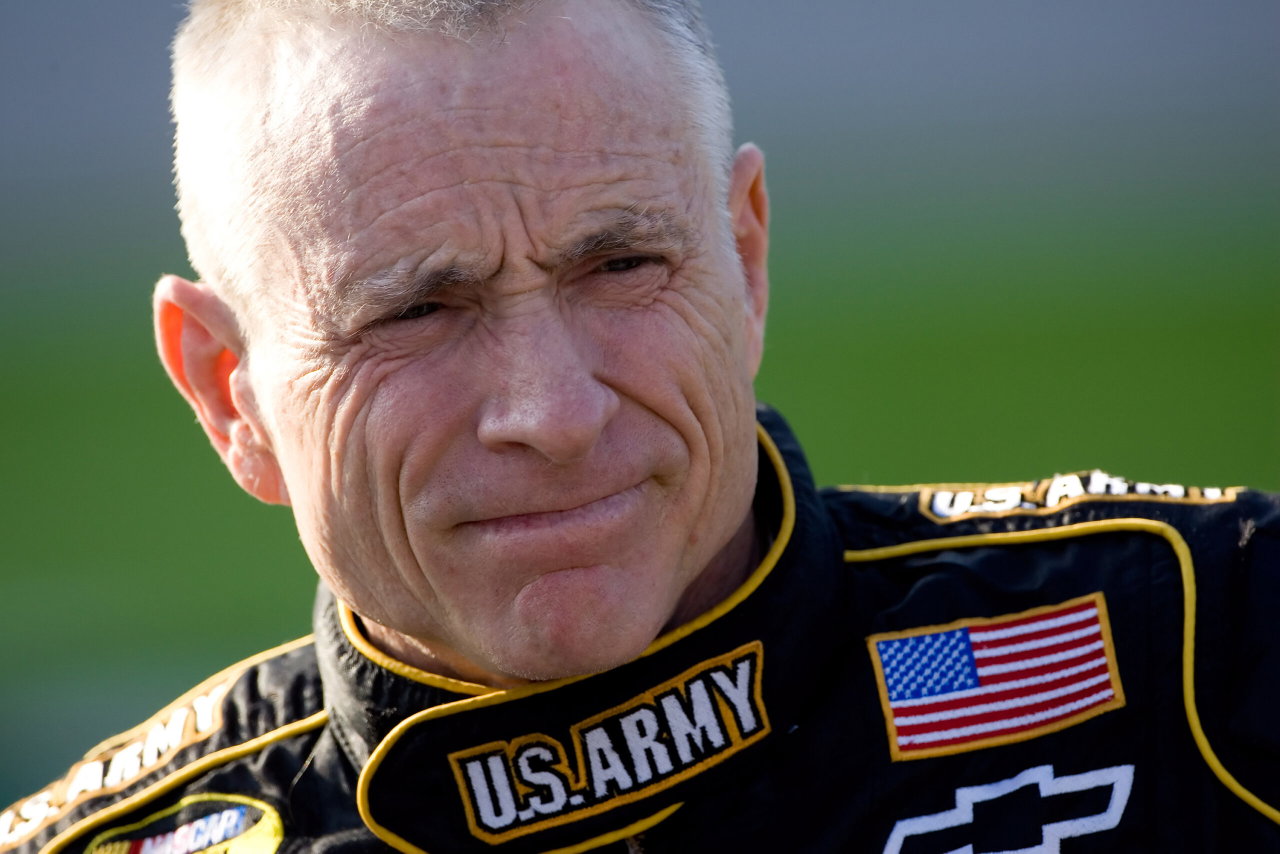
Mark Martin made a jump in 1981 that very few would have dared to. One of the sport’s brightest talents, having dominated the Midwest regional series, he didn’t have the connections to earn a seat with a top NASCAR team. So, he decided to take charge of everything and, at 22, became the owner of his own team. A decision that, quite frankly, isolated Martin from the garage at the time and almost ended his NASCAR career.
Watch What’s Trending Now!
The project failed. Martin had owner Bud Reeder invest in the team, which came to be known simply as the Bud Reeder Team and took part in the 1982 Cup Series. But money from their primary sponsor, Apache Stove, soon stopped coming, and the man Martin hired as his crew chief, Bobby Jones, was an alcoholic. They built a car that was out of spec and recorded DNFs in 12 of 30 races. By the end of the season, the team had gone bankrupt, with Martin exhausting his resources and owing Goodyear thousands of dollars for tires.
“I will tell you that nobody wanted anything to do with me,” Martin admitted in a YouTube feature released by The Scene Vault. “Nobody in NASCAR would touch me.”
He went from being a prodigy to someone who gambled everything away to make a mark in the Cup Series.
For months, Martin’s NASCAR career seemed as though it was spiraling toward an ugly end. Struggling with money, he joined underfunded teams, still hoping to impress, but instead became part of more infamous moments that damaged his reputation.
He drove for JD Stacy in 1983 without a contract and ended up leaving the team rather abruptly after a crash with Dale Earnhardt that took the NASCAR icon out of the race at Martinsville. Later in the podcast, Martin revealed how he fell out with the last team in the garage that had called him.
Morgan-McClure Racing, by Martin’s admission, had a strong superspeedway car that would run only at Daytona and Talladega. But what he drove, a “piece of junk Oldsmobile Cutlass,” made his life miserable. He also clashed heavily with his crew chief, GC Spencer.
“I knew he didn’t know, you know, anything about those race cars. I had no respect for him. He had no respect for me… When the season came to an end after our last race, I didn’t call them back, and they didn’t call me back,” Martin continued in the same feature video.
After 1983, Martin’s phone just stopped ringing. He was turned away from NASCAR, forcing him to return to racing in the Midwest, where he competed in the ASA from 1984 to 1986. But thankfully for him, one thing had not changed: the fact that he was an extraordinary racer.
Teams took notice, and Martin returned to NASCAR in 1987, slowly earning back the reputation he had lost. He became a full-time Cup Series driver for Jack Roush the very next year, and went on to craft a Hall of Fame career.
He turned Roush’s newcomer team into one of the best, becoming its flag-bearer and winning 35 races before stepping away from full-time racing in 2006. He then raced part-time before returning with Hendrick Motorsports in 2009, adding five more wins to his tally.
In 2017, Martin became a Hall of Famer. That makes it all the more mind-boggling that there was a time when he was seen as an outcast. It makes for one of NASCAR’s greatest comeback tales.