
For years, NASCAR’s postseason format has been one of the sport’s biggest sources of frustration, with fans, drivers, crew members, and others repeatedly questioning the elimination-style system. NASCAR eventually responded by reviewing its championship format, leading to the return of the Chase in 2026 and a renewed emphasis on season-long performance. Yet even this version has already raised fresh concerns. After Kyle Larson’s dominant run, Richard Petty warned that the championship could be decided long before the final races.
Watch What’s Trending Now!
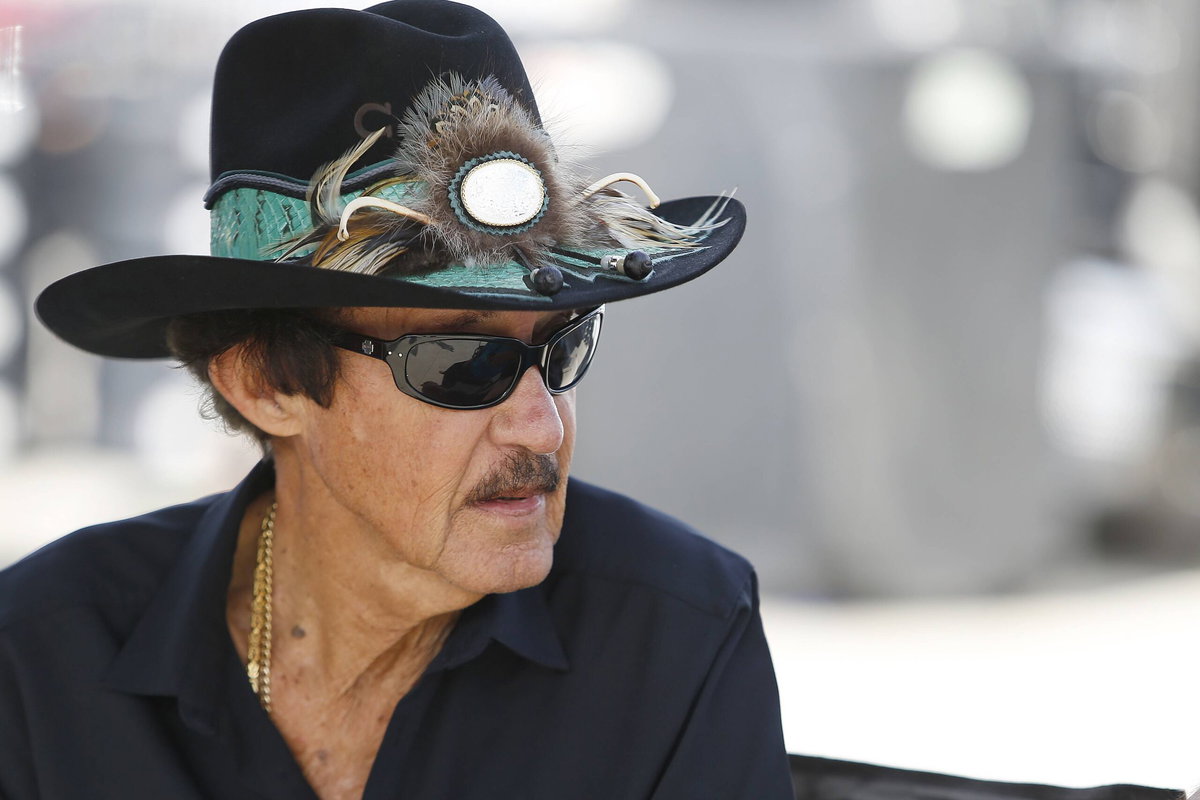
“If you’re not careful, the championship’s going to be over before they get down to the last two or three races. They didn’t design it that way, but as far as I’m concerned, it’s not a good system. Basically, if you run pretty good in Kansas, you’re going to run pretty good in Vegas,” Richard Petty’s assessed.
NASCAR’s return to The Chase in 2026 has largely been welcomed by a garage that wanted a championship format where every race continues to matter. Drivers and teams can no longer afford to treat individual races as steps toward an elimination cutoff. Every point stays relevant throughout the 10-race championship battle.
Yet Petty is looking at the same system and seeing a problem. The seven-time Cup Series champion’s concern is what happens when one driver begins building a significant advantage in a format where those points continue carrying forward.
Right now, Kyle Larson is providing the perfect example. After entering The Chase as the seventh seed, Larson has transformed himself into the driver everyone else is chasing. Four consecutive top-five finishes, including victories at World Wide Technology Raceway and Kansas Speedway, have put the Hendrick Motorsports driver firmly at the center of the championship fight.
Kansas was particularly damaging for Larson’s rivals. The No. 5 Chevrolet led 235 of 267 laps, swept both stages, and collected the fastest-lap bonus on his way to a maximum-point afternoon. His performance was so dominant that Dale Inman put it bluntly: “Larson stunk the show up pretty big.” Petty, meanwhile, had a more complimentary way of describing what he saw.
“He was the class of the field, for sure,” Petty said.
The new format gives Larson plenty of opportunities to turn a strong start into a substantial championship cushion. Every race adds another chance for the leader to extend the gap or for his challengers to claw it back. That makes the upcoming schedule particularly interesting.
The Chase now moves to Las Vegas Motor Speedway before heading to Charlotte Motor Speedway. Both races are 1.5-mile intermediate ovals, giving Larson another pair of opportunities to build on what he discovered at Kansas. Petty’s comment about Kansas and Las Vegas therefore carries plenty of weight.
If a team finds a setup that works exceptionally well on a 1.5-mile track, there is at least the possibility of carrying some of that understanding into the next race. Larson has already demonstrated his strength at Kansas. Las Vegas will now provide another test.
Then comes Charlotte, where the Bank of America 400 returns to the traditional 1.5-mile oval in 2026. For the drivers behind Larson, those races represent an opportunity to close the gap. For Petty, they could potentially make his concern even more relevant.
If Larson continues finishing near the front while his closest challengers struggle to match his points production, the championship gap could become increasingly difficult to erase. That is the irony of Petty’s position.
The same consistency that has made the new format attractive to so many people is what has him questioning whether the championship could become too predictable.
There is still plenty of racing left, with Talladega, Martinsville, Homestead-Miami and Phoenix awaiting the Chase field after Charlotte. Any of those races can dramatically alter the standings.
But Petty’s argument is that Larson does not necessarily need to dominate all of them. He simply needs to keep running well. And while much of NASCAR appears pleased to see a Chase where consistency matters, Petty is refusing to simply celebrate the change. He is looking ahead and asking whether one driver’s consistency can eventually become too much of a good thing.