
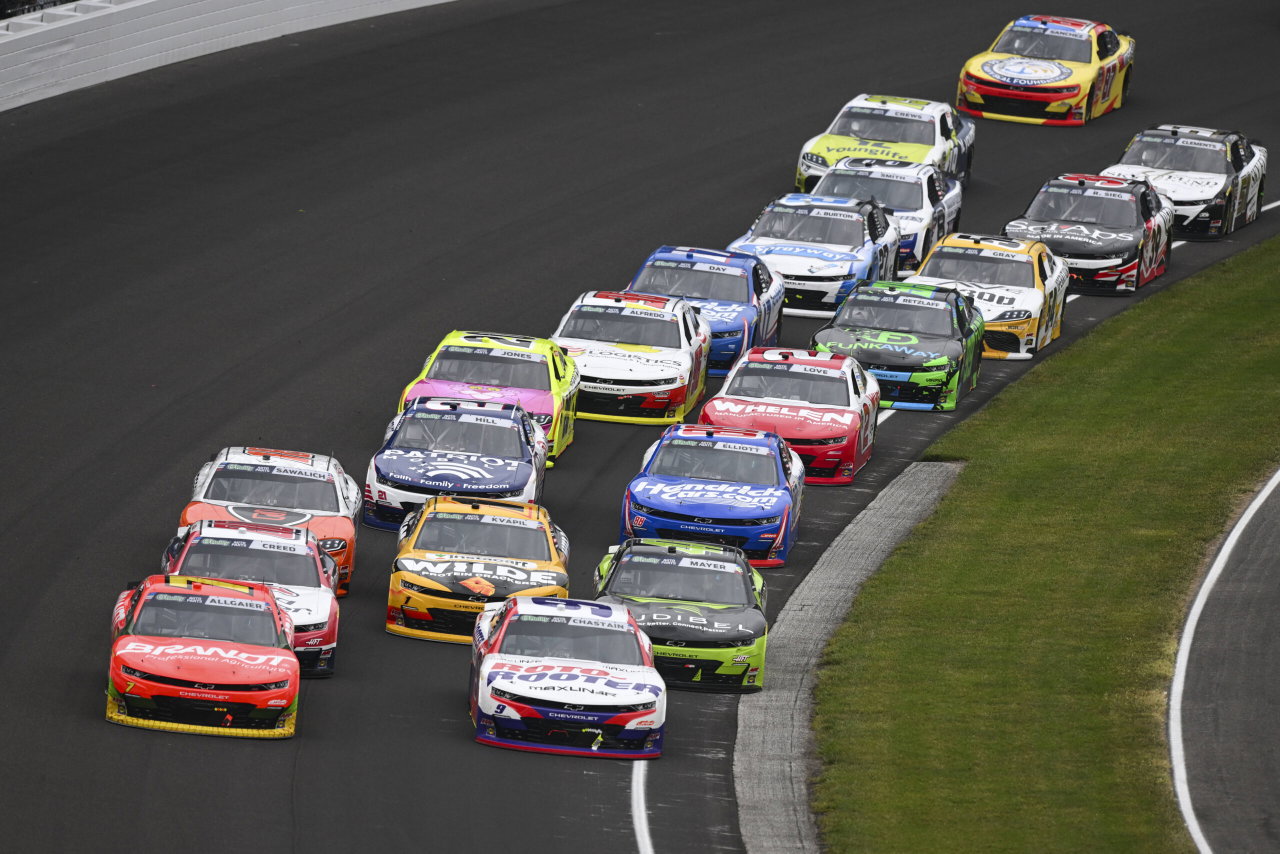
One NASCAR race drew roughly 1.5 million viewers. The next reached 2.6 million. The difference has raised an uncomfortable question for a sport trying to grow its audience during the NFL-heavy fall: how much does it matter where fans can watch? With the Cup Series championship approaching, NASCAR cannot afford to overlook either the money attached to its media deals or the viewers it could be missing.
Watch What’s Trending Now!
Former FOX broadcaster Kenny Wallace has been weighing that trade-off, using the contrasting audience figures to question whether NASCAR is getting the balance right. His argument puts a difficult choice in front of the sport: protect the financial value of streaming rights or prioritize making races accessible to a wider audience. His latest comments explain why neither option comes without a cost.
“The week before the race was on streaming—hard to find; 1.5 million views—not good, not good. Everybody talks about it,” Wallace said in a video he posted on X. “A week later, Talladega, it’s on rabbit ears; it’s on NBC free TV. The world gets it; 2.6 million views. Over one more million people watched. Don’t say that lightly; say it to yourself one more time. Over one more million people watched; the word “more.” A week later, one million more people watched! I said that three times.
“So what are we learning here? Here’s the question: should NASCAR take the money for live streaming and not worry about a million more people watching, or should they take less money and a million more people watch?”
Talladega averaged 2.581 million viewers on NBC, according to published ratings reported by Sports Business Journal. That was slightly above the 2.556 million who watched the corresponding race in 2025. Wallace’s comparison, however, should not be treated as proof that streaming alone caused the difference. The broadcasts involved different races and platforms, and the figures he cited are not necessarily a like-for-like measurement.
Still, the underlying question has merit. NASCAR’s seven-year media-rights agreements, covering 2025 through 2031, brought Amazon’s Prime Video and TNT Sports into the Cup Series alongside FOX and NBC. The deals were widely reported to be worth approximately $7.7 billion, although NASCAR did not disclose the official financial terms.
The schedule divides the 38-event Cup calendar among the four partners. FOX and NBC each carry 14 races, while Prime Video and TNT Sports split 10 midseason events. Prime Video exclusively streams five races, whereas TNT Sports’ races are also available on TNT and through streaming. NBC’s portion includes the final 14 events, covering the post-season and championship race.
For NASCAR, the financial argument for streaming is straightforward. Media-rights revenue provides a substantial, predictable income stream, and giving up a lucrative agreement to expand access would leave the sport needing to make up the difference elsewhere. More viewers do not automatically produce enough additional sponsorship, merchandise, or ticket revenue to replace lost rights fees.
Wallace illustrated the dilemma with a hypothetical offer: take $1 billion under one arrangement or accept $500 million less to put races on free television. Those figures were an example, not actual offers made to NASCAR. His point was to make the financial trade-off tangible. If the difference were that large, how much audience growth would justify walking away from the money?
Streaming has also shown that it can deliver a sizeable audience. Prime Video averaged 2.29 million viewers across its five-race Cup Series package in 2026, according to Nielsen’s Big Data + Panel measurement. That was a six percent increase from its first season. The result complicates any argument that moving races online necessarily means losing viewers, even as the service requires fans to have access to a paid subscription.
Free broadcast television offers a different advantage: discovery. A viewer can switch on NBC without subscribing to another service, search for an event, or remember which platform carries the race. That matters for casual fans who might not follow NASCAR closely but could become regular viewers after stumbling across a compelling finish or a championship battle.
The potential return extends beyond a single broadcast. New viewers can become followers of particular drivers, buy merchandise, attend races, and give sponsors access to customers they might not otherwise reach. Those gains are difficult to quantify, and there is no guarantee that a larger television audience will translate into long-term fan growth. But accessibility gives NASCAR more opportunities to introduce itself to people outside its established audience.
The NFL makes that opportunity particularly important in the fall. NASCAR’s championship races arrive when football commands enormous attention, leaving little room for the sport to lose casual viewers through unnecessary barriers. At the same time, the financial demands of running a national racing series mean NASCAR cannot ignore the value of a strong media-rights deal.
Neither platform is a guaranteed solution. Prime Video’s audience growth suggests streaming can work, while Talladega’s broadcast numbers underline the continuing value of free television. The sport’s challenge is to determine how each distribution option contributes to both revenue and long-term audience development.
That brings Wallace’s question back to the center of the debate. Should NASCAR prioritize the largest guaranteed payment, or accept less money to put more races in front of more people? With the championship at stake and the NFL competing for the same Sunday audience, the answer will shape more than a television schedule. It will help determine how easily the next generation of fans can find NASCAR.