
With two races remaining in the 2026 NASCAR Cup Series regular season, the Chase cutline has never felt more like a razor’s edge. After Joey Logano’s victory in the Cook Out 400 at Richmond on August 15, the top 16 points are set to advance under the revised format that rewards consistent regular-season performance.
Watch What’s Trending Now!
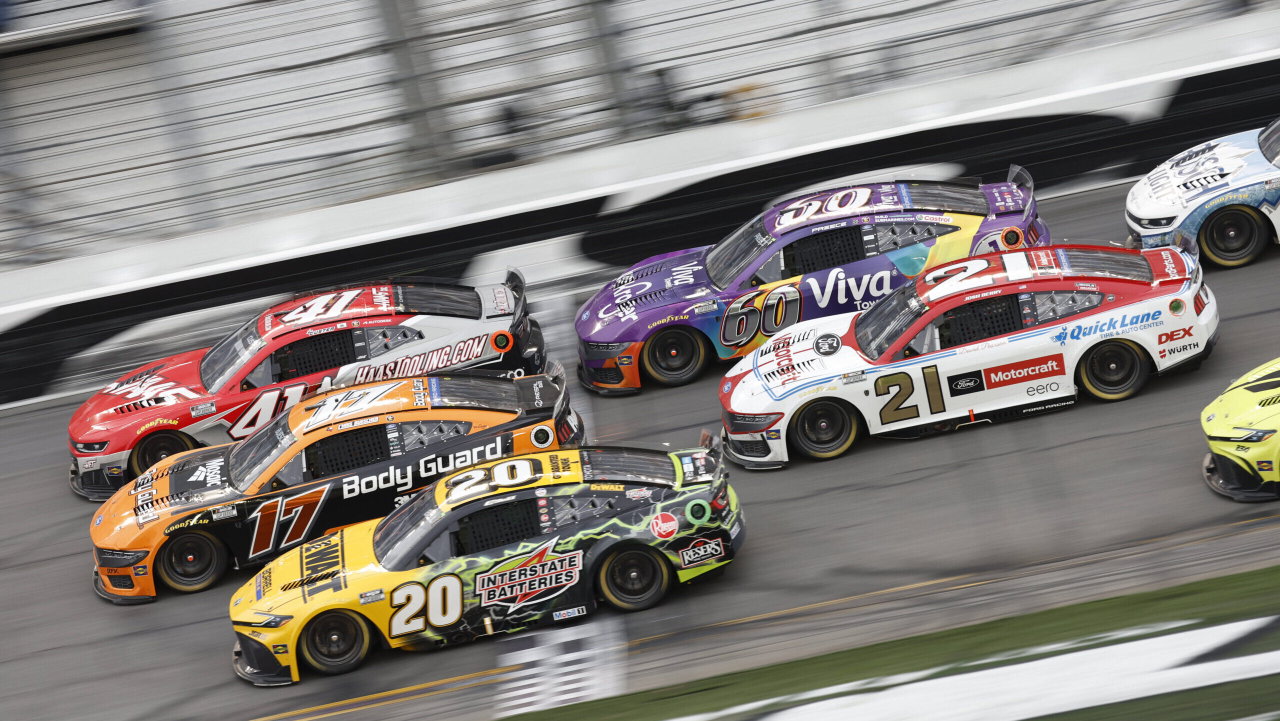
New Hampshire Motor Speedway will be hosting the Dollar Tree 301 on August 23, followed six days later by the Coke Zero Sugar 400 at Daytona International Speedway on August 29. This will be the last two opportunities for drivers to secure one of the 16th places in NASCAR’s newly reworked Chase.
Loudon’s “magic mile” rewards precision, tire management and short-track craft on a flat abrasive surface. In contrast, Daytona remains the ultimate high-risk and high-reward superspeedway. For the drivers clustered around the cutoff, these two very different tracks will decide who races for a championship and who watches from the sidelines.
Current standings after Richmond show Bubba Wallace in 14th position with 587 points, Austin Cindric in 15th position with 574 points, and Shane van Gisbergen holding the final transfer spot in 16th with 567 points. Ryan Preece, followed by Ross Chastain, Brad Keselowski and Erik Jones, are standing at position 17,18,19 and 20, respectively.
The gap from 16th to 17th has widened, but history shows that superspeedway chaos and short-track surprises can still rewrite the picture.
The five drivers that are on life support
Shane van Gisbergen: The very first question that arises when we see our beloved Kiwi at 16th position is, can the road course master survive the two high-risk ovals? The New Zealander has rewritten the road-course chapter of NASCAR history. Multiple wins in 2025 and 2026, including dominant victories at Watkins Glen and Sonoma, that brought him back inside the top 16 earlier this year, have established him as the premier road-course specialist of the Next-Gen era.
These historic victories have kept his season alive. They also disguise the central problem facing Trackhouse Racing No.97 Chevrolet, that the final two races are not road courses. It’s true that SVG’s oval development has improved; he went from a 24.8 average on ovals during his initial transition phase to 20.9 in 2026 through 14 oval starts.
He scored his best fifth-place finishes on traditional and concrete ovals like North Wilkesboro Speedway and Nashville Superspeedway. He also got his first career national series oval pole position in the truck series at Richmond. However, this improvement still remains incomplete.
The Loudon is not a superspeedway, but it is also not a traditional high-speed intermediate. The corners are flat, the straightaways are long, and the track races more like a short track than its one-mile length initially suggests. A quiet, points-scoring run at Loudon followed by survival and stage points at Daytona would likely lock him in. But a DNF could easily drop him in to the danger zone.
Austin Cindric: Cindric is entering New Hampshire with genuine momentum. His third-place finish at Richmond, complete with strong stage results, represents his best outing of the season and moved him past SVG into 15th position while expanding over the cutline.
The 2022 Daytona 500 champion has always excelled at superspeedways and has the backing of Team Penske’s engineering depth. This combination gives him a realistic path to bank points or even contend at Daytona.
However, New Hampshire has historically been an uncomfortable venue for him. He hasn’t managed a single top 10 finish at New Hampshire in his last four visits, and that’s a big concern. And so far he’s been inconsistent with his results, so he needs to be on his toes this weekend.
If Cindric can avoid trouble and score a top 15 at New Hampshire, his Richmond surplus Daytona potential should see him through. Another mid-pack or worse result, combined with a strong day from Preece, would tighten the race again.
Bubba Wallace: Wallace holds the most comfortable question of the bubble group, yet is comfortable as a relative when Daytona looms. The 23XI Racing driver has shown competitive speed at times in 2026 and carries a legitimate top-10 car on many weekends. He finished four of the five opening races of the season in top 10.
His challenge is converting those floor points at tracks where races can be decided by the incidents rather than long-run speed. New Hampshire should suit Wallace. His 2022 third-place finish at New Hampshire remains a career highlight at the track and proves he can extract results on the magic mile when the No.23 is dialed in. But one poorly timed caution, a stage point drought, or involvement in a Daytona wreck could erase much of the 70-point advantage in a single day.
Wallace’s weaknesses include occasional execution, vulnerability to the random nature of pack racing and the fact that a single bad stage incident could drop him into the danger zone. Wallace’s path is the most straightforward of the five. He just has to stay clean. His dreams of running for championship have shattered at Daytona, so he would like to seal his fate at Loudon.
Ryan Preece: Preece is the first driver outside the Chase field and the most possible immediate threat to Cindric. Yet his mathematical situation is more difficult than a simple one-good-driver. A total of 12 top-10 finishes so far this season, but he needs more than just decent results at New Hampshire and Daytona.
Preece has shown flashes of brilliance, he did bag the win at Clash at Bowman Gray. Yet, he’s never produced race winning speed in points races. Given the 50 points gap between him and SVG, he would need top 5 finishes and hope that SVG had a bad outing.
Daytona creates a different opportunity. Preece does not need to be the fastest car. He needs to remain in a position to benefit if the race breaks his way; a victory would be dream finish, but even a top five finish could generate a substantial point swing if the drivers on the bubble are caught in a crash.
Brad Keselowski: Keselowski is the most experienced driver in the group and arguably the best equipped to understand the strategic demands of both remaining races. The 2012 champion owns two wins and a strong historical record at New Hampshire, with multiple top 10s across a long career.
Yet so far this season, the veteran RFK driver has been firing blanks. With two top 5 finishes in first six races, including the runner-up result at Darlington, it felt the No. 6 team could be a contender. But with two races to go, Keselowski is staring at a 78 point difference between him and 16th place driver.
At this point, he needs the driver above him to suffer a DNF, and if possible he needs a win. What’s concerning is that in the last eleven races, Keselowski has bagged only two top 10 finishes, and that is pretty grim. Plus his last two races at Loudon has ended with finishes outside of top 20. So, he’s got a tall task ahead of him, and he will be hoping for a lucky race to save his hopes for making it into the Chase.
What about the drivers buried below the bubble?
Beyond Preece and Keselowski, Ross Chastain and Erik Jones are outside the threat; Chastain’s Trackhouse teammate status with SVG creates an interesting intra-team dynamic. A strong run at either track, particularly if he can capitalize on drafting partners, keeps him in the race. Jones, on the other hand can come up with a surprise win and make things interesting.
Other drivers immediately outside the film may need to know the sequence of failure ahead. The 2026 format makes that distinction crucial since victory does not automatically guarantee a place, and an outsider cannot simply rely on when a scenario occurs anymore. The victory must also translate into enough regular season points to place a driver inside the Top 16.
That change raises the value of consistency: a driver sitting 17th and 18th can still mount a realistic challenge through 2 excellent finishes; a driver further down the standings likely needs an extraordinary Daytona result and extensive help from the drivers already above the cut line.
So what exactly is the final verdict and prediction?
The most likely to lock in is Bubba Wallace. He is the strongest candidate to remain in the field. He is consistent. Top 10 count and current position give him the best protection against one difficult race. He does not need to chase a victory. He needs to avoid turning a manageable point advantage into a crisis.
After him comes Austin Cindric. Cindric is the next most likely to qualify, but his status depends heavily on New Hampshire. His Richmond podium indicates that the number two team can provide a competitive result at the right moment, and his superspeedway experience makes him a credible Daytona survivor.
Then comes SVG. It’s safe to say that he can be favoured to stay in the final races. Do not match his signature discipline, but his buffer is substantial enough to clean finishes, maybe sufficient. His ability to adapt on ovals is what has helped him stay ahead of the curve, and just above the cutline.
Preece remains the most dangerous outsider and could close a gap with a strong finish at New Hampshire, but overtaking both Cindric and SVG in two races is a tough ask. Keselowski’s larger deficit and recent form make a late charge improbable without extraordinary help from the results of those ahead.
Daytona will deliver its usual drama, but the cut-line panic of August is more likely to resolve with the status quo than a complete rewrite. With two races remaining for five drivers or perhaps more, we might witness the most dramatic races of the 2026 season.