
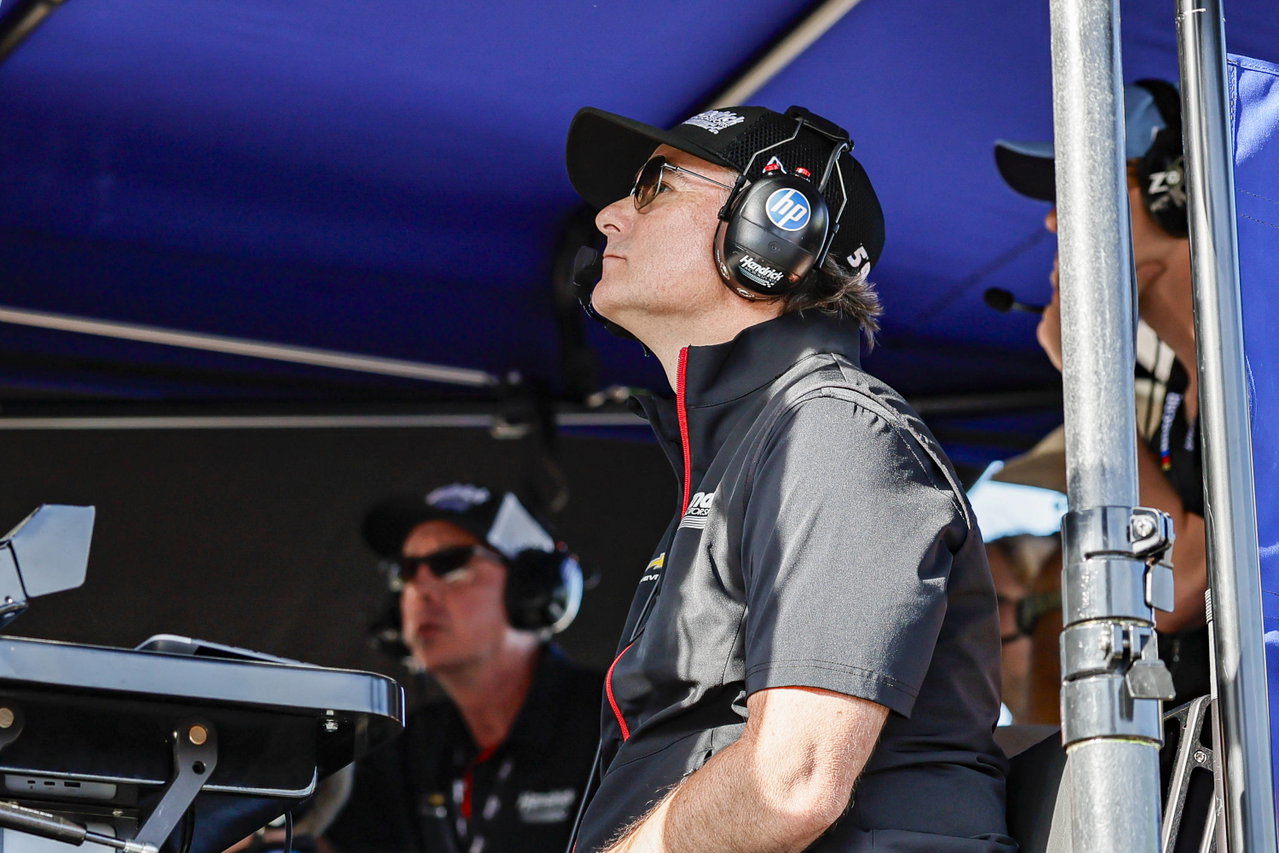
When someone says Hendrick Motorsports, Jeff Gordon’s name automatically comes to mind. A four-time Cup Series champion with Rick Hendrick and a 93-time winner at NASCAR’s highest level for the organization, he is one of the few legends to spend his entire Cup Series career with a single outfit. When outsiders came calling in 1999 and desperately pursued Gordon, HMS responded by handing him a deal few athletes can boast of.
Watch What’s Trending Now!
In a recent episode of the Dale Jr. Download, Gordon pulled the curtain on the lifetime contract that she signed with Hendrick Motorsports.
“I think people would be shocked if they saw what my driver contract looked like. Like everybody, there were no guarantees, right? We work in this world of guarantees, gotta have this, gotta have that. I had no guarantees. If the car did well on track, if the car did well with sponsorship, then we… you participated. I did well, I participated in that, and luckily that was the run that we went on until I retired, honestly.” Gordon said on the Dale Jr. Download podcast.
A lifetime contract sounds amazing on paper. However, for Gordon, it was more of an “eat what you kill” type of deal. He wasn’t simply going to earn millions for doing nothing. He had to win races, record top-five finishes, and capture championships to secure a massive payout. When he signed the deal, he was a three-time Cup Series champion. He went on to win one more in 2001, his first under the new, stunning agreement. The lifetime contract also paved the way into ownership for Gordon.
HMS wanted to field a fourth Cup Series car to get then-rising star Jimmie Johnson a seat, and Gordon pushed for both. When Hendrick asked whether he was prepared to take on real responsibility, he agreed to place the No. 48 under the same limited liability company as his No. 24, accepting accountability for the entire operation.
Looking back, Gordon admitted that taking on that level of risk was “probably dumb for me to say now,” given how difficult it is to secure corporate sponsors and turn a profit in modern racing. Still, the lifetime deal and its performance-based structure reflect the trust between Gordon and Hendrick, a partnership that has since evolved into Gordon helping run the company today.
He knew he wanted to be Rick Hendrick’s driver forever. And the boss agreed wholeheartedly.
“And I said, ‘Well, man, that was easy.’ Of course, what came along with the lifetime deal was trying to structure, you know, how do you do a lifetime deal with,” Gordon continued in the podcast while recalling the old memories.
When Gordon first signed the deal, he became a silent executive within the organization. The real test came when he began learning the business side of the sport firsthand through the 24/48 LLC, which also fielded Jimmie Johnson’s car. Gordon was responsible for making the operation succeed, and it did. Johnson went on to win seven Cup Series championships, establishing himself as one of the most dominant drivers in the sport’s history. It also set the stage for Gordon to eventually become Rick Hendrick’s successor.
Gordon retired from full-time racing in 2015, but instead of immediately running HMS, he entered broadcasting while also serving as an advisor to the team. He mentored young drivers like William Byron, who went on to win multiple Cup Series races and emerge as a genuine title contender. In 2022, the path he began in 1999 with Hendrick, who wanted him around for the long term, came full circle when he became Vice Chairman of HMS, a position he still holds today.
Gordon may have moved into the executive side of Hendrick Motorsports, but the competitive fire that got him that lifetime deal in the first place never really went away. More than a decade after his final NASCAR win, he got another chance to prove it behind the wheel.
Gordon once again extended his winning legacy after IROC
Jeff Gordon added another chapter to his storied career on August 22, 2026, sweeping both 10-lap heats of the revived International Race of Champions event on the 1.7-mile street course around the National Mall in Washington, D.C. The victory was his first individual race win since his final Cup Series triumph at Martinsville in 2015 and opened the Freedom 250 Grand Prix weekend.
Gordon drove a silver No. 24 Firebird — every driver competing drove identical cars with different numbers — owned by Rick Hendrick. Starting near the back of an eight-car field that included Kurt Busch, Helio Castroneves, Bobby Labonte, Bill Elliott, Rusty Wallace, Tony Kanaan, and Tommy Kendall, he charged forward to win both segments. In the inverted second race, he started last and still prevailed, holding off a late charge from Kurt.
“It’s so special. Of course, I ran the IROC series back in the day, but I’ve run a few of these with Ray [Evernham] and Rob Kauffman. Big thanks to them. They put a lot of effort into this series and these cars. Can’t thank them enough. I had a sponsor — HendrickCars — thank you, HendrickCars.com,” Gordon said in a post-race interview.
Hendrick had reportedly put some pressure on Gordon after his earlier exhibition races, wanting his car back with a trophy. Gordon returned it with two race wins and the championship. At 55 and years removed from full-time racing, he showed that his competitive edge is still there, even on a street circuit he had never raced before.