
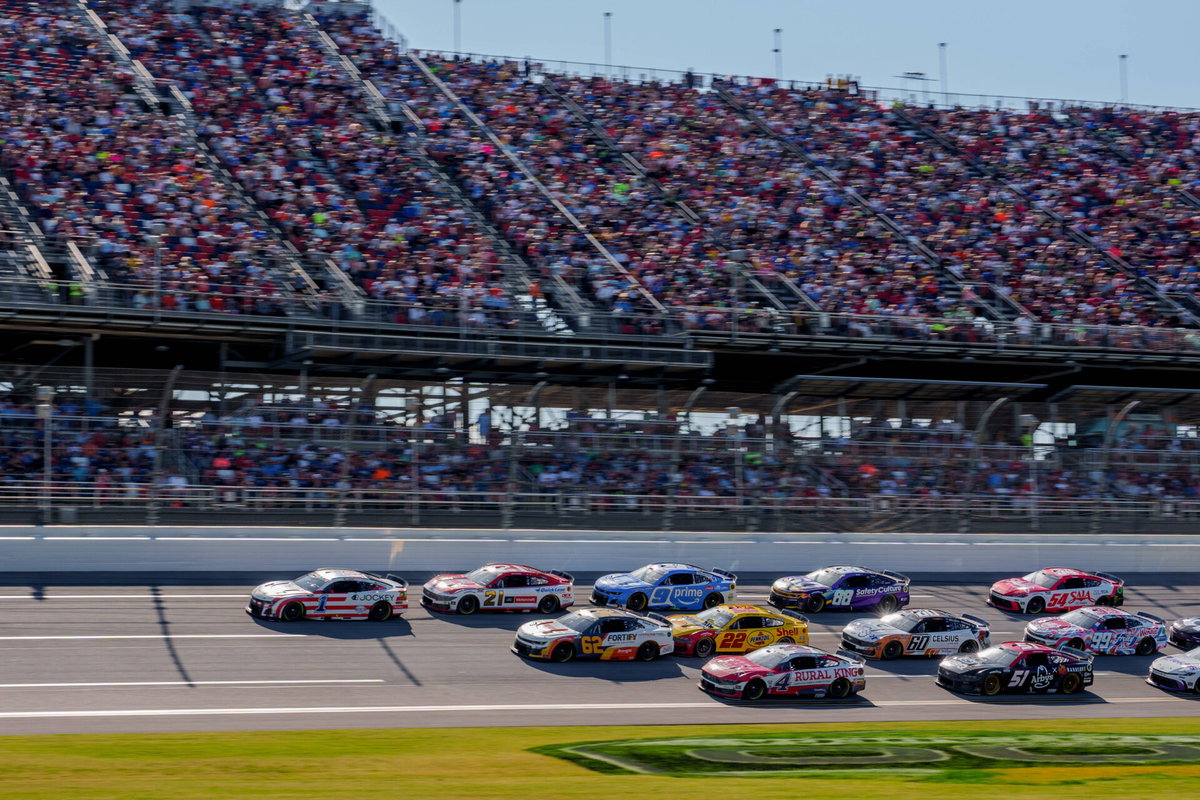
The 2026 YellaWood 500 has revealed a bigger problem with NASCAR racing this year. After much debate and criticism around the field running on 25% throttle for the longest stint of the race, which driver violated the yellow-line rule, officials considering black-flagging 75% of the field for running below the minimum speed, and more, NASCAR has decided to fix the problem at the heart of it: the newly introduced Stage One format. And while Talladega may have been its most recent victim, the problem with how the field goes racing in stage one is becoming a recurring one.
Watch What’s Trending Now!
NASCAR’s Cup Series managing director, Brad Moran, in his latest SiriusXM NASCAR Radio Interviews episode, offers a refreshing take on finding a fix to the field’s approach to stage one racing, instead of penalizing the drivers and garages for finding loopholes and defying the rules.
Moran said, “We want to correct that. It’s all got to do with strategy, fuel mileage, one can. You know there’s so much engineering in the sport now, which you know has made some great improvements, but there’s some downsides to it. This would be one of them.”
“So, we’re going to go back; we changed the stages in the spring to make the longer stage the first one, so we didn’t see anything like that in the second half of the race, but we didn’t like it. There’s not much we could do about it with the current rules and the way things are set up for 2026, but we’re, ourselves and the entire industry are going to, we’re going to figure it out.”
“So we’re going hard to work at it, and we’re going to talk about a lot of different things and look at different strategies, and we’re going to come up with a fix for it, and that’ll be probably project number one for the off-season.”
Moran’s statements reflect exactly what the field prioritized while racing at the iconic ‘Dega venue—strategy, fuel mileage, and refueling. Drivers took the position battle to the pit road, but no one in the closely running pack could capitalize on the strategy at the end of stage one, as the dominant RFK Racing trio took the green-and-white checkered flag as the top three drivers.
Besides the recently concluded YellaWood 500, the field ran the fuel-conserving strategy on three more occasions this year, all at drafting tracks and superspeedways: Daytona (twice) and Talladega. But garages resorted to the same fuel-saving strategy even before NASCAR introduced revised stage lengths in April 2026.
The first account of a fuel-saving strategy this season came at the Daytona 500 in February 2026. The drivers decided to lift to half throttle and lock into a three-wide parade, running at shockingly slow speeds. The strategy was adopted to help the new-gen cars with drag and aerodynamics; however, fans were disappointed to see a close-packed parade at a historic venue and a race like the Daytona 500.
Responding to the criticism, NASCAR revised stage lengths to promote high-octane racing at the front, aggressive overtakes, and full-throttle racing in stages two and three by shortening them. However, the field returned to a fuel-conserving game plan for stage one at the Talladega spring race and the YellaWood 500.
In the aftermath of the race held in Lincoln, Alabama, drivers, critics, and fans have largely agreed that NASCAR needs to find a solution to the way the field approaches racing at the most legendary venues on the calendar that have gained a reputation for being the fastest and most unpredictable.
So far, drivers like Denny Hamlin, Ryan Blaney, Zane Smith, and more have expressed how the fuel-saving tactics take away the soul of raw speed racing at the famous superspeedway venues. Friends, legends and veteran journalists of NASCAR too have slammed the officials for ruining the experience fans come for at drafting tracks like Daytona and Talladega.
And while Brad Moran has admitted that the governing body itself is not very happy with how stage one has played out in 2026, there’s much to fix even at the root of the issue. NASCAR must also take into account what the new-gen cars need to bring out the best in them at these tracks, instead of drivers having to adapt their driving style and sacrifice their race to take the car to the next stage.