
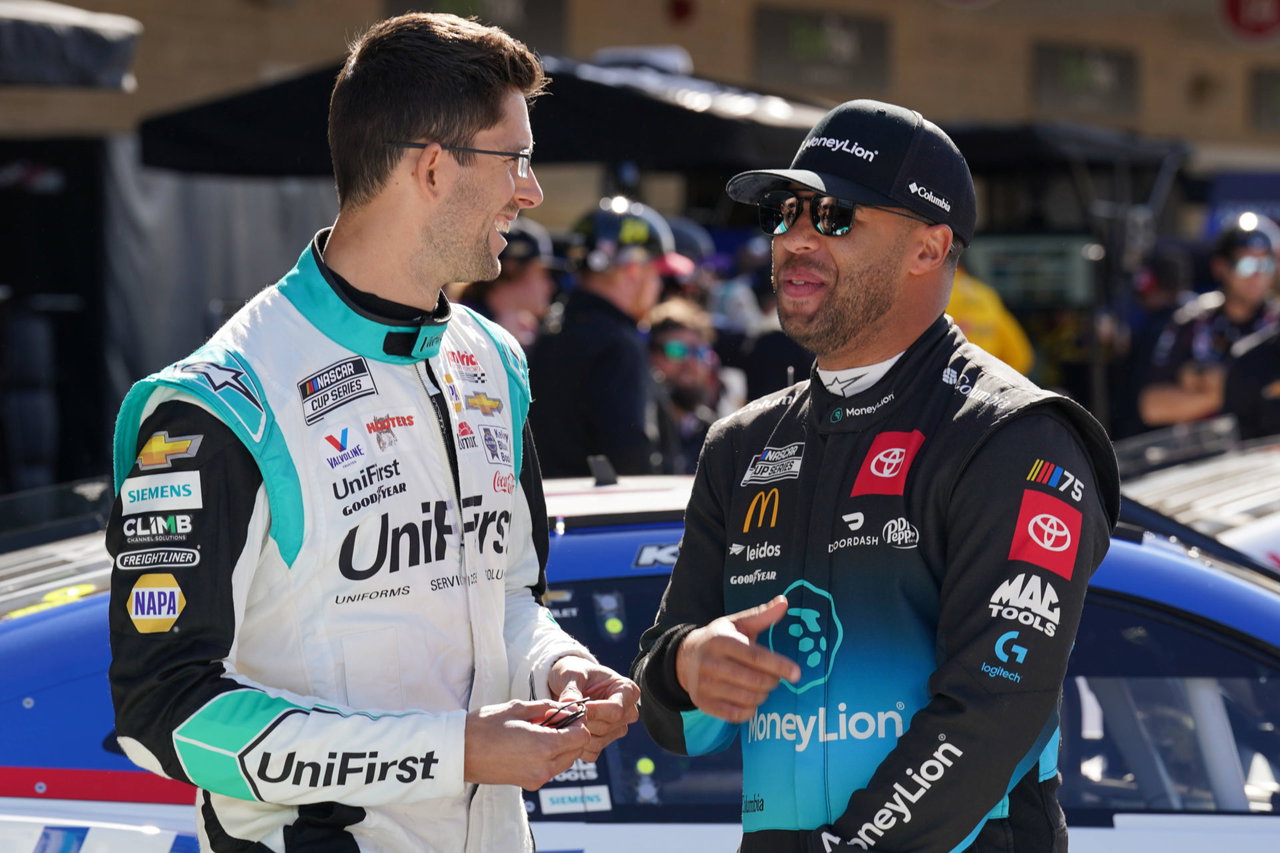
Earning a seat in the NASCAR Cup Series used to mostly depend on your ability to drive. Before making a choice, teams used to consider a driver’s skill, performance, and potential for years. But, according to Dale Earnhardt Jr., the formula has shifted. In today’s NASCAR, when a team’s survival depends on corporate money, raw driving prowess might not be sufficient to have a chance at the top level.
Watch What’s Trending Now!
“We don’t have major sponsors in the sport. There are some, but not every team has this grand sponsor that just self-funds the operation anymore. You have to put it together with multiple partners, and there are a lot of drivers that can bring funding. They are going to get the first opportunity to sit down with that team and discuss whether they’re a good fit or not,” Jr explained on the Dale Jr Download.
According to Dale Jr. this shift has altered how teams assess possible drivers. Earlier, a single sponsor could essentially bankroll a car for a whole season in the past. Jeff Gordon had that support from Dupont, whereas Home Depot backed Tony Stewart.
These days, teams frequently combine support from many businesses, with various partners showing up on the vehicle at different races. That change reflects a broader sponsorship challenge facing NASCAR. Full-season deals are becoming harder to justify as companies demand measurable returns from increasingly expensive sports partnerships.
NASCAR sponsorship revenue fell from $425 million in 2023 to $362.34 million in 2024. On the other hand, viewership and media-consumption habits have also become more difficult for brands to navigate.
The result is a more fragmented sponsorship landscape. The 2026 Cup schedule shows major teams relying on numerous partners rather than one company covering every race. Christopher Bell’s No. 20, for example, has a long list of sponsors like Rheem, Coofandy, and Yahoo!
Similarly, Riley Herbst’s No. 35 also rotates between Monster Energy, FRE, Treetop and BeatBox. That makes drivers who can bring commercial value particularly attractive.
Herbst’s family business, Terrible’s, has also helped create sponsorship and retail opportunities around his Cup program. His 2026 FRE partnership, for instance, combines the No. 35’s race exposure with activations across Terrible’s locations.
Brandon Jones represents a similar model. His father, JR Jones, has been closely connected to Rheem, which has sponsored Brandon and multiple NASCAR organizations. That financial relationship has helped keep Jones in competitive NASCAR machinery throughout his career.
For teams operating under modern financial pressures, that kind of funding can make the difference between filling a seat and leaving one open.
Understanding the team’s dilemma
When the economics of modern NASCAR are taken into account, Dale Jr.’s position becomes more evident. A Cup team is not simply paying a driver and putting a car on the track. It is funding a large operation involving mechanics, engineers, transport, equipment, facilities, testing, and research.
Additionally, Cup team ownership has become a significant financial commitment because of the charter structure. When teams choose who gets a seat, sponsorship associated with a driver may play a significant role because operational expenses might reach the millions.
For gifted drivers without financial support, this creates an unpleasant reality. A driver capable of winning races may still struggle to secure a competitive opportunity if another candidate can bring several million dollars in sponsorship.
That funding does more than keep the car running. It may assist organizations in investing in engineering initiatives, creating better equipment, and keeping skilled staff. These expenditures may eventually result in quicker vehicles, increasing the organization’s chances of winning races and earning more revenue and visibility.
The problem becomes even bigger for drivers trying to prove themselves in underfunded equipment. A talented driver can finish 25th in a car that simply lacks the speed to compete with the sport’s powerhouse organizations.
That result can make it difficult for teams to judge the driver’s true potential. Meanwhile, a driver with financial backing can receive more opportunities to compete in stronger machinery and build a larger résumé.
All that being said, sponsorship is not intrinsically detrimental to NASCAR. It frequently keeps teams going and provides drivers with opportunities that they may not otherwise get.
However, it does imply that the current ladder is no longer solely merit-based. And when a funded driver also has genuine talent, the advantage becomes even harder for an equally talented but unfunded driver to overcome.