
NASCAR has given Cup Series teams permission to replace front brake pads and rotors after practice and qualifying at Phoenix Raceway, addressing a concern that has followed the series through several demanding weekends. The decision comes after brake failures at Gateway sent multiple Chase contenders into the wall, turning a competitive race into a safety concern.
Watch What’s Trending Now!
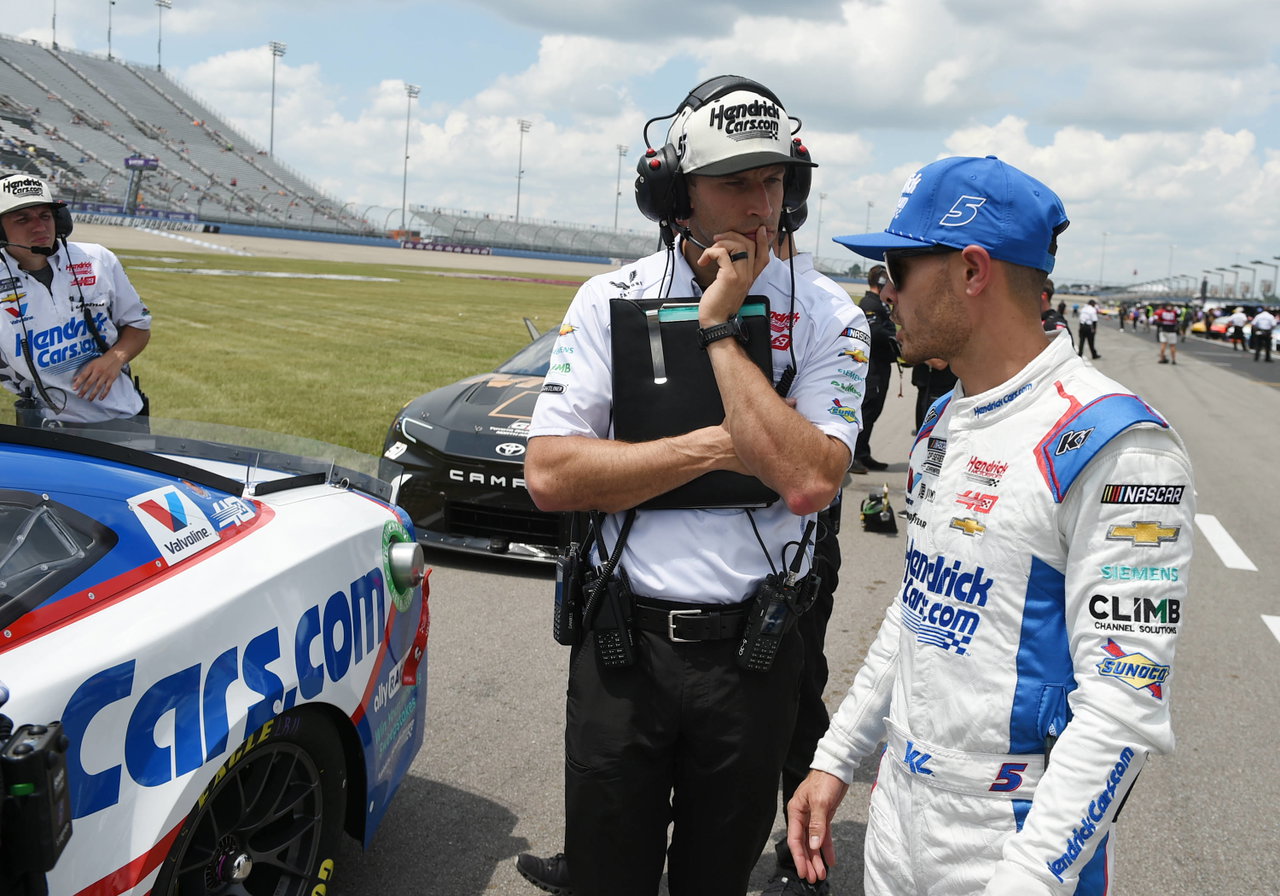
For Cliff Daniels, the change offers Hendrick Motorsports a chance to prepare Kyle Larson’s No. 5 Chevrolet with fresh components before Sunday’s race. But the decision also reflects a wider issue with how NASCAR’s current weekend format affects equipment, something teams have had to manage under impound rules.
“I think it’s smart. I think it’s manageable, and for us, it’s just the opportunity to put fresh stuff on there,” said Daniels on SiriusXM NASCAR Radio. “Our, call it fast short-track brake package, has been pretty consistent for a while for us.
“But we certainly are going to take the opportunity to put fresh stuff on there, just to know that you’re starting the race with max potential for durability for the brake setup, that’s been a question mark for everybody, so we very much appreciate having the extra practice time and now definitely appreciate having this opportunity to just get fresh brakes on there to start the race.”
NASCAR announced the adjustment on Wednesday. Teams can now remove and replace front brake pads and rotors after Saturday’s practice and qualifying, with no fixed limit on the number of changes. The allowance does not extend to other brake-system components. Rear rotors can be inspected during Sunday’s pre-race adjustments, with any concerns handled by NASCAR on a case-by-case basis.
The decision follows a difficult afternoon at World Wide Technology Raceway on September 13. Ryan Blaney was running sixth when his right-front brake rotor exploded through the hood of his No. 12 Ford on Lap 155. He kept the car against the outside wall to scrub off speed before taking it to the garage, ending his race in 35th. Zane Smith had already crashed heavily on Lap 131 after an apparent brake failure.
The trouble continued late in the race. Chase Elliott lost braking entering Turn 1 on Lap 214, spun across the nose of Chase Briscoe’s Toyota, and sent both cars into the SAFER barrier. Elliott finished 31st and Briscoe 32nd. Chris Buescher also suffered a brake failure near the finish, retiring in 27th. The race featured 18 cautions and two overtime restarts, but the brake failures were particularly costly because they removed drivers from the championship fight through no ordinary on-track battle.
Phoenix presents a related challenge. NASCAR moved tracks shorter than 1.5 miles to the 750-horsepower package for 2026, up from the baseline 670 horsepower. The additional power, lower-downforce configuration, and repeated heavy braking place greater demands on the equipment. Phoenix was the first traditional oval to use the package in March, when Blaney won.
Daniels also pointed to the format of practice itself. NASCAR’s combined-group sessions now give teams 50 minutes on track, rather than splitting the time into separate 25-minute sessions for Group A and Group B. That means more running and additional wear on components before teams reach the race, when impound restrictions would ordinarily limit what they could change.
His point was that the procedure has changed while the demands on the equipment have grown. Before impound-style weekends became standard at short tracks, teams commonly replaced brakes after practice. The newer format made that familiar preparation harder to carry out.
“So when you see through the lens of years ago, before we had the impound-style formats of race weekends at short tracks, and especially a track like Phoenix, teams would always change their brakes after practice, going into a race,” Daniels said. “That was very common. Since COVID, everyone has become accustomed to the impound-style formats. Well, when you take an impound-style format, and you add a little bit more practice time, it is that much more wear and tear on your personal equipment, so I appreciate the move from NASCAR.”
Denny Hamlin’s experience at Iowa earlier in the season showed why the distinction matters. During the August 9 race, the Joe Gibbs Racing driver dealt with a brake problem that made the afternoon a test of managing the car rather than simply racing it. On his Actions Detrimental podcast, Hamlin discussed the limitations teams face when they want to replace components but must work within NASCAR’s rules and the requirements surrounding their equipment.
Hamlin’s Iowa weekend also involved a separate penalty: his No. 11 Toyota was sent to the rear after unapproved adjustments. The two issues should not be conflated, but together they illustrate the difficult position a team can face when a car needs attention and the rules restrict its options. Hamlin ultimately finished fifth at Iowa despite the brake concerns.
The Phoenix allowance creates a clearer path for teams to address front-brake wear before the start. It does not eliminate the possibility of mechanical failure, nor does it permit unrestricted changes to the braking system. Instead, it gives crews a defined opportunity to replace two critical components without sacrificing their starting positions to do so.
The change could affect how confidently teams approach Sunday’s start, particularly on a track where braking performance matters from the opening laps. If the procedure proves useful at Phoenix, NASCAR may have reason to examine similar allowances elsewhere. For now, teams have one less uncertainty to manage before the green flag.