
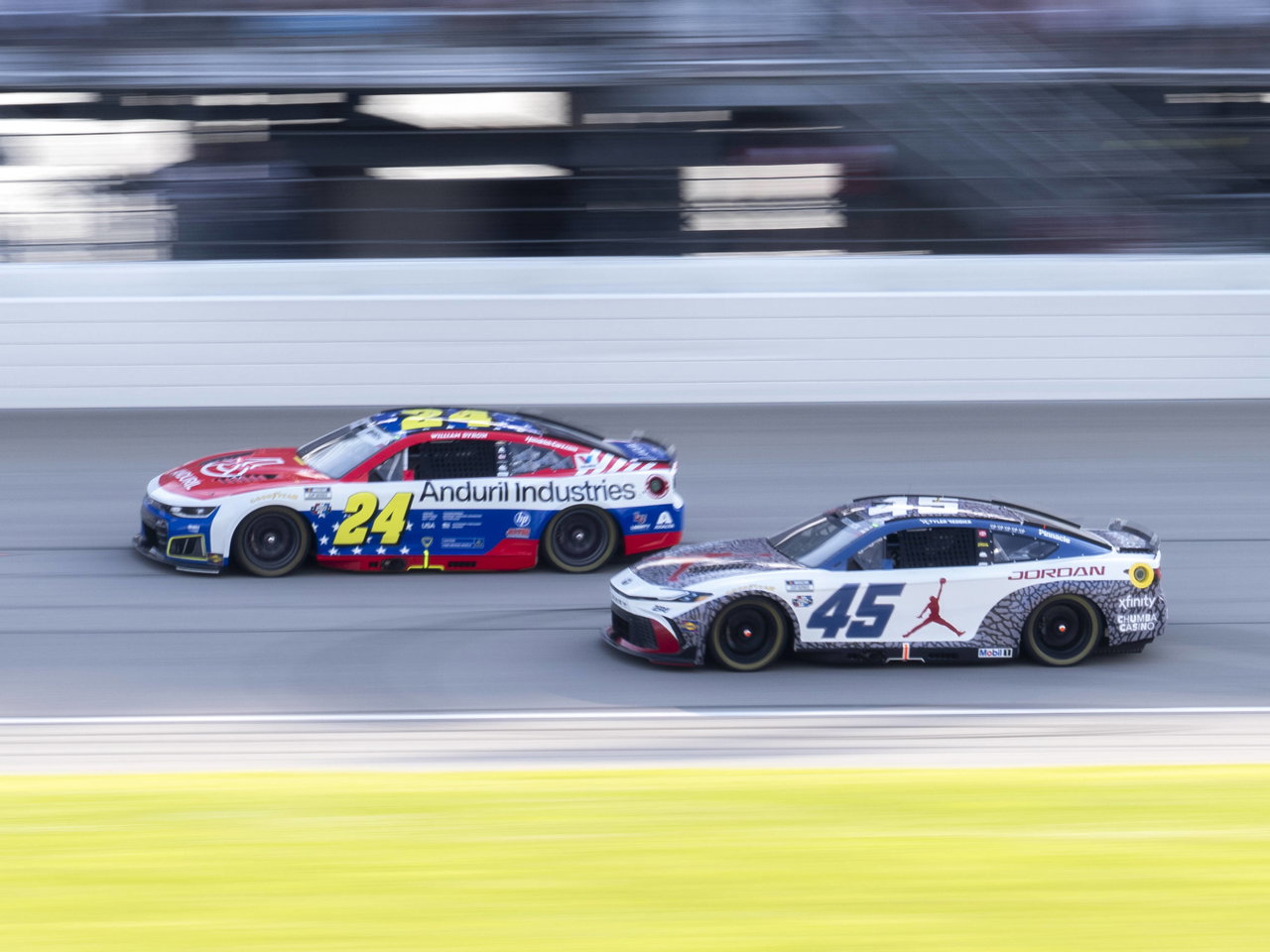
Before the 2026 season began, the idea of who would be fighting for the championship looked very different. Denny Hamlin, who leads the championship right now, was a dejected man who, after cruelly losing out on the title last year, said he didn’t even want to look at a car. The idea that he would come out and get right back into the Cup Series title hunt wasn’t at the top of everyone’s list.
Watch What’s Trending Now!
What was, though, was Chevrolet and Hendrick Motorsports. William Byron was arguably the most consistent driver of 2025, leading the most laps. Kyle Larson was the champion who struck a dagger into Hamlin’s hopes. And with Chase Elliott and Alex Bowman joining the two to create an unchanged superteam, there was reason to believe HMS would continue its dominance.
Alas, that faltered, and the perspective of fans changed a couple of months into the season. Then came the high-flying Tyler Reddick. Between February and April, it seemed like everything the 23XI driver touched turned to gold.
Five race wins in nine races, and a commanding lead atop the standings made him the new favorite. A Toyota driver.
And then Reddick fell from grace. Since then, the likes of Hamlin, Ty Gibbs, and Ryan Blaney have all put together consistently strong performances at the front, sending Reddick down to fourth in the standings.
What looked clear at the start of the season and in its build-up isn’t clear anymore. These two early-season favorites, who were being touted for a historic season, are suddenly looking like outsiders, with NASCAR just three races away from the Chase.
Tyler Reddick’s free fall from his early historic dominance
Driving the No.45 Toyota for the 23XI Racing team, he opened his 2026 season victory account with the Daytona 500, which continued with back-to-back victory lane celebrations in Atlanta and then at the Circuit of the Americas.
He became the first driver in Cup Series history ever to sweep the first three races of a season back-to-back. Later, victories in Darlington and Kansas followed, giving him five victories in the first 9 events.
“An incredible Toyota Camry all day long,” Reddick said after the Kansas Speedway race in April.
Then the calendar flipped towards the summer, and the results eventually collapsed. Since mid-June, his average finish has been 24.2, and over the last nine races, he’s finished 25th or worse six times. Even last weekend in Iowa, the 23XI driver crashed in the opening stage and DNFed. The cameras later showed a dejected Reddick shaking his head in the garage.
The speed hasn’t completely disappeared for Reddick. At Michigan, he was caught up in a restart crash while running near the front and finished 35th. At the Naval Base Coronado street course, a late flat tire while he was in contention dropped him to 25th. Power steering failure at Sonoma left him last, while debris punctured an oil cooler at Chicagoland and led to another poor finish, this time 36th.
Hamlin has outscored him by more than 200 points over the last 10 races, and now, it’s up to Reddick to respond.
He needs to turn that speed into wins and strong top-10 and top-five finishes. With only three regular-season races remaining, Reddick needs to start finishing near the front again if he wants to steady and reignite his championship hopes.
Chevrolet’s collective shortfall
“I don’t know that we have ever gone this far into a season and them not being in contention to win these races by dominating an event so far,” Kevin Harvick said about Hendrick Motorsports’ issues on his podcast.
None of their presumed championship weapons have looked remotely competitive enough for the crown. And quite frankly, it’s down to their poor mechanical package.
Harvick reported earlier this year that the Chevrolet cars were designed to maximize downforce and minimize drag. But they failed to achieve that, and the cars ended up with more drag than expected. Loose handling balance over long runs has severely limited HMS’s otherwise brilliant drivers from being competitive.
There have been 23 races so far this season. Hendrick Motorsports has won only two, both with Chase Elliott, while Chevrolet has six wins overall.
Two of those came from Trackhouse Racing’s Shane van Gisbergen on road courses, which he specializes in, while Daniel Suarez and Carson Hocevar have won one each. Neither of the latter two drivers has been particularly consistent.
Larson has eight top-five finishes but no wins and has endured a difficult recent stretch that includes multiple finishes of 33rd or worse. Most recently at Iowa, the defending Cup champion, who last won a race in May 2025, was caught in a multi-car restart incident on Lap 149 involving teammate Bowman. Larson finished 33rd, while Bowman finished 34th.
Even though Byron has been consistent with top-10 finishes and four top-five finishes, he hasn’t been able to turn them into wins. So far, Elliott has been the brightest star for HMS, carrying their hopes with two wins, multiple top-five finishes, and more consistent points scoring. Still, even his performance hasn’t quite matched what you’d expect from a championship favorite.
Elliott, Larson, and Byron will all make it to the Chase, but their hopes beyond that look slim.
After 23 races, Toyota leads with 14 wins and approximately 1,072 points. Chevy sits second with six wins and roughly 896 points, while Ford has three wins and around 800 points.
With three races remaining, it’ll be interesting to see whether Chevrolet can turn things around and make a late push, or whether this ends up being a disappointing season for both Chevy and HMS.
The Chase Format and why it’s momentum still matters
NASCAR returned to a Chase-style championship format for 2026, and there is now no more “win, and you’re in.” After the regular season, the top 16 drivers in points advance. Their points are then reset based on their regular-season finishing positions. A driver can certainly recover during the Chase.
The points reset gives everyone a fresh starting line. A 10-race stretch can rewrite the narrative. Yet entering the postseason in poor form still carries weight for several reasons. Starting a 10-race title fight without recent wins or clean finishes doesn’t help nearly as much as arriving with momentum.
In contrast, hot contenders like Hamlin, Gibbs, and Blaney carry both statistical and organizational advantages. Also, mechanical and technical weaknesses and communication issues do not disappear automatically. A regular season collapse can be evidence of deeper issues that persist into the postseason. The Chase can reset the points. It can’t necessarily reset a team’s problem.
What can be a lifesaver for Reddick and Chevy?
For Reddick, the requirements are straightforward and urgent. He needs clean finishes in the remaining races, ideally wins and consistent top-five and top-10 results. He’ll need to recover enough points and improve his seeding position to avoid starting the Chase at a significant disadvantage compared to the leaders. Most importantly, he needs to rediscover the form that helped him win five races earlier in the season.
For Chevrolet and HMS, the checklist is broader and more difficult. They need to sort out the issues with their cars and the excess drag while keeping pace with Toyota’s development.
Larson needs to look like a genuine race-winning threat again. Elliott needs week-to-week consistency to secure a strong seeding position, while Byron has to turn his speed into results instead of settling for good finishes.
Reddick’s free fall and Chevrolet’s collective flatness raise the possibility that some of the early season favorites will spend the postseason trying to rediscover what they lost in the summer.
The format gives them 10 races to solve problems and string together results. Now the final verdict will be decided only after the completion of the remaining regular season races.