
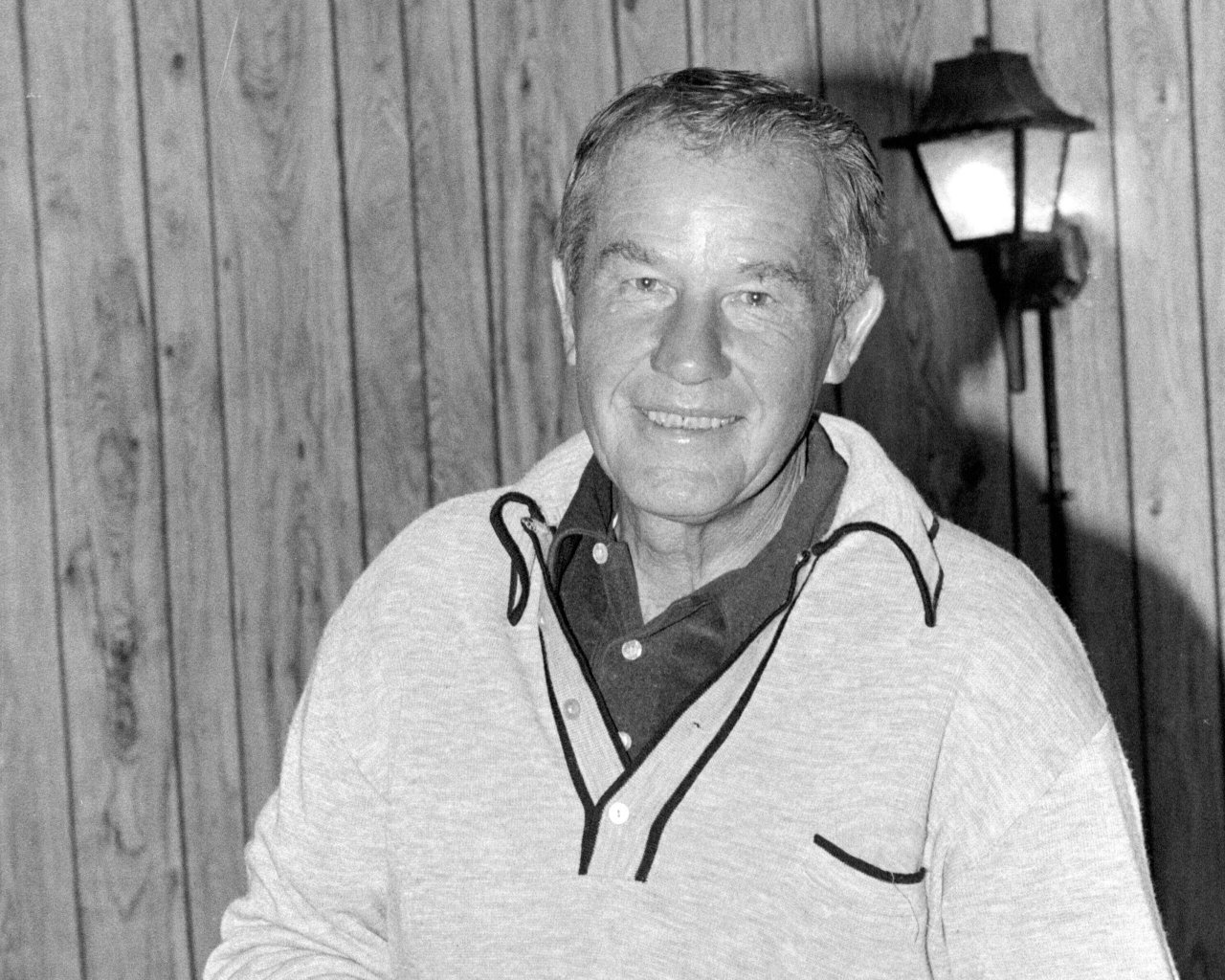
Lee Petty was 35 when he first lined up for a NASCAR race, a late start that never held him back. By the autumn of 1957, he already owned a championship and a reputation that was becoming a headache for the people running the sport. One of them decided to put it in writing. Nearly seven decades later, that piece of paper has resurfaced.
Watch What’s Trending Now!
“We have received a great many complaints this season about rough driving on your part are now piling in so fast and from so many different directions that it is going to be necessary for someone to put the “Eye” on you for the next several race meets,” read the letter addressed to Lee Petty, as shared by Petty Brothers via X.
The letter, dated October 15, 1957, was signed by Pat Purcell, NASCAR’s executive manager, who opened by calling it a “friendly personal note.” He admitted he was reluctant to send it, described sportsmanship as an ideal, and said he hoped nothing would happen to change his opinion. Parts of the surviving page are hard to decipher, but the message comes through clearly.
Petty Brothers Racing’s caption added its own spin: “Earnhardt got the nickname, Lee Petty wrote the playbook!”
Petty was no up-and-comer in 1957, and officials knew exactly whom they were writing to. He had already won the 1954 Grand National championship, and the family team he built, Petty Enterprises, dated back to 1949 and would grow into one of NASCAR’s winningest operations.
Who Is the Poster-Child of Modern-Day NASCAR?
Longtime Petty crew chief Dale Inman, Lee’s nephew, has described Lee as a racer who treated the sport as a business and protected his equipment because he was the one repairing it. Rough driving and careful bookkeeping, in other words, lived under the same roof.
The trophies kept coming. Lee captured titles in 1958 and 1959, becoming the sport’s first three-time champion, and he won the inaugural Daytona 500 in 1959 after officials spent three days studying photographs and newsreel footage to separate him from Johnny Beauchamp. He retired with 54 wins in 427 starts and an average finish of 7.6.
A rough reputation that followed Lee Petty into the 1960s
The 1957 letter was not the last time his methods drew complaints. On March 27, 1960, Petty won the Gwyn Staley 160 at North Wilkesboro after taking the lead from Junior Johnson late in the race, and runner-up Rex White was not impressed.
“Something’s got to be done. The Old Man (Petty) is getting rougher and rougher. If this sort of thing keeps up, there is going to be a lot of equipment torn up and some drivers badly hurt,” White said, according to Autoweek’s historical account of NASCAR’s memorable racing confrontations.
Petty’s competitiveness did not stop at the garage door. When son Richard appeared to have won his first Grand National race at Lakewood in Atlanta in 1959, Lee filed a scoring protest. Officials agreed Richard had been credited with an extra lap, dropped him to third and awarded the victory to his father.
Decades later, another hard charger tested the same boundary. After a late-race tangle with Darrell Waltrip in the February 1986 Miller High Life 400 at Richmond, NASCAR fined Dale Earnhardt $5,000, required a $10,000 bond and placed him on probation.
NASCAR official Bill Gazaway said there is “a fine line between hard racing and reckless driving” and that Earnhardt had stepped over it. Earnhardt conceded he misjudged the gap but denied wrecking Waltrip on purpose, and the penalties were softened on appeal, with the probation and bond dropped.
The two cases are not identical. Lee received a private warning after complaints accumulated, while Earnhardt faced a public penalty for one specific wreck. Still, both show NASCAR repeatedly trying to decide where hard racing ends and unacceptable conduct begins.
Lee’s legacy is far larger than any warning. Richard went on to win seven championships and a record 200 races, building on the foundation Petty Enterprises provided. Before Richard became The King, though, Lee was the driver rivals feared, and officials watched closely. The letter does not dent that legacy. It helps explain how it was built.