Imago
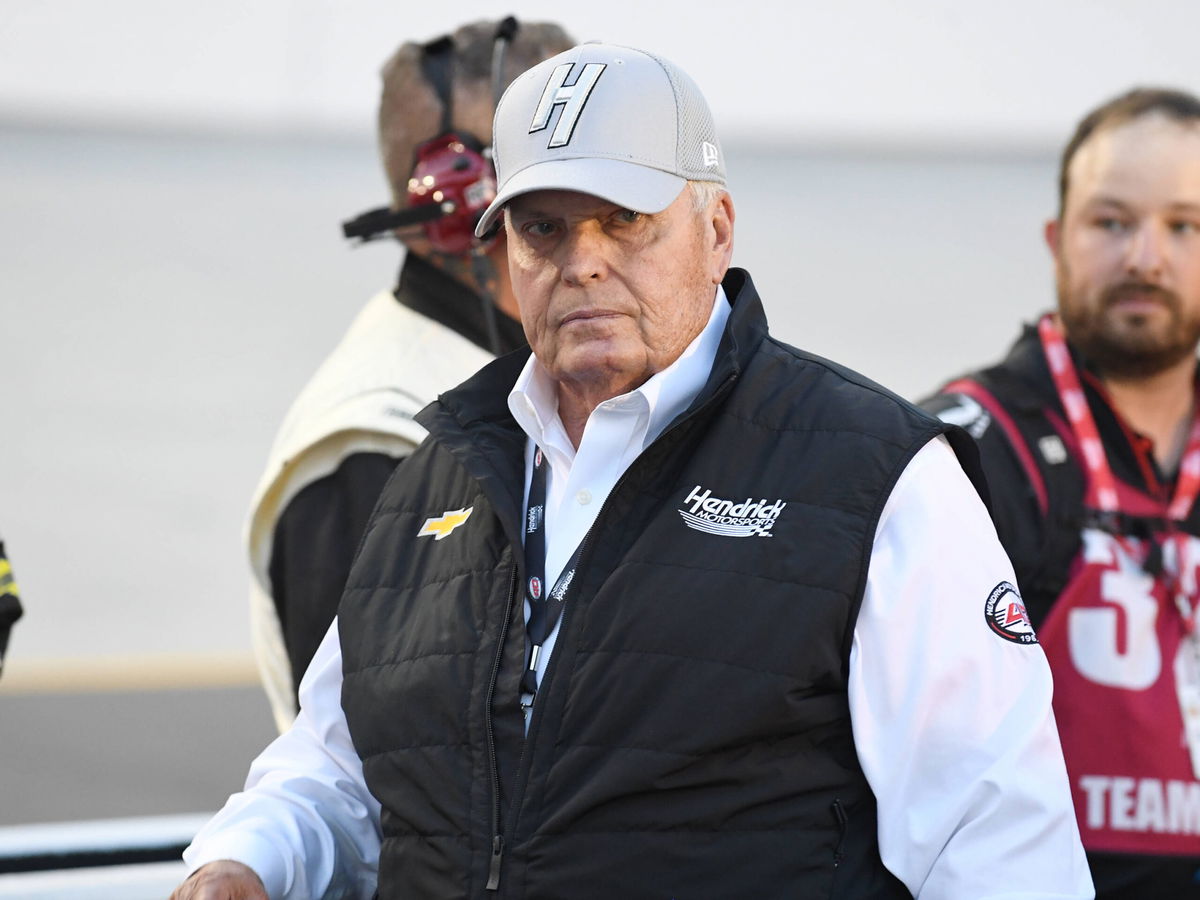
BRISTOL, TN – SEPTEMBER 21: Rick Hendrick looks on prior to the running of the NASCAR, Motorsport, USA Cup Series Bass Pro Shops Night Race on September 21, 2024, at Bristol Motor Speedway in Bristol, TN. Photo by Jeffrey Vest/Icon Sportswire AUTO: SEP 21 NASCAR Cup Series Bass Pro Shops Night Race EDITORIAL USE ONLY Icon240921905
Imago
BRISTOL, TN – SEPTEMBER 21: Rick Hendrick looks on prior to the running of the NASCAR, Motorsport, USA Cup Series Bass Pro Shops Night Race on September 21, 2024, at Bristol Motor Speedway in Bristol, TN. Photo by Jeffrey Vest/Icon Sportswire AUTO: SEP 21 NASCAR Cup Series Bass Pro Shops Night Race EDITORIAL USE ONLY Icon240921905
It seemed like another routine masterclass racing year for Hendrick Motorsports. Yet, by April, Hendrick Motorsports had only just secured its first win at Martinsville, which came far later than expected. The storyline remained consistent: even after strong qualifying runs, race-day pace fell off sharply. Despite the slow start, the Vice President of Competition at HMS Chad Knaus is confident in the team being able to bounce back strongly.
Watch What’s Trending Now!
“It’s a Hard One”: Knaus repeats the same problem from every angle
NASCAR has introduced a whole lot of changes this year. Chevrolet has also executed changes in its body, and the adaptation is what has been tough so far for the team.
“The car is gonna be great. It’s gonna take a little bit of time still. I don’t think that we’re quite there yet,” said Knaus. “The rules changing at the same time that the car changes, making it difficult, with the higher horsepower and the changing of the aerodynamic packages at some of these bigger short tracks, the Darlington’s, the Dover’s, places like that.”
After a lot of talks, NASCAR finally introduced more horsepower to the race cars on shorter tracks. However, there are restrictions on teams with regard to practice, and this is making things a little difficult for HMS.
“When you have the testing restrictions that we do. We don’t get to go to the racetrack and test a whole lot, definitely as an organization,” said Knaus. “We don’t get to use a whole lot of wind tunnels all the time, because of the restrictions and the hours that NASCAR puts out there.”
🤏 “It’s gonna take a pinch for us to get there, but we’re gaining on it.”@TeamHendrick Vice President of Competition, @chadknaus on the organization getting up to speed with the new @TeamChevy body.
More ➡️ https://t.co/WGRTG5gnEd pic.twitter.com/y49j9Hwq4K
— SiriusXM NASCAR Radio (Ch. 90) (@SiriusXMNASCAR) April 2, 2026
Towards the end, a traditional conclusion would just close on a positive note. Yet the statement was true to Knaus, who couldn’t let go without a sprinkle of anxiety for fans.

Imago
LAS VEGAS, NV – OCTOBER 16: Bubba Wallace 45 23XI Racing MoneyLion Toyota, rear, and Kyle Larson 5 Hendrick Motorsports HendrickCars.com Chevrolet, front, crash on the front straight away during the NASCAR, Motorsport, USA Cup Series Playoff South Point 400 Sunday October 16, 2022 at Las Vegas Motor Speedway in Las Vegas, Nevada. Photo by Will Lester/Icon Sportswire AUTO: OCT 16 NASCAR Cup Series Playoff South Point 400 Icon2210163094
“We’re gaining on it, we’ve been solid, we haven’t been as good as what we need to be, it’s gonna take a pinch for us to get there,” he admits before returning to the same unfinished saga, “we just gotta get it figured out just a little bit.”
What stands out about Knaus’ emphasis on restrictions, instability, and engineering causes is his repetition of the same signalling that the issue may not be confined within Hendrick Motorsports alone, but could point toward a broader concern within the Chevrolet camp itself.
A manufacturer-level lag: Chevrolet’s slow start raises bigger questions
It must be noted here that some patterns are beginning to emerge regarding Chevrolet’s new Camaro ZL1 body. With Knaus already stressing aerodynamic issues, there could be a manufacturer-level problem that is being ignored. Out of the first six Cup races, Chevrolet did not win any, while Toyota won five of those six. Even the majority of laps were led by a Toyota, and it was not until Martinsville that both Hendrick and Chevrolet received their first wins.
Another support for this thesis would be other Chevy organisations also lacking front-running conversion. The same can be evidenced in the tableau of Richard Childress Racing. Martinsville marked the first time in RCR history that the team failed to score a top-10 finish in the first seven races of a Cup season. Both Kyle Busch and Austin Dillon were at 24th and 27th on points, respectively, both with zero top 10s.
While it’s too early in the season to comment on whether this issue is a track-wide manufacturer’s one, it is to be noted that Chevy, as a manufacturer, lagged badly in early-season win conversion as well as front-end dominance. And maybe it is this exact broader pattern that Hendrick’s issue can fit into.
Written by

Edited by

Godwin Issac Mathew