Imago
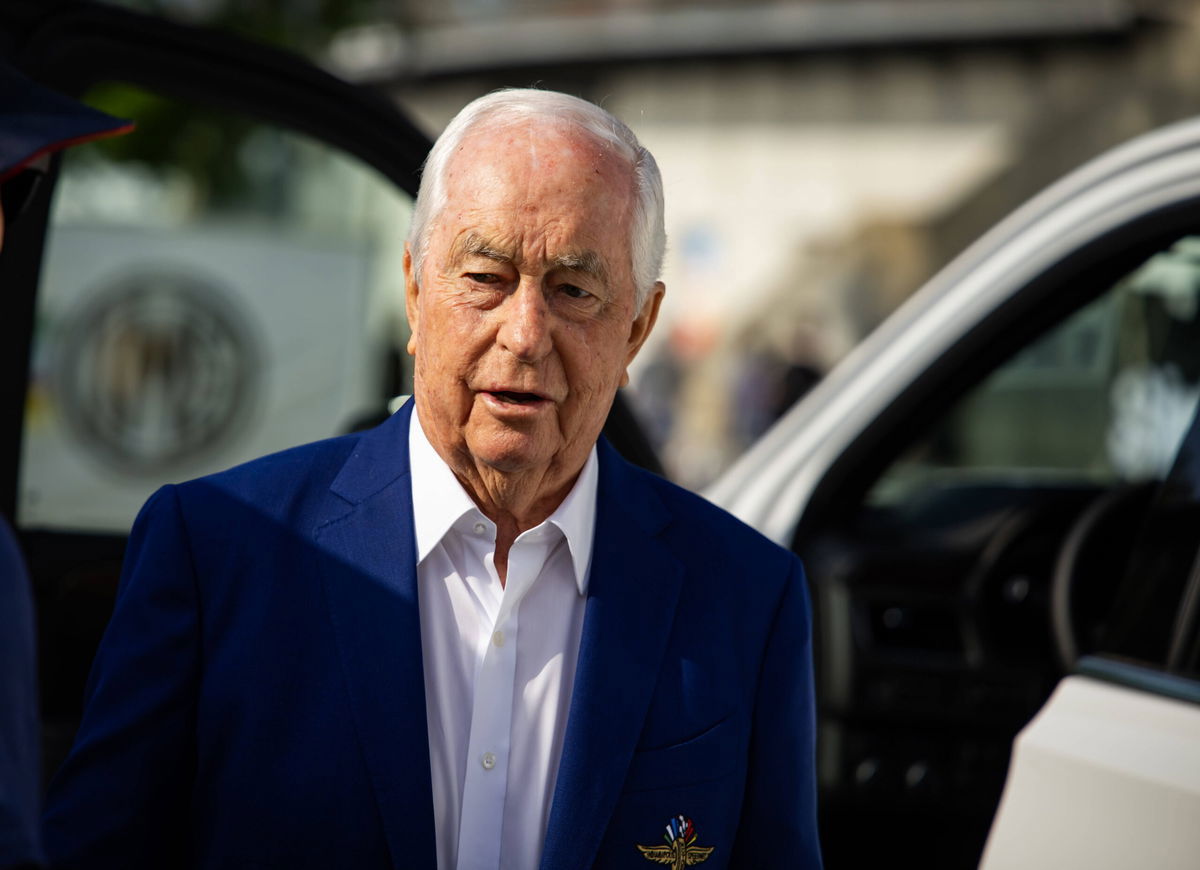
IndyCar, Indy Car, IRL, USA Miller Lite Carb Day May 24, 2024 Indianapolis, Indiana, USA IndyCar Series team owner and track president Roger Penske in attendance during Carb Day final practice for the Indianapolis 500 at Indianapolis Motor Speedway. Indianapolis Indianapolis Motor Speedway Indiana USA, EDITORIAL USE ONLY PUBLICATIONxINxGERxSUIxAUTxONLY Copyright: xMarkxJ.xRebilasx 20240524_mjr_su5_019
Imago
IndyCar, Indy Car, IRL, USA Miller Lite Carb Day May 24, 2024 Indianapolis, Indiana, USA IndyCar Series team owner and track president Roger Penske in attendance during Carb Day final practice for the Indianapolis 500 at Indianapolis Motor Speedway. Indianapolis Indianapolis Motor Speedway Indiana USA, EDITORIAL USE ONLY PUBLICATIONxINxGERxSUIxAUTxONLY Copyright: xMarkxJ.xRebilasx 20240524_mjr_su5_019
For months (read: years), IndyCar fans have lived with a low-key dread – What if Honda actually walked away? After all, the manufacturer has been part of the series since 1994, powering champions, dominating eras, and even serving as the lone engine supplier for six seasons. So when rumors swirled that Honda might finally pull the plug after 2026, teams and fans braced for the worst. But instead of an exit, the opposite happened. And at the center of it all sits Roger Penske, who just locked down a deal that stabilizes IndyCar’s future and puts Chevy, Honda, and his own empire all on the same long-term page.
Watch What’s Trending Now!
Roger Penske’s IndyCar future is secured
IndyCar has officially secured multi-year engine supply extensions with both Chevrolet and Honda beginning in 2027. This is a massive stabilizing move for a series that was staring down expiring contracts at the end of 2026. The renewed deals come with an added twist: each manufacturer will receive one charter for guaranteed entry in 2028, solidifying their competitive presence as IndyCar transitions to a new era of franchised participation.
This announcement finally puts to rest nearly two years of speculation about Honda’s potential exit, a narrative that hung over the paddock like a storm cloud. Had Honda walked, it would have gutted the competitive balance, disrupted team planning cycles, and severely weakened the prestige of events like the Indianapolis 500. The fears weren’t unfounded.
Before recommitting, Honda was openly re-evaluating its motorsports strategy. Rising operational costs, declining ROI, and the frustration of carrying the series with no third manufacturer in sight all pushed Honda toward the exit. Industry insiders even floated the possibility of Honda redirecting resources toward a future NASCAR program.
.@IndyCar today is confirming that @Chevrolet and @Honda are renewing their OEM deals for multiple seasons from 2027 and will now each get a charter that can be used in 2028. pic.twitter.com/3JtgzAl3tZ
— Adam Stern (@A_S12) February 12, 2026
But IndyCar’s structural changes played a major role in turning the tide. The introduction of the charter system (heavily inspired by NASCAR) created financial stability and long-term value for manufacturers and teams alike. Charters, first introduced in late 2024, were assigned to full-time entries from 2022 and 2023, with teams capped at three per organization.
Under the new agreement, manufacturers cannot use their guaranteed charter to help a team exceed the three-car limit, keeping the field balanced while still offering incentives such as revenue sharing, priority grid protections, and stronger media-rights alignment.
In the end, Penske’s ability to get both Chevy and Honda to sign on for the long haul is more than a win. In fact, we call it a lifeline. The deal secures IndyCar’s competitive integrity, reassures teams, and sends a message to fans: the series isn’t just surviving the next era; it’s building a stronger one.
Where does this leave NASCAR’s long hunt for Honda?
For more than a decade, NASCAR has been chasing an elusive goal: securing a fourth manufacturer to join Ford, Chevrolet, and Toyota. And for just as long, the conversation has repeatedly circled back to one name. Honda. The Japanese automotive giant has been the most logical candidate, holding multiple exploratory meetings with NASCAR leadership over the years and frequently appearing in industry rumor cycles.
The appeal is obvious: Honda has a massive U.S. market presence, deep motorsports heritage, and a fanbase that would instantly energize NASCAR’s manufacturer landscape. But technical hurdles have always stood in the way. NASCAR’s rules still require a pushrod V8 engine, a configuration that Honda no longer offers on any modern performance platform.
Virtually all of Honda’s motorsport programs (Formula 1, IndyCar, IMSA, and Super GT) rely on turbocharged V6 engines, which align more closely with their road-car technology. A move toward a turbo-V6 formula, similar to what IMSA adopted in 2014, could finally open the door for Honda. NASCAR officials have hinted at future engine modernization, but nothing concrete has been adopted.
And now, Honda’s long-term extension with IndyCar puts a new wrinkle in the equation. After months of uncertainty, Honda’s recommitment through 2027 and its securing of charter protections signal a deeper investment. Not a scaling back. With engine development, staffing, and financial resources now tied to IndyCar stability, a NASCAR entry becomes less likely in the short term.
That said, the door isn’t completely closed. If NASCAR pushes forward with long-discussed hybrid technology or a downsized turbo engine formula, Honda could re-enter the conversation quickly. But for now, with fresh contracts signed and the IndyCar relationship solidified, Honda’s priority appears clear: strengthen what it already has before chasing something new.