
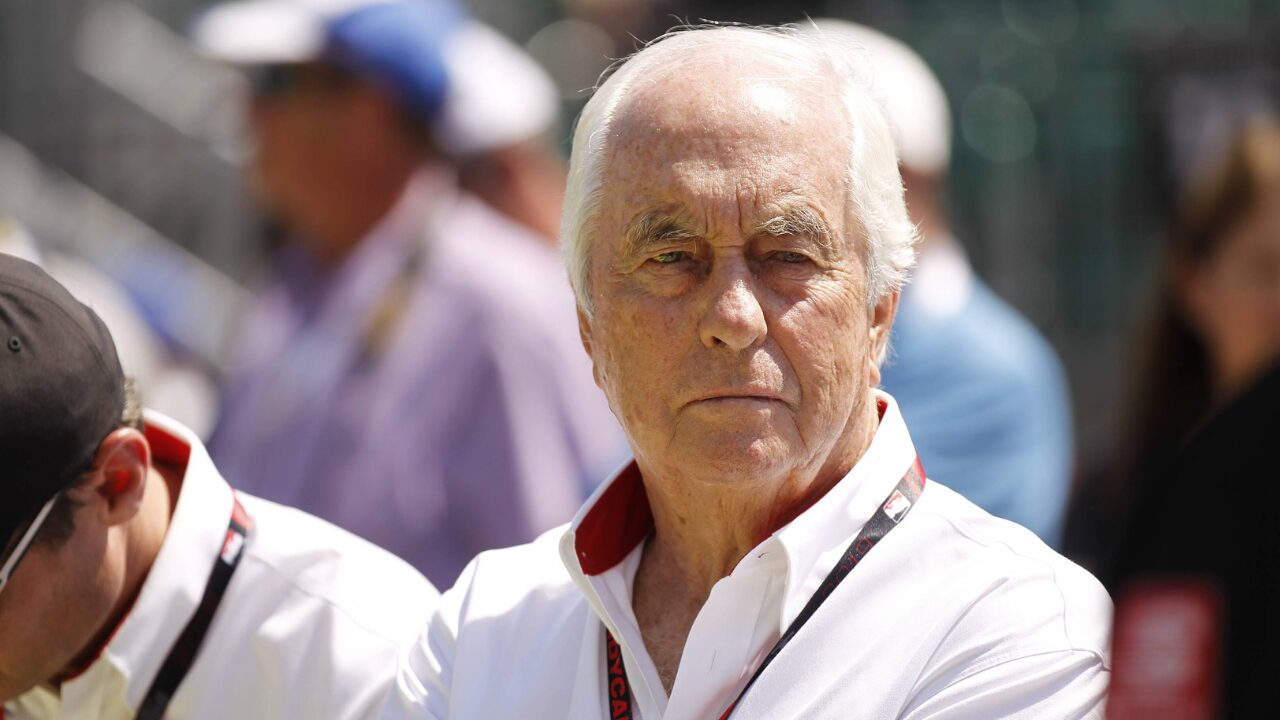
Few know how to put on a major race better than Roger Penske. The Indianapolis 500 remains a spectacle in large part because of his $50 million investment in the iconic Speedway. So when Penske spends a year building a race from scratch around Washington, D.C.’s National Mall, with the President expected to pace the field in an armored limousine, it is worth paying attention. This time, it’s the Freedom 250 Grand Prix.
Watch What’s Trending Now!
Sports Business Journal’s Adam Stern put it plainly ahead of the weekend: “This week’s Freedom 250 Grand Prix may not garner the viewership of an Indy 500, but it could get more media exposure than any event in IndyCar history.”
Here is the number behind that. IndyCar’s annual media rights deal brings in roughly $35 million. The Freedom 250 Grand Prix of Washington D.C. is already approaching $500 million in advertising value, and the cars have not moved yet.
The Freedom 250 Grand Prix is one of two major events President Donald Trump tied to America’s 250th anniversary celebrations this summer, the other being UFC’s card at the White House in June. President Trump authorized this one directly and is expected to be on the grounds Sunday.
There have been hints that the “Beast,” the President’s armored limousine, could pace the field before the start of the race. Chairman Bud Denker has spent months working with local law enforcement, including the Secret Service, to prepare for what a street race in the nation’s capital will look like up close.
“They know what a race is now,” Denker said. “I took 50 people from the mayor’s office, fire department, EMS, Capitol Police, park police, and I took them to Arlington, so now they know what Arlington is, because to talk about a driver’s right, a driver’s left, what no man’s land means, where the fence is — that is important.”
The circuit is a temporary 1.7-mile layout with seven turns running past the Capitol, the Washington Monument, and the Smithsonian. The Freedom 250 Grand Prix was originally planned for 125 laps but was extended to 147 to cover exactly 250 miles, a nod to the anniversary. The added distance also forces an extra pit stop, bringing another layer of strategy into the race.
Demand from the public was never a concern, with more than 288,000 people applying for free general admission tickets. Daily attendance is expected to reach between 120,000 and 130,000. The three-story hospitality suites along the circuit, with 45 units available, are priced at $200,000 to $250,000 each and are almost entirely sold out.
The sponsor list also looks nothing like a typical IndyCar weekend. Boeing, Amazon Web Services, Delta Air Lines, United Airlines, Wells Fargo, Dell Technologies, Gulfstream Aerospace, and more than a dozen other major brands have signed on. Most have never been involved with IndyCar before.
Monumental Sports and Entertainment, the biggest sports business operation in D.C., handled the sales push after being named the official marketing partner back in February.
“We felt great about it from the beginning, so the market responded quickly,” said Jim Van Stone, Monumental’s president of business operations.
UFC’s June event at the White House generated $1 billion in media value. IndyCar is already nearly halfway there. That is the commercial reality Penske and Denker have created. What they have also created, however, is a very different kind of headache for the city around them.
How Freedom 250 Grand Prix Is Shaking the Foundations of History
Getting city streets ready for open-wheel cars traveling at 185 mph is no simple task. Engineering crews had to weld down more than 220 manhole covers along Pennsylvania, Constitution, and Independence Avenues. At those speeds, the aerodynamic suction generated by IndyCars can be strong enough to lift heavy iron covers off the ground, making them a serious safety concern for the Freedom 250 Grand Prix.
Workers dropped 1,800 concrete barriers along the curbs, building a continuous wall between the public and the circuit. Major street closures began August 18 and run through August 26, with city officials urging residents to take the Metro.
The National Air and Space Museum, the National Museum of Natural History, and the National Museum of the American Indian all sit inside the security perimeter. This weekend, a tourist who wants to walk into any of those federal buildings needs a Grand Prix ticket to do it.
The bigger concern, however, is what those buildings hold. The Wilbur J. Cohen Building sits right at Turn 6 and is known as the “Sistine Chapel of the New Deal” for its rare collection of 1930s murals by Ben Shahn and Seymour Fogel.
The Living New Deal group formally warned the General Services Administration that 130-decibel engine noise and sustained ground vibrations could cause micro-cracks and permanent paint damage to the murals. The Trump administration dismissed those concerns, saying Penske Entertainment had met all federal safety requirements.
Not everyone took that at face value. The National Gallery of Art conducted its own independent vibration study and began boarding up the famous glass skylights designed by architect I.M. Pei. A separate protective barrier was also put up around an outdoor Alexander Calder sculpture. The Smithsonian said its foundations are safe but confirmed that engineering teams will monitor vibration levels throughout the weekend.
Before a single lap has been run, this race has already changed what a race weekend can look like commercially. What it does to everything around it, however, remains an open question.