Imago
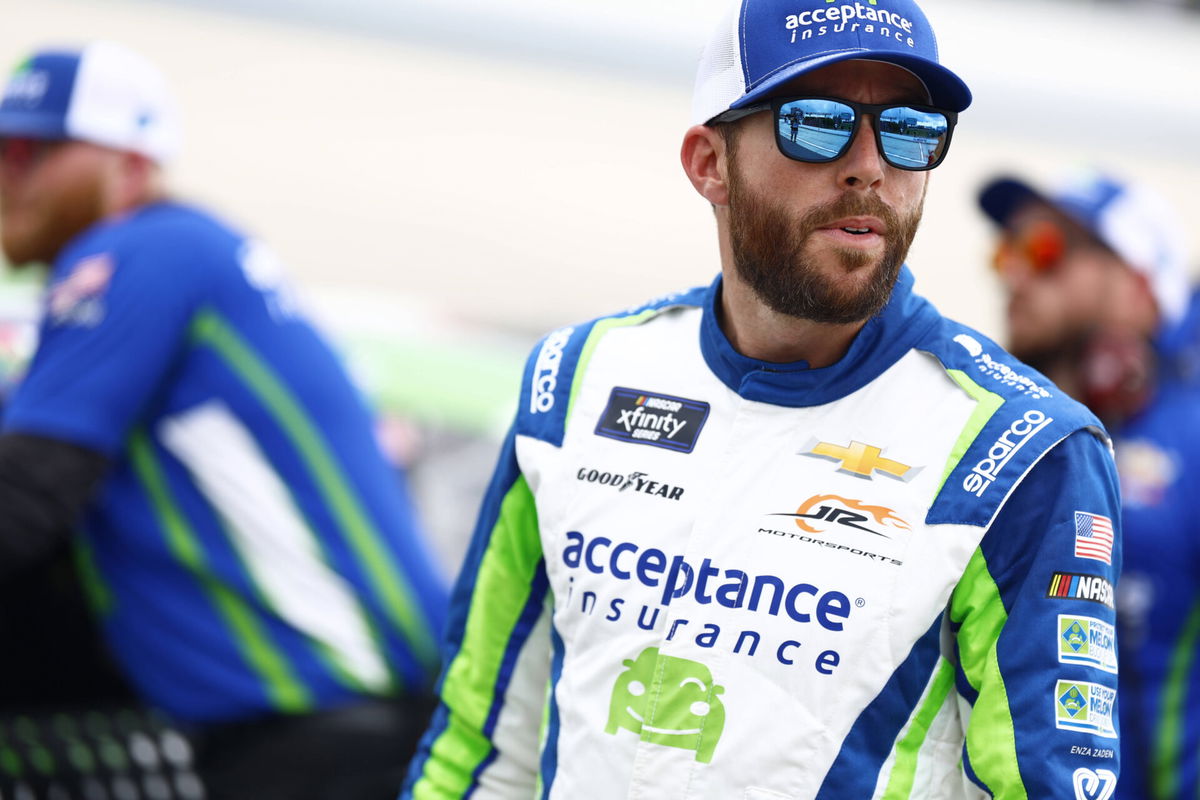
July 19, 2025, Dover, De, USA: ROSS CHASTAIN 1 of Alva, FL gets ready to qualify for the BetRivers 200 in Dover, DE. Dover USA – ZUMAa161 20250719_aaa_a161_021 Copyright: xWalterxG.xArcexSr.x
Imago
July 19, 2025, Dover, De, USA: ROSS CHASTAIN 1 of Alva, FL gets ready to qualify for the BetRivers 200 in Dover, DE. Dover USA – ZUMAa161 20250719_aaa_a161_021 Copyright: xWalterxG.xArcexSr.x
Imago
July 19, 2025, Dover, De, USA: ROSS CHASTAIN 1 of Alva, FL gets ready to qualify for the BetRivers 200 in Dover, DE. Dover USA – ZUMAa161 20250719_aaa_a161_021 Copyright: xWalterxG.xArcexSr.x
Imago
July 19, 2025, Dover, De, USA: ROSS CHASTAIN 1 of Alva, FL gets ready to qualify for the BetRivers 200 in Dover, DE. Dover USA – ZUMAa161 20250719_aaa_a161_021 Copyright: xWalterxG.xArcexSr.x
While Christmas usually brings warmth and celebration, Ross Chastain’s season a few years ago unfolded as if the Grinch had stolen more than just holiday cheer. The Florida native had weathered plenty of turbulence in recent seasons, but nothing tested him quite like the moment his world unraveled in 2019. Long before wins, point standings, or redemption arcs, he found himself caught in the fallout of the DC Solar scandal, a chapter that forced him to confront pressure, uncertainty, and his own reactions in real time. Looking back, Chastain didn’t sugarcoat, signaling the red flags he should have picked up earlier.
Watch What’s Trending Now!
“I didn’t hear it two days after the raid because they all went silent out there,” he said on the Dinner with Racers podcast. “And then it slowly trickled on the local news link that was sent to somebody. Some of the people knew but they didn’t tell me until like a couple days later… Erickson called me, was like, ‘Hey, you sit down.’ And I was like, ‘What?’ ‘You need to sit down for a minute. We had something to tell you.'”
The incident refers to the stunning downfall of DC Solar, Ross Chastain’s full-time Xfinity Series sponsor for the 2019 season.
Just days after a company Christmas party, one where Pitbull made an appearance and one that Kyle Larson called “best holiday party I’ve ever been to by far!!”, the walls came tumbling down.
FBI raided the headquarters of the renewable energy company and owner Jeff Carpoff’s home before the new year, deeming them unfit to fulfill their sponsorship obligations with Chastain’s team Chip Ganassi Racing. The Florida native had run three races in DC Solar-backed equipment in 2018, winning once and doing enough to secure a full-time ride.


What seemed like a long-awaited breakthrough quickly unraveled. Authorities confirmed search warrants had been carried out at Carpoff’s residence, but the details were initially scarce.
The full picture emerged later when Carpoff and his wife, Paulette, pleaded guilty to conspiracy, wire fraud, and money laundering. As per the Department of Justice, the billion-dollar Ponzi scheme was the biggest criminal fraud scheme in the history of the Eastern District of California. Jeff Carpoff was ultimately sentenced to 30 years in prison.
But, for Chastain, the first red flag he faced with Carpoff was during an interaction with the now-Trackhouse Racing driver’s dad and the company.

Imago
Ross Chastain
“You would get the rental money back,” Chastain added. “And then after five years, they would buy it back from you at a depreciated value of whatever percentage it was agreed upon. We were in year six, and they hadn’t bought it back. My dad asked them. They were like, ‘We haven’t actually done that. We did an amendment and we sent it to us’ like a sixth or a seventh year thing. That was a red flag.”
That said, the ripple effect hit fast.
For a driver who had spent years looking for opportunities in underfunded cars, the loss was devastating. The collapse of the sponsorship didn’t just end a program; it pulled the ground out from under Chastain at the moment his career finally seemed to be gaining traction. However, no one understands the importance of sponsors needed for racing better than Chastain.
Chastain reveals the dark reality of funding in NASCAR
Motorsport isn’t built on talent alone; it runs on money, equipment, and opportunity. Ross Chastain learned that early. Unlike many drivers, he didn’t come from a racing dynasty or a family with deep pockets.
His roots were in watermelon fields, not pit lanes, with generations of family working as farmers in southern Florida.
When Chastain began breaking into NASCAR, the financial reality hit hard. Occasional starts were manageable, but sustaining a career at the national level required far more funding than his family could provide. Even with the help of agricultural-linked sponsors, the numbers rarely added up.
“That struggle never really ends,” he said. “For my team to be competitive costs about $50,000 a race. We figured we might be able to run one race, but after that, we would be out of people and money.”
At one point, the family realized they couldn’t even fit enough sponsor names on a race truck to cover the cost of a single season. But the grind never really stopped.
Each race came with a price tag, and without the budget of powerhouse teams, Chastain raced with whatever resources he could secure, knowing speed often followed spending.
Today, as a track house racing cup series Driver, the footing is steadier, but the lessons from those lean years remain a defining part of the story.
Related Newsletters