Getty
AJ Allmendinger (Image: Getty)
Getty
AJ Allmendinger (Image: Getty)
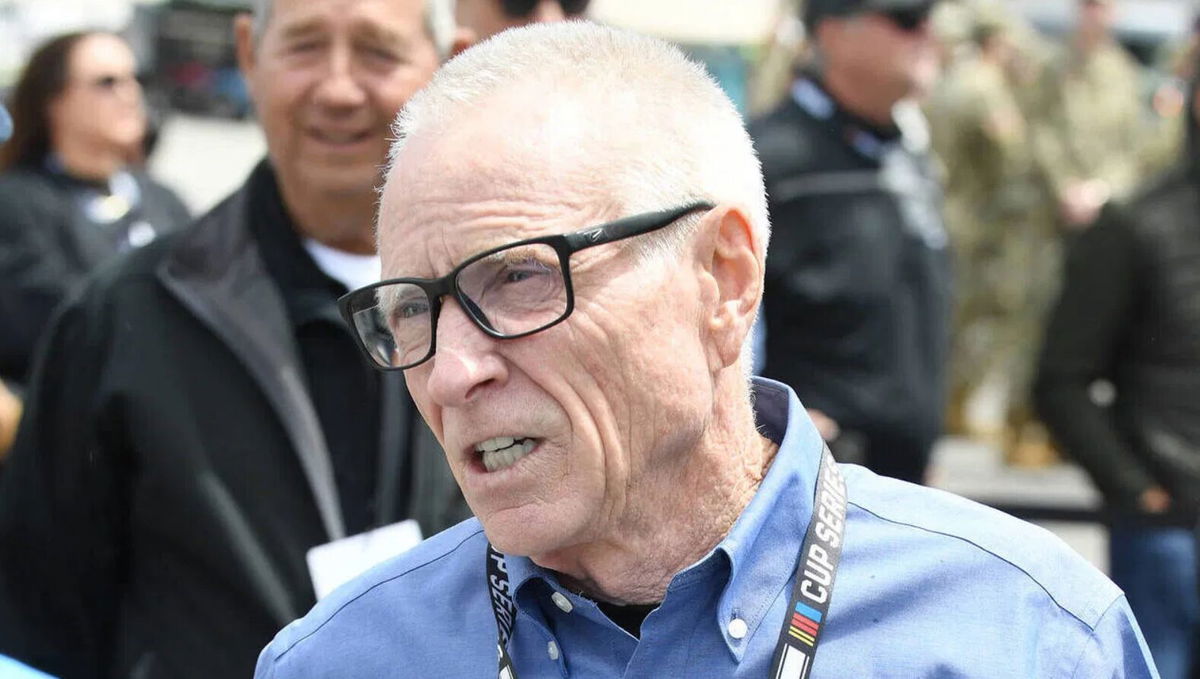
In the early nineties and 2000s, it was a familiar sight to see Mark Martin cruising at 200 mph when he was one of NASCAR’s most fearless competitors. Back then, pushing the limits was ‘just another day at the office’ for him. But it looks like the times have changed. Years after stepping away, Martin found himself in a much slower seat, and what he felt in that moment completely flipped his perspective on today’s drivers.


Mark Martin’s Darlington moment changes everything
Watch What’s Trending Now!
“So,we’re heading down to set the cruise control at 45 because that’s pit road speed and our pace car speed. We’re practicing, and I look down there at Turn 1 and it scared the sh*t out of me. It just did.”
Now, that admission, as raw as it can get, from Mark Martin says more than years of commentary ever could. The NASCAR Hall of Famer recently opened up about his experience at Darlington Raceway, where he served as the honorary pace car driver for the 2026 Goodyear 400.
On March 22, Mark Martin led the field to green in a race eventually won by Tyler Reddick. But for him, the real story wasn’t the race, but the realization that hit before it even began. Driving at just 45 mph, a fraction of racing speed, Martin found himself genuinely shaken looking into Turn 1 at Darlington, one of the toughest tracks on the circuit. And that’s what makes this moment so striking.
“I can’t believe we used to do that!”
Driving the pace car at Darlington gave @markmartin a new respect for current #nascar #racing@6matthewmartin pic.twitter.com/iotYEP1WGP
— Kenny Wallace Media (@KWallaceShow) March 28, 2026
As you guys know, for years, Martin had been one of the more outspoken critics of modern-day NASCAR drivers. He often questioned the overall depth of talent, the evolution of driving styles, and even the marketability of newer stars compared to past generations. To him, something about the sport felt different (and not always in a good way).
But this experience flipped that narrative. Seeing the track from a different lens, without the adrenaline, without the race-day mindset, gave him a renewed appreciation for just how demanding the sport remains. Sometimes, it takes stepping away from the driver’s seat to truly understand what today’s drivers are pulling off every single week.
Martin sets one condition for his return
For all the renewed respect he’s gained for today’s drivers, Mark Martin still isn’t itching to jump back behind the wheel. At least not in the traditional sense. But interestingly, he hasn’t completely shut the door either.
“I wish they would let me do a test and dictate what was done on the car, just one time. Let me have one car, one team, and let’s have them do the things that I want to do and if the things that I want to do show something, then let’s have a group of cars come and run that, because I have my own beliefs, and yes, it’s based on 40-year-old information, but ….” Martin said.
That’s not nostalgia talking but a racer still thinking like an engineer. Mark Martin’s condition is simple but telling. He doesn’t want a ceremonial lap or a feel-good comeback moment. Instead, he’s proposing a controlled test session where he can experiment with setup changes and directly measure how they impact the car’s behavior, especially in traffic.
His focus? Challenging some of the modern design philosophies that define today’s NASCAR, particularly around aerodynamics and race quality. It’s a fascinating idea. If approved, such a test could act as a bridge between old-school driver instinct and modern data-driven engineering.
Mark Martin’s decades of experience, paired with today’s technology, might uncover insights teams haven’t fully explored yet. And more importantly, it raises a bigger question: how open is NASCAR to learning from its past while shaping its future?