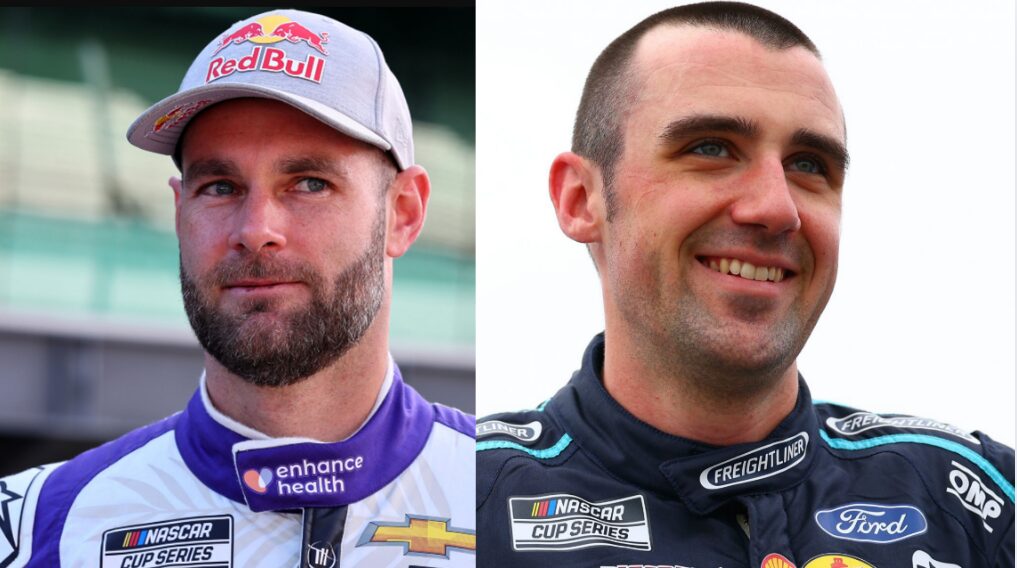
Supercars aren’t easy, and Shane Van Gisbergen knows that better than most. The three-time supercar champion has built his racing career around it, and for once, he didn’t feel like the outsider when his NASCAR peer Austin Cindric stepped on the field. And although the 27-year-old driver finished dead last, SVG couldn’t help but applaud Cindric’s confidence. Speaking to SpeedCafe, the Kiwi didn’t hold back on his American driver’s efforts.
Watch What’s Trending Now!
“Well, he was last. Like our guys are so good over there,” he said. “That’s the thing. People realize the level of supercars is really high. Like the guys are even the back markers are pretty decent drivers all through the junior categories.”
Austin Cindric made a headline-grabbing leap into the Repco Supercars championship with a wildcard entry at the BP Adelaide grand final by lifting a Tickford Racing-prepared Ford Mustang against Australia’s elite touring drivers.
The 2022 Daytona 500 champion, a NASCAR regular, jumped into a series renowned for its intense competition and street circuit challenge, racing in the iconic Adelaide event with backing from Ford Performance.
Road course racing, however, is the key factor here. For a driver accustomed to nothing but left turns on ovals, navigating right-hand corners can be a major adjustment.


That said, SVG did not shy away from acknowledging Austin Cindric’s efforts.
“The conditions looked pretty difficult on Saturday, and yeah, he did a solid job,” SVG said. “It’s always tough jumping into a category like that and pushing hard. If you put any of the Supercars drivers into an oval, they’d be at the back as well. They’re two completely different disciplines.”
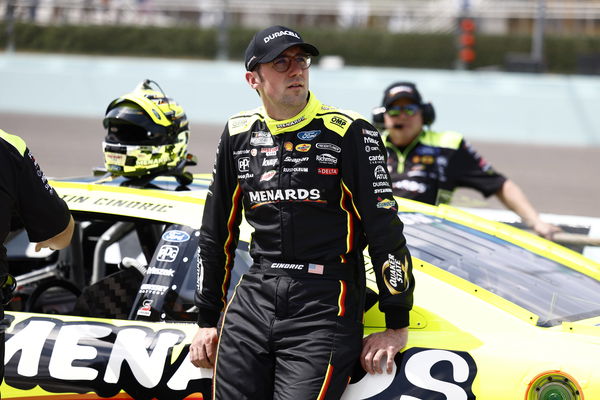
Imago
March 22, 2025, Homestead, Fl, USA: AUSTIN CINDRIC 2 of Mooresville, NC gets ready to qualify for the Straight Talk Wireless 400 in Homestead, FL. Homestead USA – ZUMAa161 20250322_aaa_a161_067 Copyright: xWalterxG.xArcexSr.x
The supercar adventure wasn’t just symbolic; it came with real preparation and acknowledgement of the series’ unique difficulty. Ahead of his Adelaide debut, the American participated in ride days and test sessions to acclimate to the Gen3 Mustang and street circuit conditions, with Supercars CEO James Warburton calling his wildcard effort a genuine cultural crossover that would engage both Supercars and NASCAR audiences alike.
For once, the NASCAR driver gets a taste of what SVG built his career around. It is no secret that the key is that we had to learn things the hard way when he shifted to NASCAR’s ovals.
And while he made a name for himself, dominating and winning almost every road course on the 2025 calendar, the New Zealander is chalking up his oval domination.
SVG’s oval experiment that paid off
SVG’s 2025 season was defined by his dominance on road and street circuits, where he closed the year with five wins and seven top 10 finishes. Most of that success came away from ovals, which early in the season proved to be his biggest challenge.
Regularly finishing outside the top 20, SVG was forced to adapt to NASCAR’s unique oval racing demands and the car’s handling characteristics, an adjustment that took time and patience.
As the season progressed, the narrative began to shift. SVG steadily improved on ovals, breaking into the top 20 at tracks such as Michigan and Darlington before reaching a significant milestone in September with his first oval top 10 finish at Kansas Speedway.
That late-season breakthrough carried real meaning. Speaking with Speedcafe, the Kiwi driver explained that playoff pressure initially stalled his momentum, but once he was eliminated from championship contention, the team had the freedom to experiment.
“I didn’t do a good enough job, and that’s the pressure of the playoffs,” he said. “It felt like we were building good momentum, and then we struggled a little. I didn’t drive well enough, and as soon as the playoffs ended, we tried different setups the very next week. Once we were out of the playoffs, we were willing to take some risks with the cars.”
Those changes addressed a key weakness in corner entry, an area where he had lagged behind his teammates. With a setup better suited to his driving style, the results followed quickly.
He qualified strongly at New Hampshire and ran inside the top 10 during Stage One, backed it up with another top 10 finish at Kansas, and showed a solid foundation at Las Vegas.
While there is still room to grow, the trajectory is clear. SVG heads into 2026 with confidence, momentum, and a rapidly improving oval program, a clear signal to the field that he is no longer just a road course threat.
Related Newsletters