Shane van Gisbergen was unarguably the deserving recipient of the Rookie of the Year award this season. Last year, having finished the Xfinity (now O’Reilly Auto Parts) Series in 12th place led to his Cup rise and gave him a good position with Trackhouse Racing.
Watch What’s Trending Now!
Piloting the #88 Chevy, Gisbergen managed to put himself in victory lane a whopping five times. However, he still finished the season in 12th place owing to his performance in ovals. There was a certain pattern he followed throughout the season, one which seems hard to break. However, Justin Marks gave him a rather odd solution to overcome this.
Shane van Gisbergen’s oval problem earned an odd solution from Justin Marks
Unlike most of the Cup Series drivers, Gisbergen does not have enough experience racing on oval tracks. He ran in the Supercars Championship for all seasons between 2008 and 2023, and then made his full-time NASCAR debut in the Xfinity Series. He hasn’t been the best-performing on oval tracks. In fact, all five races he won in 2025 were on road courses. The rest of the time, he mostly had mid-pack results in the oval races.
While his performance on road courses has been strong, Trackhouse owner Justin Marks also wants his driver to perform better on other tracks, and he dropped quite a suggestion for it.
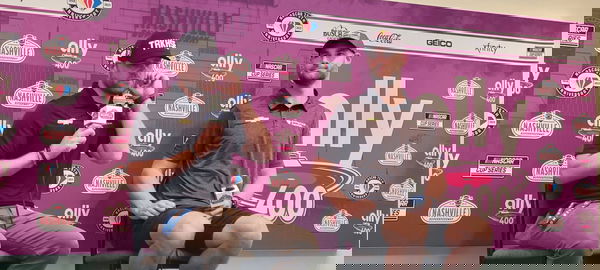
“Justin said, he’s like I was the same in ARCA. You just got to send it in there and the thing will stick and spin out. He’s like he’s fully expected me to junk cars all last year,” Gisbergen said on the Dinner with Racers podcast.


Imago
via X (@STaranto92)
As per Shane van Gisbergen, Marks wanted him to push harder on the track, especially during the qualifying sessions. This was a major weakness for him during the season. He did perform quite a few overtakes in the races, but almost always qualified towards the back of the grid.
Even though pushing hard could have resulted in a crash, Justin Marks still trusted Gisbergen and asked him to go flat through the corners.
“I didn’t crash that much but I qualified bad and built up during the race. He basically told me, Kansas just go in there flat and see what happens. I did qualify decent there at Kansas. I did it flat, and my brain was undoing my foot just come up,” he explained.
The suggestion seemed to be working for SVG. But why did he find it hard adapting to oval tracks?
Why is adapting to oval tracks difficult for drivers like SVG?
There are quite a few differences between a road course track and an oval track. Hence, most of the drivers find it hard to adapt to either of those, and so was the case for Gisbergen in 2025.
He was one of the more competitive drivers in the Supercars Championship. But coming to stock car racing, he had to unlearn a lot of the things he had been following ever since his career started. Even the most basic difference in the two types of circuit provides a challenge to the drivers.
Imago
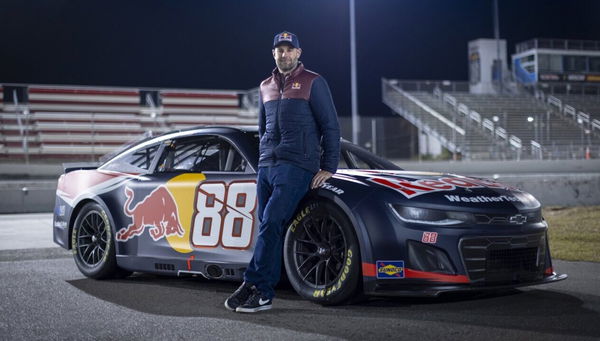
Shane van Gisbergen Red Bull
For example, road course drivers gain most of the time in heavy braking zones, which are not present on oval courses. As SVG commented, he didn’t find it comfortable to push the car flat out through the corners on ovals, since he is used to lifting on corners in Supercars. Hence, he lost plenty of time.
There are other differences, such as the strategies. Road courses demand more aggressive driving, but one has to manage their tires more in oval racing, especially in NASCAR.
Moreover, dirty air dominates in oval racing (draft from other cars). On the other hand, it slows the drivers on road courses through the corners, as it also affects the aerodynamics.
These were some of the issues that Shane van Gisbergen faced in his first season with Trackhouse Racing. Racing on an oval requires taking more risks, which is simply not what he’s used to. Even though oval tracks seem easier to race on paper, it can sometimes be the other way around.
Nevertheless, Gisbergen showcased some improvement towards the end of the season, and Justin Marks’ suggestion has helped keep him consistent. But can he manage a race win on an oval in 2026?
Related Newsletters