
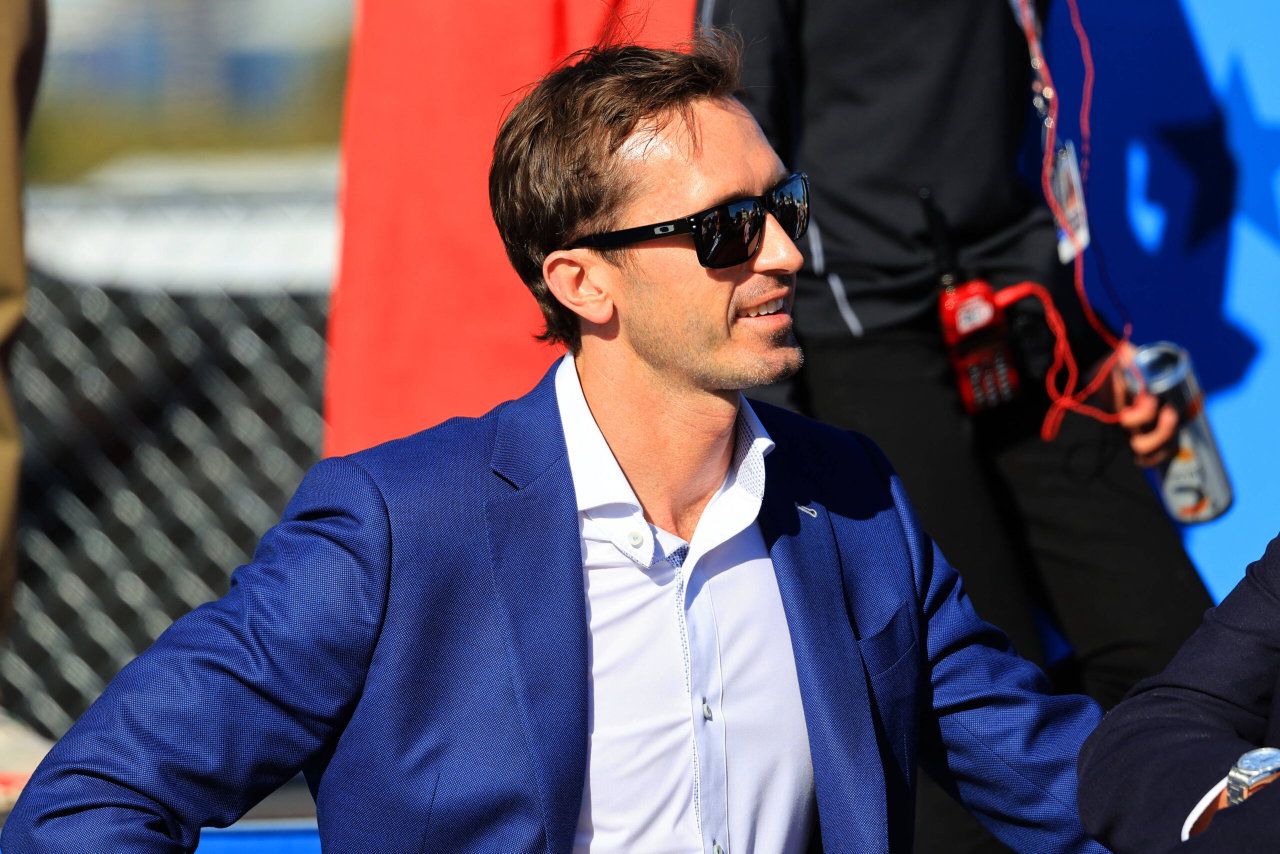
NASCAR is currently in the second year of its biggest media rights deal ever, a seven-year agreement worth $1.1 billion per season and split between five major partners. The deal runs through 2031, meaning the future of the sport’s broadcast is secure, for now. However, Chief Operating Officer Ben Kennedy has already hinted that NASCAR is thinking about what comes next.
Watch What’s Trending Now!
For the post-2031 cycle, NASCAR could consider major changes, including rethinking its Sunday schedule to avoid clashing with football season. Kennedy said the focus is on finding the right balance between giving broadcasters enough races while continuing to grow the sport.
“Something we’re thinking about as we think about 2032 inventory start dates and dates. You know, frankly, should we be going up against the NFL at this point in the year on every single Sunday? It’s a challenging proposition,” Kennedy said on the podcast.
It’s a big statement because fans and even some drivers, like Chase Elliott, have asked NASCAR to consider shifting Cup Series races to Saturdays. The Hendrick Motorsports driver empathized with fans who spend their hard-earned money to travel to races, only to face the logistical nightmare of commuting home late at night, with most of the fanbase having to report to work the next day.
Sometimes, unforeseen events can make it an even bigger ordeal. In Atlanta, for instance, bad weather caused the race to end at almost 2 a.m. on Monday this year.
Kennedy, however, didn’t address that issue on the podcast. His concern was the NFL, which begins in the fall and dominates the same television window NASCAR occupies during the most exciting part of its season, the Chase. Going up against the NFL is no easy task, even for the premier stock car racing series in the country when it is at its most important stage.
On average, a Cup Series postseason race between September and November 2025 drew around 1.5 to 2.8 million viewers, according to Nielsen. By comparison, NFL Sunday afternoon windows regularly pulled in 18 to 24 million viewers. NASCAR wants to avoid that clash, and moving its races away from that window would help it avoid going head-to-head with one of the most-watched sports leagues in the world.
There’s still time before NASCAR makes a final decision, but Kennedy revealed on the podcast that the sanctioning body has already met with the race teams earlier this September. What measures they take as they begin planning for the future remains to be seen, but there’s one thing few can argue with. Financially, the current deal has been a massive success for the sport.
With $1.1 billion guaranteed annually for seven years, NASCAR and its stakeholders have financial stability, while broadcast partners like Amazon Prime (for the Cup Series) and The CW (for the O’Reilly Series, which is streamed free on their platform) have received widespread praise for how they showcase the sport.
New and exciting venues have been added to the calendar, with Chicagoland making its return to anchor the launch of TNT Sports’ portion of the 2027 season’s coverage. North Wilkesboro became a points-paying race, and in 2026, NASCAR raced at an active military base in Coronado, San Diego, California, for the first time ever. The steps are being taken, and the effort is being recognized. The next step, however, has to be addressing the biggest drawback of this $7.7 billion deal: viewership.
The deal has the fewest free-to-air NASCAR races in history, with network races dropping from 20 to just 8 across FOX and NBC. As a result, casual viewership has taken a hit.
In the first year of the deal, overall Cup Series viewership fell 14.7% year over year, averaging 2.45 million viewers compared to 2.87 million before. Fans have also grown tired of needing multiple paid cable channels and streaming subscriptions just to follow a 38-race Cup Series season.
Kennedy’s comments show that NASCAR is already thinking about how to improve the numbers. The sport has the money and investment. With the 2032 cycle still a few years away, NASCAR has time to decide what needs to change. How it handles the next deal could shape how fans watch the sport for years to come.