
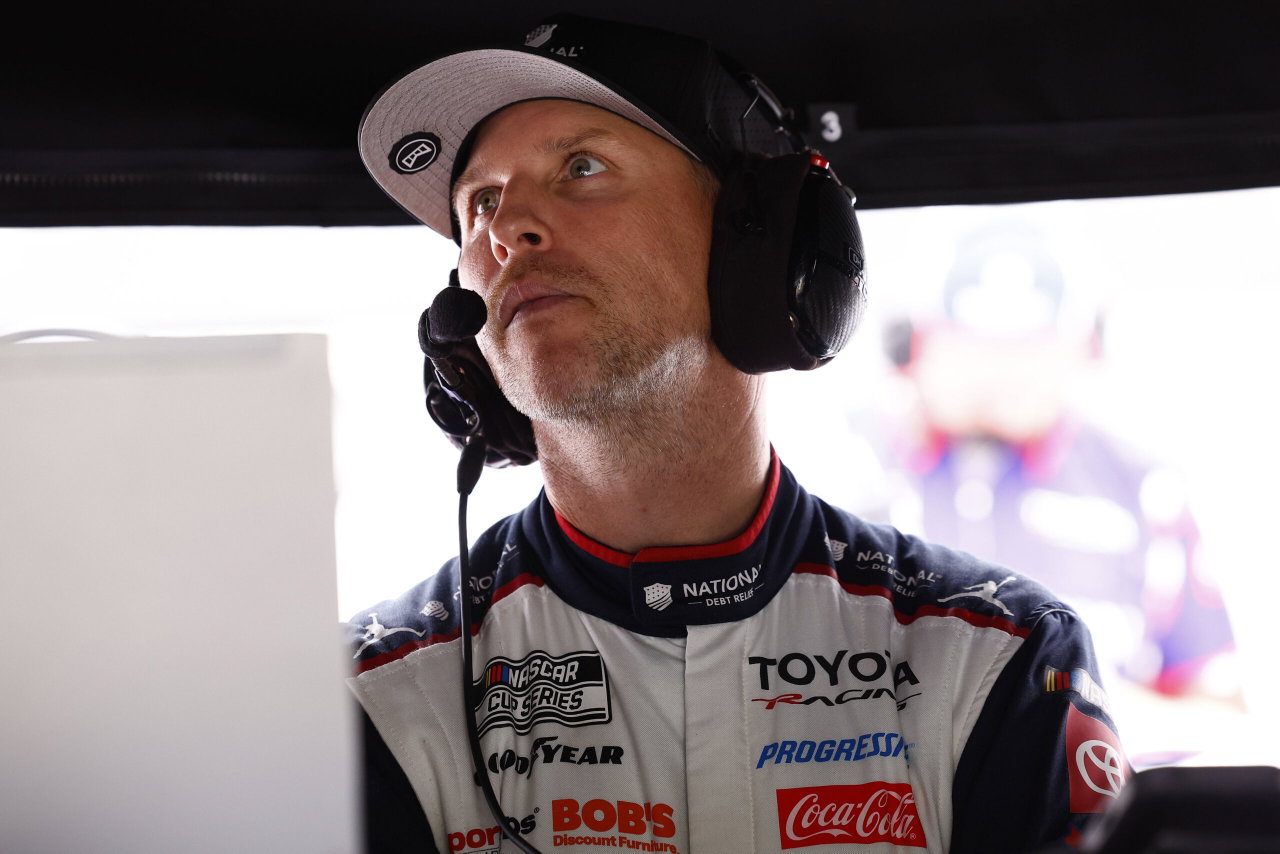
NASCAR introduced competition cautions to give teams a chance to check their cars and assess tire wear, particularly when rain or other disruptions cancelled practice and qualifying, leaving teams with limited data before race day. One early example came at the 2003 Subway 400 at Rockingham. NASCAR scheduled a competition caution on Lap 45 after rain disrupted the previous day’s running, allowing teams to make mandatory pit stops. This move significantly helped teams adjust their setups and address potential issues before the race progressed.
Watch What’s Trending Now!
But now, in 2026, after the Charlotte Chase race, Denny Hamlin is questioning whether such planned interruptions protect teams from their own problems at the expense of authentic racing.
“I don’t know. It used to be for tire wear, but we’re at a point with our tires. Everyone knows when your tires are starting to wear out, and you’ve got to just pit. But I agree there. There shouldn’t be a competition caution to save the race teams from their issues,” Denny Hamlin shared his views on the Actions Detrimental podcast.
Denny Hamlin believes NASCAR needs to rethink its use of competition cautions. The issue came up at Charlotte Motor Speedway ahead of the Bank of America 400. Rain had washed out practice and qualifying, leaving NASCAR with limited information about how the cars would perform over a full race run. Officials scheduled a competition caution around Lap 35 to give teams an opportunity to inspect their cars and evaluate tire wear. But Hamlin questioned whether such an early interruption was necessary.
The timing is worth noting. The Bank of America 400 was scheduled for 267 laps, with the first stage ending on Lap 80, the second on Lap 165 and the race finishing on Lap 267. That meant the competition caution came before the field had completed even half of the opening stage. Rather than allowing teams to continue running and figure out how their tires were holding up, the planned yellow gave them an early chance to pit and make adjustments.
Hamlin had started 12th and was working his way toward the top 10 when the caution period arrived. However, his pit stop brought another problem. His team received a penalty after a crew member fell over the wall and touched the hot side of pit road while retrieving a tire, also interfering with Connor Zilisch’s crew in the neighboring stall. The incident added to Hamlin’s difficulties, although his criticism was aimed at the broader use of competition cautions rather than just what happened to his own team.
There are, of course, historical reasons for NASCAR to be cautious about tire wear. The 2008 Brickyard 400 at Indianapolis Motor Speedway remains a clear example of how serious the problem can become. Some tires failed in fewer than 15 laps, leaving rubber debris around the track and forcing repeated caution periods. Eleven cautions were attributed to tire issues.
That kind of situation presents a genuine safety concern. Hamlin’s argument, however, is that teams should not automatically receive a planned caution whenever tire wear becomes a factor. If drivers can feel their tires losing grip, crews should decide whether to pit, risk staying out, or sacrifice track position to protect their cars. Those choices are part of race strategy.
Hamlin also believes stage racing limits how much tire management can influence a race. At intermediate tracks, stage lengths often allow teams to run around 40 laps on a set of tires before the next stage break provides another opportunity to pit. He pointed to races at Kansas and Las Vegas, where tire performance could change significantly as a run progressed.
Still, Hamlin acknowledged that restarts matter to NASCAR and its television audience. He also noted that passing can happen within the pack, even when the leader enjoys a substantial advantage. In his view, the Next Gen car makes it particularly difficult for following drivers to close the gap to the car at the front.
NASCAR is working on changes to the car’s aerodynamic platform, including restoring more of its pitch characteristics, to help drivers follow each other more closely. Those changes require careful consideration because adjustments could create unintended problems.
Ultimately, Hamlin wants NASCAR to give teams more responsibility for managing their own races. Competition cautions may be useful when practice data is missing or tire conditions create a safety risk, but he questions whether they should be used simply to give teams an early reset.