
NASCAR has been looking for ways to reconnect with the fans who miss the rough-and-ready character of stock-car racing. But what if the answer does not involve changing the Cup Series at all? A recent social-media interaction has raised questions about a possible partnership that could bring an entirely different kind of racing closer to NASCAR’s biggest stages.
Watch What’s Trending Now!
Veteran insider Kenny Wallace believes there is more to the latest development than meets the eye. The former NASCAR driver has been pushing an idea that could appeal to traditional fans, and he thinks an unlikely partnership might finally give it some momentum. Wallace admits, though, that he does not know what is being planned.
“Monday morning, I’m on Instagram, and guess who collaborated together NASCAR and Garrett Mitchell,” Wallace said on X. “Now I don’t know what’s coming. But you can bet your sweet a** something is coming between NASCAR and Cleetus and those Crown Vics.
“My idea was on a Friday or Saturday night at a NASCAR racetrack; let’s have some Crown Vic races. Hell, I think they should do it every d*** race, every d*** weekend. And here’s why: because that will give you all what you’ve been wanting so bad. I want to go back to the old days.”
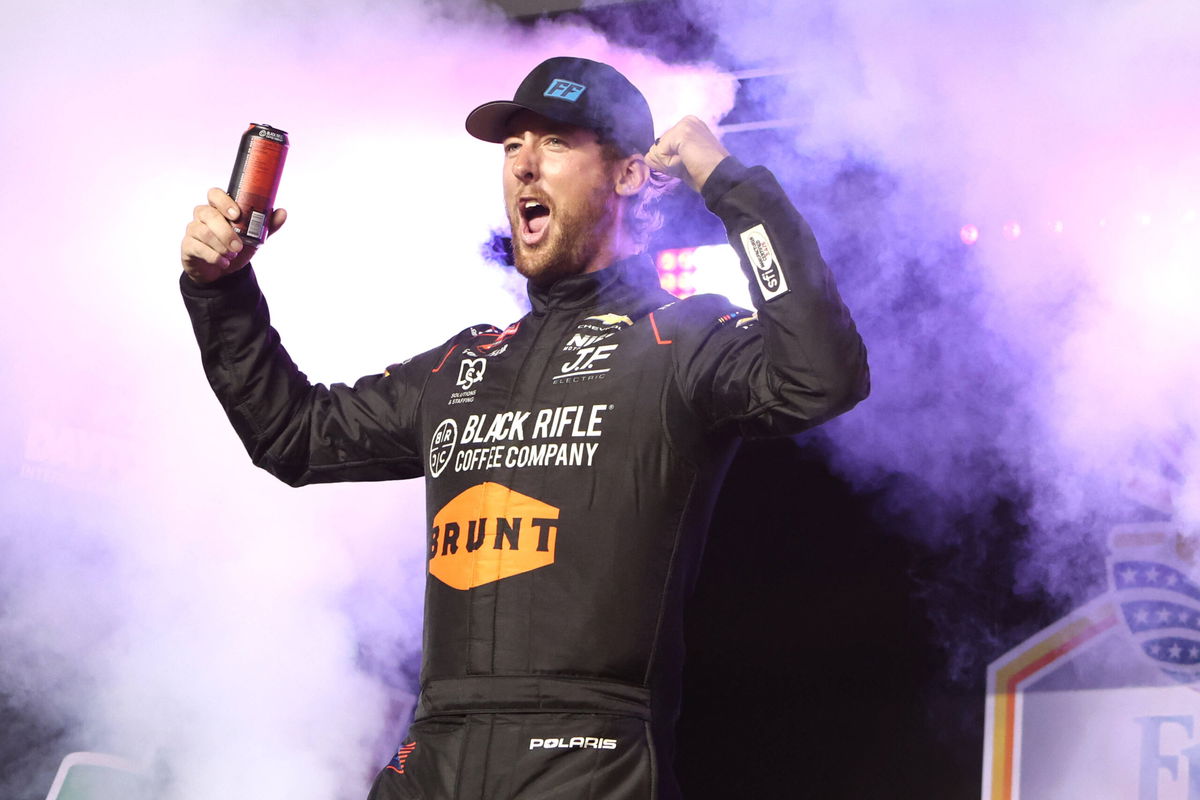
The Instagram collaboration Wallace noticed involved NASCAR and Garrett Mitchell, better known as Cleetus McFarland. Neither party has announced a Crown Vic racing partnership, but a connection between the internet personality and the sport is already growing.
McFarland made his national NASCAR debut in 2026, competing in the Craftsman Truck Series with Niece Motorsports and the O’Reilly Auto Parts Series with Richard Childress Racing (RCR). It subsequently confirmed that he would contest the full 2027 ARCA Menards Series schedule in its No. 33 Chevrolet.
That rising profile makes Wallace’s suggestion particularly interesting. McFarland has built much of his motorsports following around the Ford Crown Victoria, a full-size, rear-wheel-drive sedan that was discontinued in 2011. Built on Ford’s Panther platform, the car features traditional body-on-frame construction, a V8 engine, and a solid rear axle.
It is a far cry from the sophisticated Next Gen machinery competing in the Cup Series.
Yet that difference is exactly what makes Crown Vic racing attractive. These cars are heavy, durable, and capable of absorbing plenty of contact. Modified examples can deliver entertaining racing without the engineering complexity and enormous budgets associated with professional stock-car competition.
For fans who miss the days when drivers could lean on each other and fight for every position, the spectacle offers a familiar flavor.
McFarland has turned that appeal into an established attraction at his Freedom Factory in Bradenton, Florida. His annual 2.4 Hours of LeMullets, first held in 2020, brings together professional racers, automotive creators, and celebrities for an endurance race featuring modified Crown Vics.
The two-driver format requires teams to make a driver change, while the short-track layout encourages close racing and plenty of contact.
The November 13 edition offered a reminder of why the event has attracted attention beyond McFarland’s online audience. NASCAR Cup drivers Denny Hamlin, Ryan Preece, Ty Dillon, and Carson Hocevar joined the field. McFarland and Hocevar eventually secured their second straight victory, surviving a chaotic contest that also featured a dramatic fight with Dillon. Hamlin finished third, while Preece endured an early crash before returning in a backup car.
Wallace wants NASCAR to bring that kind of entertainment to its own race weekends. His proposal is not about replacing the Cup Series or turning professional racing into a demolition derby.
He believes Crown Vic events could serve as supporting attractions on Friday or Saturday nights, giving fans another reason to arrive at the track early.
He also sees room for manufacturers to get involved. Wallace floated the possibility of including Chevrolet Camaros and Dodge Charger models alongside the Fords, provided the competing cars came from comparable model years.
That could transform the concept into a heritage-style competition, allowing manufacturers to celebrate their automotive history while introducing a different generation of fans to their older performance cars.
There is also a wider appeal to consider. Dale Earnhardt Jr. recently compared the toughness and determination on display at LeMullets to qualities associated with mid-1980s Cup racing.
His observation underscored why the event resonates with traditional fans: the cars look familiar, the racing is physical, and drivers are not afraid to fight for position.
For NASCAR, a collaboration with McFarland could provide a natural bridge between its established audience and the millions who follow his automotive content. A branded Crown Vic attraction at selected race weekends is one possibility, although no such arrangement has been confirmed.
Wallace might not know what NASCAR and McFarland have planned, but the ingredients are there. The question is whether NASCAR sees an opportunity to bring this grassroots spectacle to its own backyard.
If the idea gains traction, fans could get something they have been asking for without NASCAR having to turn back the clock on its premier series.