
NASCAR has spent nearly eight decades building a business that extends far beyond what happens on the racetrack. Its value stretches across television rights, iconic venues, sponsorships, and a loyal American fan base. With live sports becoming increasingly attractive to investors, the sanctioning body has reasons to draw attention from businesses looking for their next major opportunity. But there is a difference between wanting a piece of NASCAR’s commercial success and convincing the people who own it to surrender control.
Watch What’s Trending Now!
For the France family, that distinction is particularly important. NASCAR remains a privately held business, and outside interest inevitably raises questions about its long-term ownership. Whether the approaches represent an opportunity to bring fresh capital into the sport or the beginning of another takeover conversation is a different matter altogether.
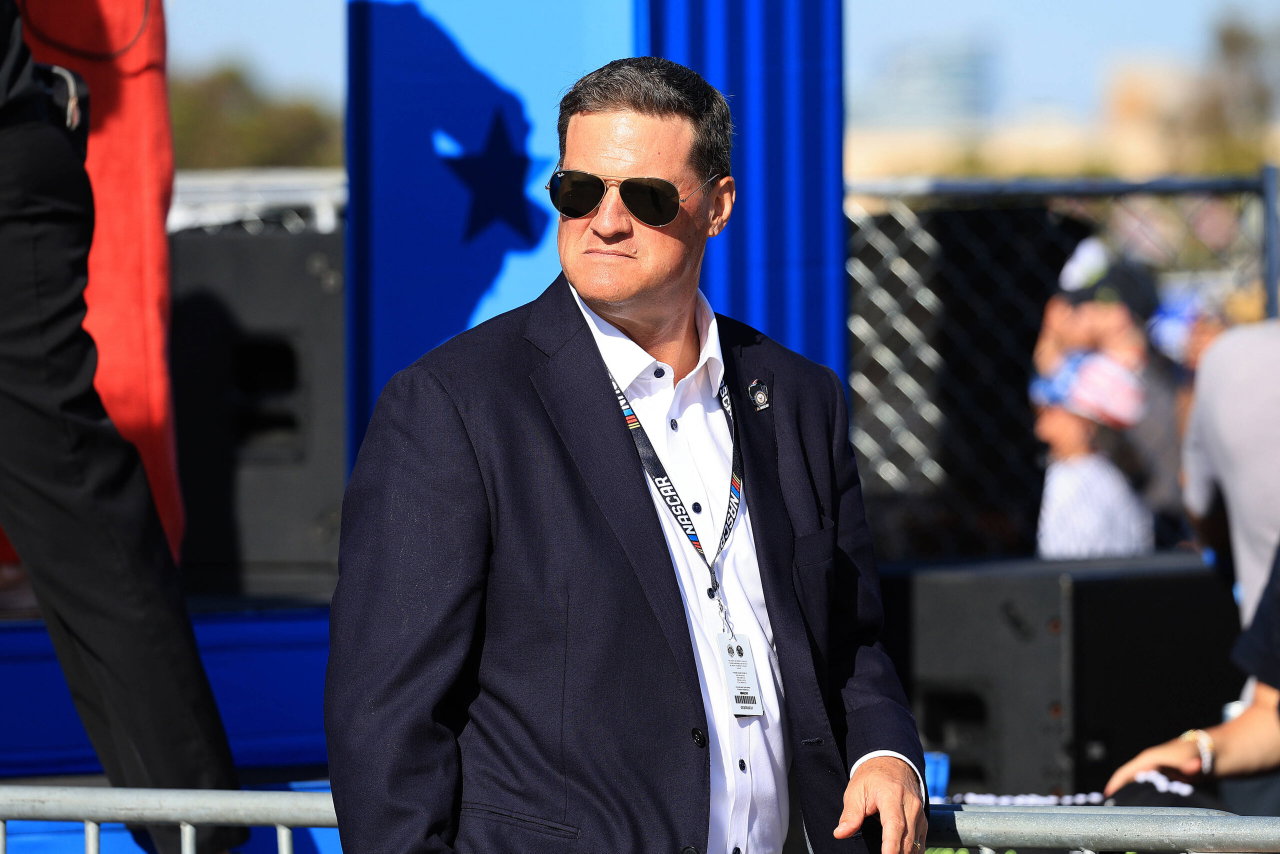
“For its part, the Daytona Beach-based governing body NASCAR has been on the receiving end of unsolicited approaches by businesses seeking equity in the company or to work on joint ventures, according to people familiar with the matter,” reported Sports Business Journal, according to SpeedFreaks. NASCAR CEO Steve O’Donnell has said that NASCAR is not for sale, and just because investors are showing interest does not mean any deal will happen.
The distinction between an outright acquisition and an investment is central to the speculation. The reported approaches do not establish that NASCAR has received a formal takeover bid or started a sale process. Instead, they point towards businesses exploring minority ownership opportunities or joint ventures. Both could bring outside money into the organization without necessarily changing who controls it.
This is not the first time the France family has faced questions about selling. In 2018, NASCAR reportedly engaged Goldman Sachs to explore potential investment and ownership options. NBCUniversal emerged as a serious prospective buyer, with discussions involving a possible minority stake. However, the proposed transaction never materialized after parent company Comcast shifted its attention towards acquiring Sky. The France family ultimately retained control.
The renewed interest is understandable when NASCAR’s commercial position is considered. Its seven-year media rights agreements, running from 2025 through 2031, involve FOX, NBC, Amazon’s Prime Video, and TNT Sports. The reported value of the Cup Series and Xfinity Series agreements is approximately $7.7 billion, providing a substantial long-term revenue foundation. Few American sports properties can offer investors that kind of established broadcasting business.
NASCAR also has an important advantage in its ownership of a significant portfolio of racing venues. Its 2019 acquisition of International Speedway Corporation brought the two businesses together, giving NASCAR greater control over its tracks and the commercial opportunities surrounding them. Beyond race-day ticket sales, those properties offer potential for hospitality, entertainment, real estate development, and other events. An investor interested in unlocking that value might prefer a joint venture over purchasing the entire organization.
There is another reason outside capital could appeal to NASCAR. Private equity has already found its way into the team ownership landscape. Trackhouse Racing, for instance, brought in Avenue Sports Fund, led by former Milwaukee Bucks co-owner Marc Lasry, through a significant minority investment in 2024. That transaction demonstrated the appetite for motorsports investments, although buying into a racing team is fundamentally different from acquiring an interest in the sanctioning body.
The financial case for accepting an investor is therefore straightforward. NASCAR could unlock some of its considerable enterprise value while bringing in capital to strengthen its international presence, improve digital distribution, and develop its commercial properties. A strategic partner could also provide expertise in areas where the sport has room to grow. The France family would potentially benefit financially without necessarily relinquishing control.
However, selling would introduce complications that go beyond ownership percentages. NASCAR’s relationship with its teams has been under considerable strain, particularly following the antitrust dispute involving 23XI Racing and Front Row Motorsports. The December 2025 settlement introduced evergreen charters and ended a prolonged legal battle over the sport’s commercial structure. Although the agreement provided greater long-term security for teams, its financial terms remained confidential. Any prospective investor would inherit those relationships and the responsibility of maintaining a sustainable business for all stakeholders.
Formula One offers a useful comparison. Liberty Media completed its acquisition of the championship in 2017, in a transaction valuing the business at approximately $8 billion. Under its ownership, F1 placed greater emphasis on digital engagement, social media, international expansion, and reaching younger audiences. Netflix’s Drive to Survive subsequently helped introduce the championship to a broader American audience. The transformation demonstrated how a new ownership group could approach motorsports as a global entertainment property rather than simply a racing championship.
But NASCAR cannot simply replicate that model. Formula One operates on a global calendar, while NASCAR’s identity and commercial strength remain deeply connected to the American market. Liberty’s investment also does not establish that a sale would automatically deliver similar results for NASCAR. A new controlling owner could bring fresh ideas, but pressure to maximize returns might also influence decisions involving ticket prices, scheduling, venue development, and the sport’s relationship with its teams.
That is ultimately what makes O’Donnell’s position important. NASCAR can entertain investment proposals, explore commercial partnerships, and assess opportunities without putting the entire organization on the market. Investor interest is not the same as an acquisition agreement, and the France family has little reason to surrender control simply because outside businesses see potential in the sport.
The question is no longer whether NASCAR is valuable enough to attract serious investment. Its media contracts, venues, and commercial reach have already established that. The bigger question is whether outside capital can make the sport more valuable without compromising the control and independence the France family has maintained since 1948. For now, O’Donnell’s message leaves little room for interpreting investor interest as an indication that NASCAR is preparing to sell.