
Long before NASCAR brought stock cars to Naval Base Coronado, racers were already finding ways to turn military infrastructure into temporary race tracks. For nearly two decades, the Coronado Speed Festival transformed active runways and taxiways into a circuit surrounded by aircraft hangars, helicopters, and warships. The event eventually disappeared in 2016, but the idea never completely went away.
Watch What’s Trending Now!
On June 21, the Cup Series will race inside an active military base for the first time when the Anduril 250 debuts at Naval Base Coronado. And before a single competitive lap has been completed, drivers are already warning that the 3.4-mile layout may present one of the biggest setup compromises the Next Gen era has seen.
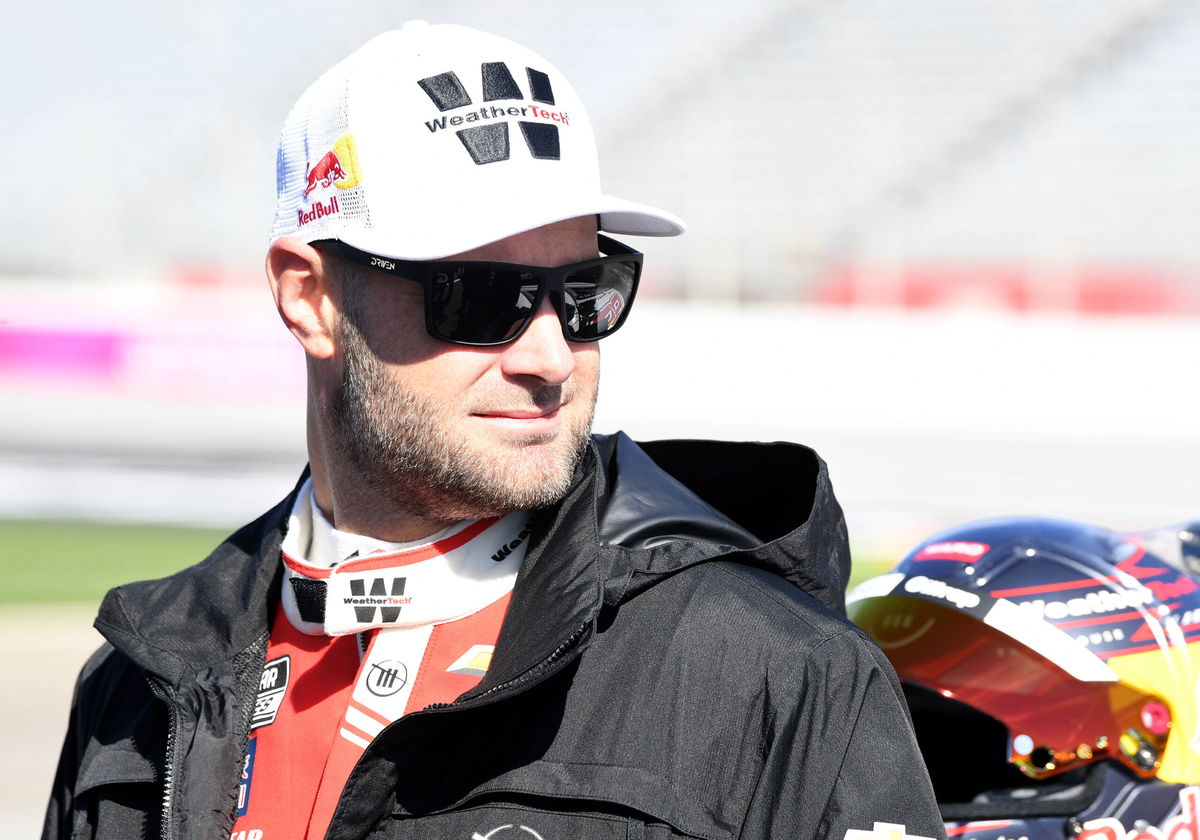
“I know if you go do a sim session for this racetrack for two hours, you’re lucky to get 20 laps because it takes so long to get around there,” Dale Earnhardt Jr. said during a recent Dirty Mo Media appearance with Shane van Gisbergen and Connor Zilisch.
“Yeah, I did some iRacing last night, actually,” van Gisbergen replied. “That’s probably the only sim work I’ve done.”
“It’s tough, man. Even the first corner on the exit of that right-hander, then you come down the hill and it’s bumpy.”
Zilisch has already compared the challenge to Chicago, NASCAR’s most recent street-racing experiment.
“Chicago was tough, but I feel like this track is even more technical than that was.”

You know San Diego is going to be tricky when SVG is crashing in the sim. 🤯 This week's guest episode with SVG + Connor Zilisch is out now. Spotify: bit.ly/3SNy4TW Apple: apple.co/4xvKS1r YouTube: bit.ly/43HTLHp
That’s where the real challenge begins. Part of this track, in NASCAR San Diego, is smooth public pavement, and part of it is the base’s old flight line, where helicopters and Ospreys normally sit. Van Gisbergen says the jolt between the two feels like Sebring, a track that’s spent decades rattling cars apart.
The challenge extends beyond the pavement. NASCAR has already confirmed that spotters will be stationed atop military barracks, permanent buildings, and even double-decker buses because a single vantage point cannot see the entire circuit. Chase Elliott recently noted that surrounding buildings create significant blind spots around portions of the course, adding another unknown to a weekend already defined by limited track data.
The concern isn’t just the track itself. It’s how the track interacts with NASCAR’s Next Gen car, which generates much of its grip through an underbody design that rewards low ride heights and stiff suspension setups. Van Gisbergen laid out exactly where that philosophy could be challenged.
“There’s a huge compromise between getting the floor on the ground and maintaining ride quality. So you’re going to see some bad-handling cars.”
The dilemma stems from the design of NASCAR’s Next Gen car. Teams typically run the platform low and stiff to maximize underbody downforce generated through the floor and diffuser. Coronado’s mix of fresh asphalt, rough military concrete and expansion joints creates the opposite demand.
“It’s going to be very bumpy, so it’s all about the car then,” van Gisbergen said. “You’ve got to have good suspension set up, soft and compliant.”
That creates a compromise. A softer setup helps the car absorb bumps and surface transitions, but teams risk sacrificing some of the aerodynamic platform that generates grip on road courses.
“Everyone’s gotten greedy,” he said. “The cars have gotten lower and lower and stiffer because that’s how the car makes grip.”
AJ Allmendinger echoed similar concerns after studying the layout.
“I know they are trying to repave parts of it and make it smoother, but it’s going to be rough.”
William Byron echoed those concerns after spending time in the simulator.
“It took me a good 45 minutes to an hour to learn the track and figure out which turn was coming up next,” Byron said.
Why Coronado Feels Familiar to Van Gisbergen
While the rest of the garage was staring at simulator screens, van Gisbergen actually went and walked the place. It was still half-built, only Turns 1 and 2 had barriers up, and the airfield section wasn’t even paved yet; helicopters still parked where the racetrack will eventually sit. And somehow, he liked what he saw.
He said the layout of NASCAR San Diego reminded him of Homebush, the former Sydney Olympic Park street circuit that hosted Supercars season finales from 2009 through 2016.
“Nothing really flows; it’s all one to the other. Then we will put a corner here and here. It’s odd.” via Speedcafe.
The comparison matters because Homebush was one of the most demanding street circuits in Australian motorsport. Built around Sydney Olympic Park, the track mixed public roads, concrete sections and awkward corner sequences that drivers often described as lacking natural rhythm.
Van Gisbergen thrived there. He collected four race victories and 11 podium finishes at the venue, including a win during the 2016 season finale that helped secure his first Supercars championship. For a driver who built his reputation mastering rough, unforgiving street circuits, the similarities to Coronado are difficult to ignore.
That’s also why Trackhouse teammate Ross Chastain admitted he’s leaning heavily on van Gisbergen’s experience.
“I’m going to learn from Shane a lot,” Chastain said. “Shane is an open book.”
Oddsmakers have taken notice as well, installing van Gisbergen as the favorite for the inaugural event. Whether that translates into victory remains to be seen. But as teams arrive with limited data and a track stitched together from public roads, military concrete and active airfield pavement, van Gisbergen appears to have one advantage few others can claim: he’s seen this kind of puzzle before.