
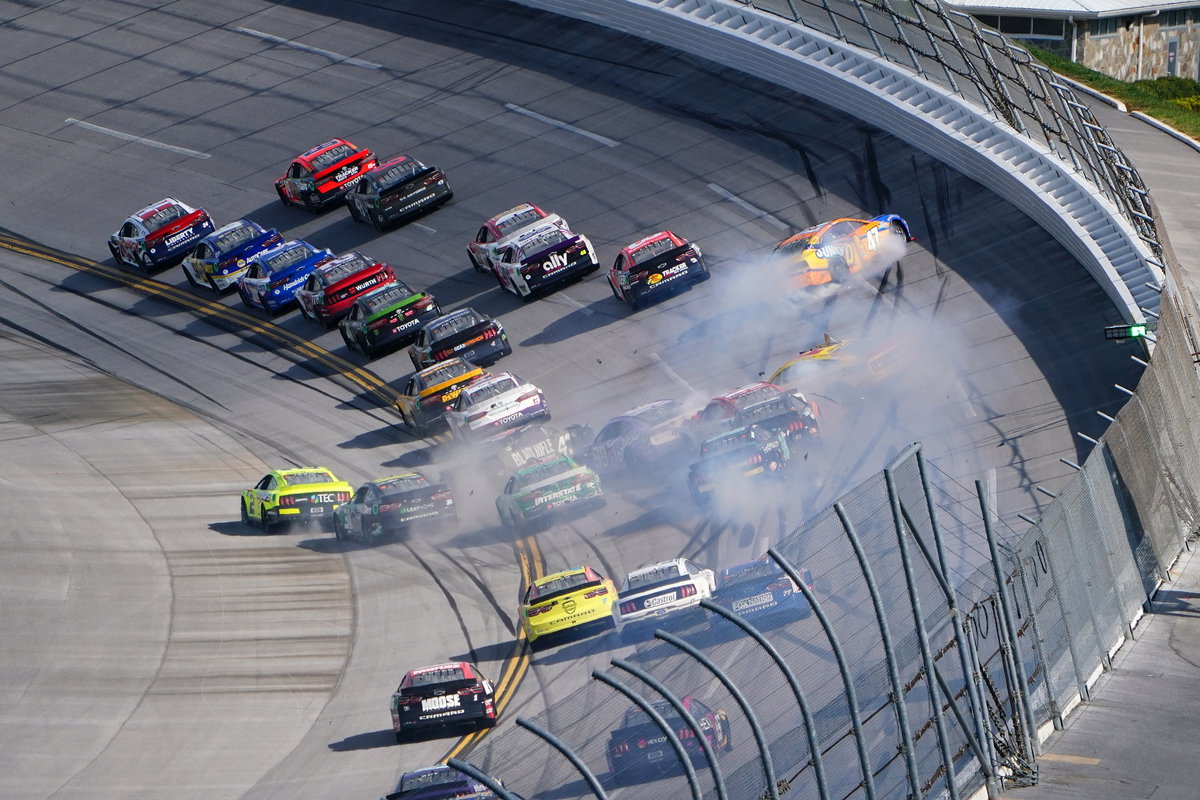
What happens when you mix a 2.66-mile-long track with a steep 33-degree banking and put on some of the world’s most fearless and fiercest racecar drivers in high-powered stock cars? You get Talladega, one of NASCAR’s biggest spectacles, which has produced some of the most iconic moments in the sport.
Watch What’s Trending Now!
But a similar combination can also be a recipe for disaster. Over the years, Talladega has witnessed some of the biggest and most destructive wrecks in the history of the sport, some of which were so intense that they landed drivers in hospitals and forced the governing body to change the very rules of racing.
2002 Aaron’s 312
On lap 14 of the Busch Series race at Talladega, around 30 cars became victims of one of the most chaotic wrecks. In turn 2, Shane Hmiel made contact with Scott Riggs from behind, who then made contact with Johnny Sauter, who spun sideways before flipping multiple times and blocking the entire racetrack.
This resulted in a violent wreck, which many call the biggest in modern NASCAR history. The wreck was so massive, and the damage to the cars was so significant, that only 3 cars remained on the lead lap, and over 50% of the cars that started the race failed to finish it.
1983 Winston 500
On lap 71, Darrell Waltrip made contact with Phil Parsons’ Pontiac, which led to them both hitting the wall. While Waltrip remained on the field as he crashed, Parsons’ car went up in the air and flipped a lot of times before landing on the roof of Ricky Rudd’s car.
Both drivers were taken to the hospital, as the race was eventually won by Richard Petty. The aftermath of this incident was an 11-car pileup.
2009 AMP Energy 500
With five laps left in the race, the #39 of Ryan Newman was hit from behind, which pushed him towards the infield. Within seconds, Newman was facing the other way, and the same wing, which was supposed to keep his car on the ground, acted as a catalyst that thrust it airborne.
The car flipped violently multiple times in the air before it landed on Kevin Harvick’s hood. Newman eventually found himself upside down in the infield grass as his racecar screeched to a halt in the grass. While the driver was uninjured in the violent wreck, a special maneuver had to be made to extract him from the car. The safety crew cut off his roof to take out the driver.
Newman’s incident was key in NASCAR addressing driver safety in wrecks of a similar nature. It led to the introduction of extra roof bars, which were later called ‘Newman Bars.’
2024 YellaWood 500
With five laps remaining in the 2024 YellaWood 500 at Talladega, a shove by Brad Keselowski caused the leading racer, Austin Cindric, to spin out on the backstretch of the track, setting off a huge crash that involved about 28 vehicles, with seven of the drivers’ days done at the moment.
This was the biggest pile-up in NASCAR Cup Series racing history, which was exacerbated by the contact made by other racers, including Joey Logano and Harrison Burton.
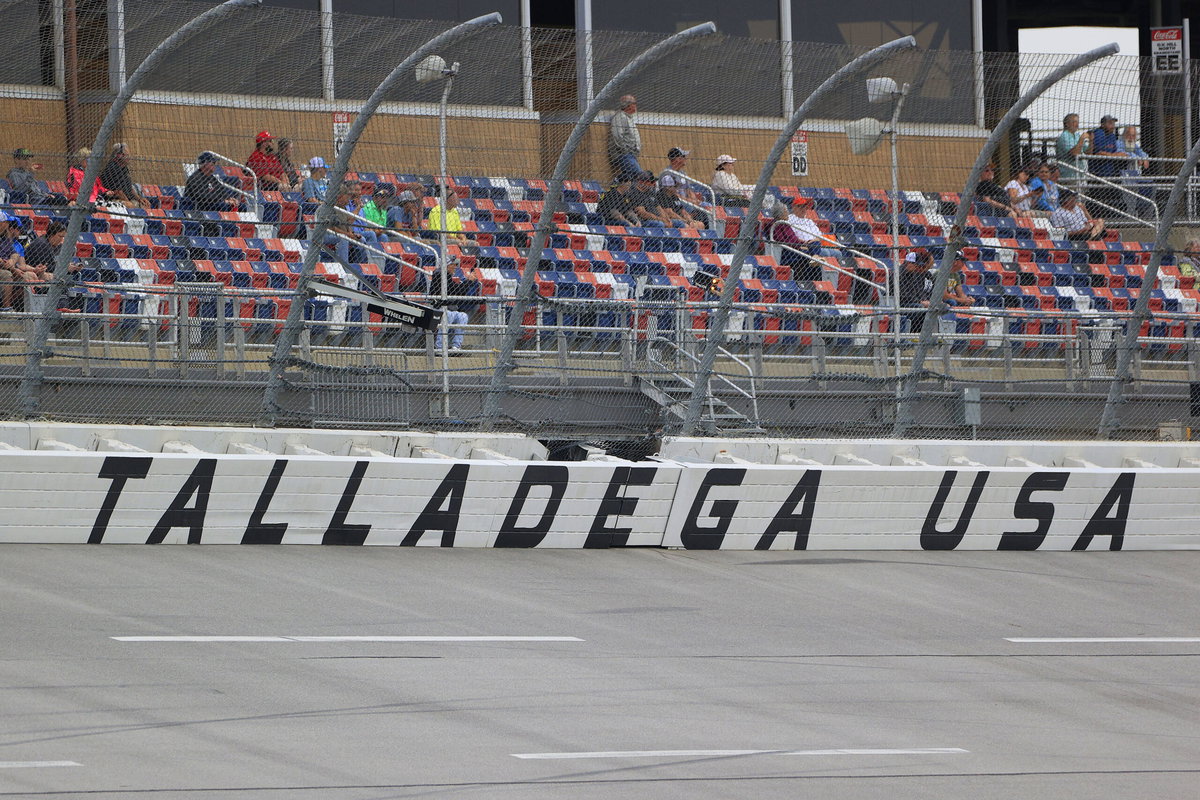
Imago
TALLADEGA, AL – APRIL 20: The Speedway logo on the frontstretch safer Barrier during the General 200 ARCA Series race on Saturday April 20, 2024 at the Talladega Superspeedway in Talladega, Alabama. Photo by David J. Griffin/Icon Sportswire AUTO: APR 20 ARCA Menards Series General Tire 200 EDITORIAL USE ONLY Icon953240420139
1996 DieHard 500
Few names are as synonymous with Talladega as Dale Earnhardt Sr. The Intimidator holds the record for most wins on the superspeedway (10). However, in 1996, he was also involved in one of the worst wrecks seen at the track.
On lap 117, Sterling Marlin lost control of his car after Ernie Irvan’s bumper made contact with him. This led to Marlin hitting Earnhardt, who hit the frontstretch wall at over 180 mph. The #3 hit the wall head-on, immediately flipped, and somehow landed on all four wheels, leading to a 13-car pile-up.
2013 Aaron’s 499
During the 2023 Aaron’s 499, Kyle ‘Rowdy’ Busch, part of a large pack, made contact with the rear of Kasey Kahne. This contact was enough to trigger ‘the big one’ as Kahne hit the outside wall and incited a chain reaction which ended up wrecking 16 cars. Fortunately, no drivers were injured in the wreck.
When all was said and done, Busch hopped on his radio, acknowledging that he was okay and was at fault for causing the wreck. “I caused it,” the #18 driver said.
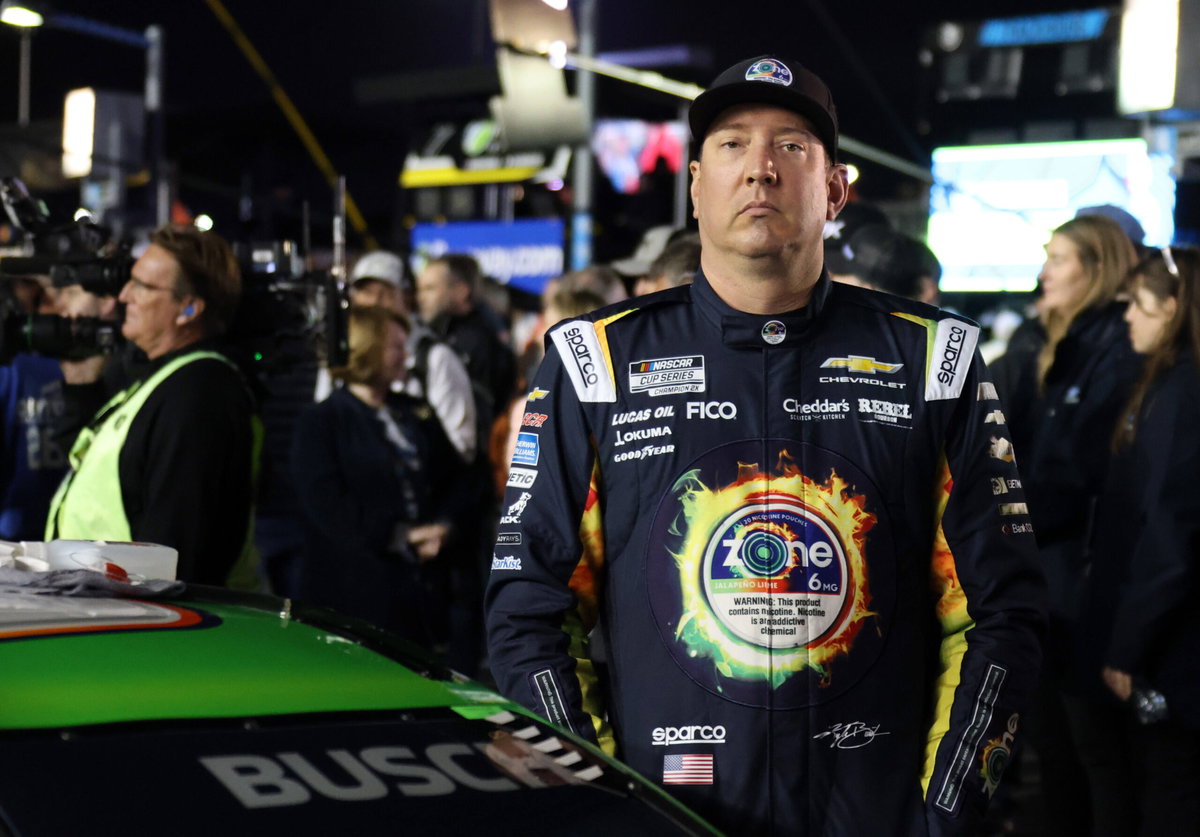
Imago
DAYTONA BEACH, FL – FEBRUARY 12: Kyle Busch 8 Richard Childress Racing Zone Jalapeno Lime Chevrolet stands by his car prior to the NASCAR, Motorsport, USA Cup Series Daytona 500 Duels 1 on February 12, 2026 at Daytona International Speedway in Daytona Beach, FL.Photo by Michael Bush/Icon Sportswire AUTO: FEB 12 NASCAR Cup Series Daytona 500 Duels 1 EDITORIAL USE ONLY Icon260212013
2003 EA Sports 500
The accident occurred during lap 182, when Sadler’s car made contact with the right side of Busch’s car. Within seconds, Sadler’s car was spun out and flipped, coming down on its top. The car slid into the grass area behind the back stretch, heading straight to turn 3. The car tumbled several more times along the track until finally coming to rest on all four wheels. Thankfully, Sadler emerged from the wreck uninjured.
Sadler recalled that the whole experience was harrowing for him in the moment. “It was a scary wreck from inside the car, and it may have been a little scarier to see the replay. I was alert during the entire wreck. When you flip or get airborne, it’s a very eerie feeling,” he said.
1996 Winston Select 500
One of the scariest crashes at Talladega left Ricky Craven in a hospital, where he saw his own wreck for the first time on television. Craven went airborne between turns 1 and 2 over the banking, flew over the other cars, and hit the catch fence through the roof side.
The car came back down and resulted in a 13-car pileup. Such was the violent nature of the wreck that parts of the car were put on display at the International Motorsports Hall of Fame in Talladega.
Reflecting on his violent wreck, Craven said, “I had no idea how bad it was. I had no idea how ugly it looked. I actually hit the wall upside down, and it hurt. It got really quiet, and I thought, ‘That was bad, but at least its over.’ What I didn’t realise was that at that time I was in the air, and then it just started. Once I got caught up in the fence, it sort of got ugly.”
1993 Winston 500
In the very final moments of the 1993 Winston 500, Rusty Wallace was involved in an intense battle with his rival, Dale Earnhardt Sr. But when the Intimidator in #3 tapped Wallace’s #2 Pontiac, it spun backwards and flew into the air near the pit road exit.
Wallace then flipped multiple times near the start/finish line in the air while the rest of the field took the checkered flag as the #2 landed on the infield grass.
While Wallace showed movement despite the violent nature of the wreck, he didn’t escape completely unharmed. He suffered a broken left wrist, cuts and bruises, and a concussion. His car was left in such a bad shape that the safety crew had to cut off the roof to get him out of the car.
This incident became one of the flashpoints in the Earnhardt-Wallace rivalry. Two years after the wreck, Wallace told the #3 driver after their incident in the Goody’s 500, “I ain’t forgetting Talladega, and I’m not forgetting this.”

Imago
Allsport /Allsport
But beyond being a chapter in their rivalry, Wallace’s crash at Talladega, which followed his crash at Daytona in the same year, pushed the governing body to introduce roof flaps on the cars for superspeedways.
1987 Winston 500
In the 1987 Talladega Cup race, Allison was flying after qualifying second with a speed of 211.797 mph. He carried that speed into the race, going over 200 mph when a blown engine and a cut tire turned him around, facing the wrong way from the start/finish line. His car went airborne and, within seconds, crashed into the fence. But moments after it made contact with the fence, it slammed on the track and spun violently multiple times.
Following his incident, he was asked if he felt he was going too fast, to which Allison famously replied, “How fast is too fast?”
While his response was of a die-hard racecar driver, NASCAR didn’t exactly share the same assessment of speed. In fact, it can be argued that Bobby Allison’s wreck at Talladega in 1987 is the most important one in the history of superspeedway racing.
After all, the violent nature of the wreck led to NASCAR introducing restrictor plates to the racecars, which limit the power and produce pack racing, a visual synonymous with superspeedway racing to this day.
All of these incidents prove that racing at Talladega is one of the most, if not the most, spectacle-inducing while simultaneously being the most dangerous aspect of NASCAR. Over the years, after each wreck, the governing body has walked the tight rope of improving the safety while maintaining the spectacle aspect of pack racing alive.