
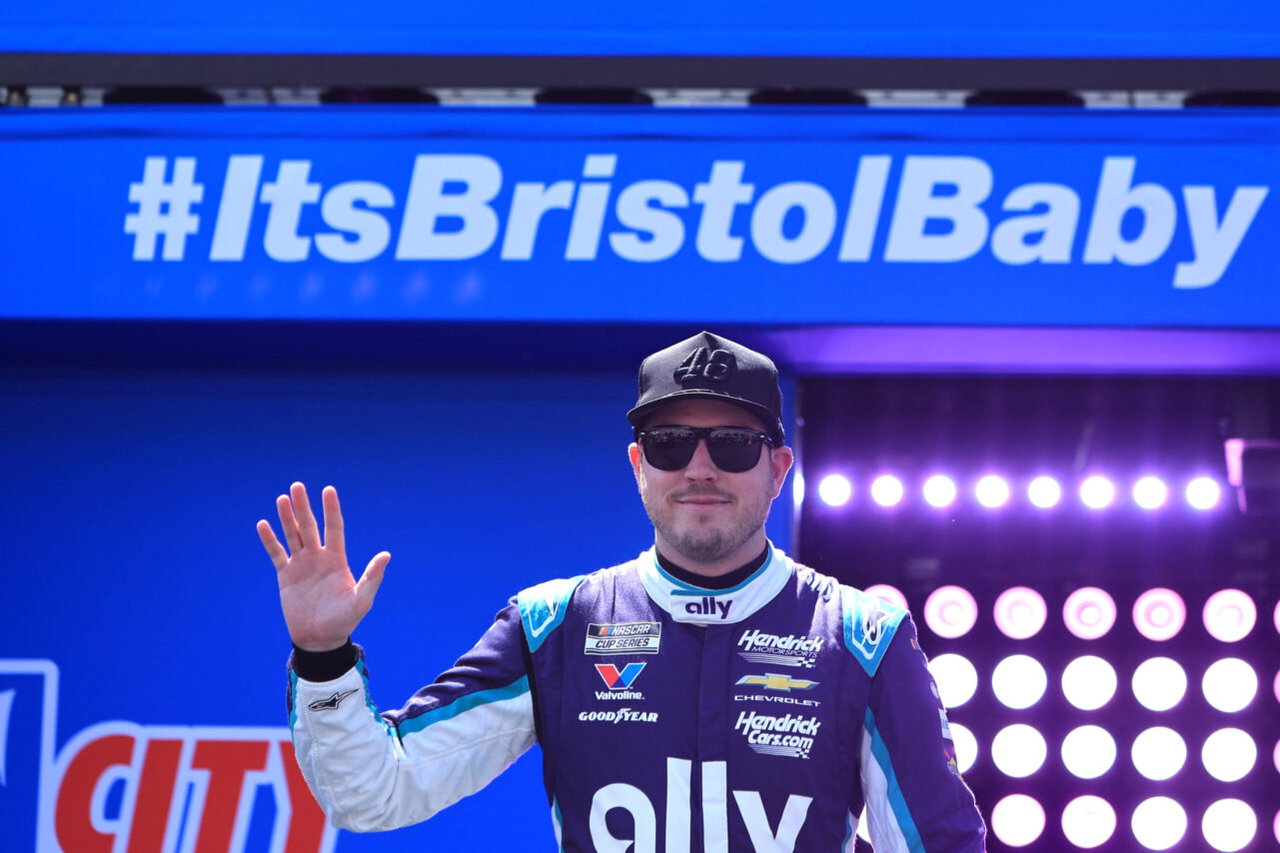
The courtesy is gone. Alex Bowman remembers when a driver could let a faster car pass, save the fight, and hope the favor came back later. But he does not see that understanding holding up anymore in NASCAR.
Watch What’s Trending Now!
“I feel like every generation probably has that, has kind of just evolved through, right? I’m sure in the early 2000s it was more aggressive than it was in the ’90s, and so on and so forth. So it has just continued to get more and more aggressive.” Alex Bowman told SiriusXM NASCAR Radio.
He is not arguing that NASCAR was ever a particularly polite sport. Drivers have always fought for space, and nobody gets far by surrendering every position. But there is a difference between racing hard and knowing when a fight is not worth having. In his view, that second part is becoming harder to find.
What is interesting is that Bowman still remembers how the arrangement worked. It was not simply about being nice to another driver. It could make sense for both cars.
Picture two drivers fighting over a position early in a long run. One has better speed and wants past. The other can make the pass difficult, but doing so might cost both cars valuable time. Letting the faster car through can be the smarter move, especially if their pace changes as the run progresses.
That is the give-and-take Bowman misses. A driver might get a position back later because the other competitor remembered the earlier decision. Neither needed to make a formal agreement. They simply understood that one corner did not decide the entire race.
Alex Bowman still sees that approach from some competitors. He singled out Team Penske’s Ryan Blaney as a driver he considers fair, but he does not believe that attitude is widespread anymore.
The risk is what happens when that trust is not returned. A driver who gives way might find himself pushed aside later, blocked when he tries to pass, or left with no opportunity to recover the lost ground. Bowman says that is now the more familiar outcome.
“But very few,” he revealed. “For the most part, you’re just going to get run over, moved out of the way, or, like, manipulated with air and never get a break back on any side of it.”
That reference to air is important. NASCAR’s Next Gen car, introduced in 2022, can be difficult to drive closely behind another car. The turbulent air coming off the car ahead affects the following driver’s grip and handling. Even when a driver has enough speed to challenge, getting alongside and completing a pass can be difficult.
If passing is already hard, surrendering a position becomes a much bigger decision. The driver who moves aside may not get another chance to fight back. Defending aggressively starts to look less like bad etiquette and more like a necessary way to protect track position. Alex Bowman sees that change most clearly when drivers defend their positions.
This is also where Bowman’s criticism reaches beyond the drivers themselves. If the car makes passing difficult, asking competitors to show more patience will only go so far. A driver fighting for a result cannot be expected to keep giving away positions when the car behind may never offer the same opportunity in return.
NASCAR has tried to address that problem through changes to its rules package. For 2026, the Cup Series raised its target horsepower from 670 to 750 at road courses and oval tracks shorter than 1.5 miles. The aim was to increase throttle control, encourage tire wear, and create more passing opportunities.
The change is in focus because more horsepower alone is not the whole answer. NASCAR’s officials have also considered how aerodynamic drag, downforce and tire wear work together. The challenge is finding a balance that allows cars to follow and pass without damaging the quality of racing at tracks where the current package already performs well.
There is another complication. Even if a technical change gives drivers more chances to pass, it cannot guarantee that they will trust one another. Better racing conditions might reduce the pressure to defend every inch, but the decision to offer another driver room still comes down to the person behind the wheel. Alex Bowman believes the trend will continue regardless.
“So, yeah, this car has changed things a lot,” he said. “I think this car, how bad it is in dirty air, has changed things and just kind of made everybody have to step up on the defending side.”
That leaves NASCAR with a problem that cannot be solved by telling drivers to be nicer. If passing remains difficult, aggressive defence will remain a rational choice, and courtesy will continue to carry a competitive cost. The question is whether changes to the car can make that cost smaller before Bowman’s prediction becomes the new normal.
Blaney may still offer the sort of racing Alex Bowman remembers, but one fair competitor cannot restore an entire field’s trust. NASCAR can change the rules. It cannot order drivers to return a favour. The sport has to give them a reason to do it.