
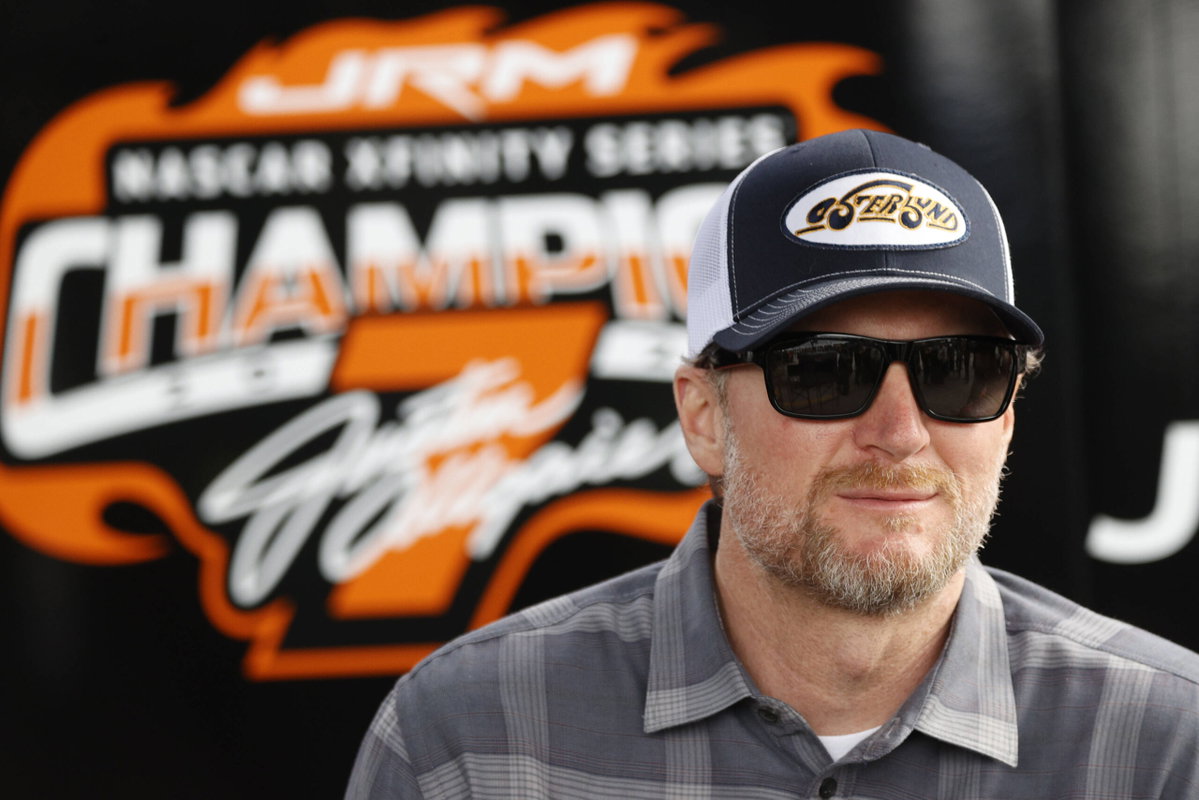
The 2026 Daytona 500 delivered a strange sight: much of the field running well below what its cars were capable of, even the driver out front, while the grandstands waited for someone to make a move. Dale Earnhardt Jr., a two-time winner of the race, watched it unfold and came away with a list of fixes. Some of them would change the cars. Others would not go near them.
Watch What’s Trending Now!
“One of the things that we got away from was the point that you get for leading a lap. I’d love to go back to that. Right now, we give you a point for having the fastest lap. And that’s really just an ad sale,” Dale Earnhardt Jr. said on ‘Dale Jr Download’.
He added that the fastest-lap point amounted to a sale to an advertiser and was blunt about what should happen to it:
“So, let’s get rid of that. I think get rid of that 100%. Get rid of the fastest lap. It needs to go away. Give a single point for leading a lap.”
He would also pay more for leading the most laps, somewhere between three and five points, and argued drivers would then chase the front while others tried to stop them from stacking laps. Neither change, he said, would transform the racing:
“So, those are two small things that they it wouldn’t move the needle a ton, but it’s certainly it’s going to create some stuff. It’s certainly a carrot that we’ve taken out of the race that was motivating people to try to get up front.”
NASCAR dropped its one-point bonuses for leading a lap and for leading the most laps when stage racing arrived in 2017. The fastest-lap point Dale Jr wants gone is part of the 2026 scoring system.
The suggestion was one of several he floated after the Daytona 500, which he labeled an “epidemic” on the ‘Dale Jr. Download.’ By his account, even the driver leading the pack was at about 60 percent throttle. Aerodynamic drag makes it hard to escape a tightly packed field, so Earnhardt proposed pulling enough drag off the cars that a driver at full throttle could drive away from conservers.
He has kept up the criticism. When NASCAR vice president of competition Elton Sawyer addressed the issue that month, Earnhardt pushed back on his tone and said he did not like seeing drivers run at half throttle and seconds off the pace.
How the Next Gen car changed Fuel-Saving strategy
Earnhardt also links the trend to the Next Gen car’s pit-stop design, introduced in 2022, which uses a single center-locking lug nut that lets crews change tires faster.
“I think the reason why we have fuel mileage and massive fuel saving in these races is that the next Gen car introduced a lengthy time frame of filling the car full of fuel. The Next Gen car with the single lug. It switched from tires to fuel.”
“So, now that we have a single lug, it’s quick as hell to change four tires, and it takes a really long time to fuel. And so, fueling now is a premium. You want to do as little of that as possible. So now that’s why you’re saving fuel.”
Because the tires are durable, he added, a team needing only a splash of fuel can bolt on two, which makes a fresh set of four unnecessary in some cases.
That pit-road math can shape a race long before the closing laps, and anyone who refuses to conserve gives away track position. At Daytona and Talladega, where drafting partners are essential, leaving the pack to accelerate also risks losing spots.
NASCAR has since tried several fixes. For April’s Talladega race, the stage breaks were moved to laps 98 and 143 so the final two stages could run without a fuel stop, though it acknowledged fuel-saving would not disappear entirely, particularly in the opening stage. Christopher Bell called the superspeedway package “a complete joke” afterward, and Earnhardt said he agreed, adding that he had not liked the Next Gen car at Daytona and Talladega.
In July, NASCAR unveiled a new superspeedway package for the August 29 Daytona race, cutting the rear spoiler from seven inches to four and horsepower from 510 to 465.
Earnhardt applauded the move as a risk worth taking and asked fans for “some grace,” though he acknowledged fuel-saving would not vanish overnight. Fuel mileage still shaped the Daytona race, and the opening stage at Talladega on October 25 again saw much of the field conserving. A “Preseason Thunder” test at Daytona before the 2027 Rolex 24 will examine further technical changes.
Dale Earnhardt Jr’s proposals attack different parts of the problem. A revised points structure could pull drivers toward the lead, while changes to the car and the race format could shrink the payoff for conserving.