
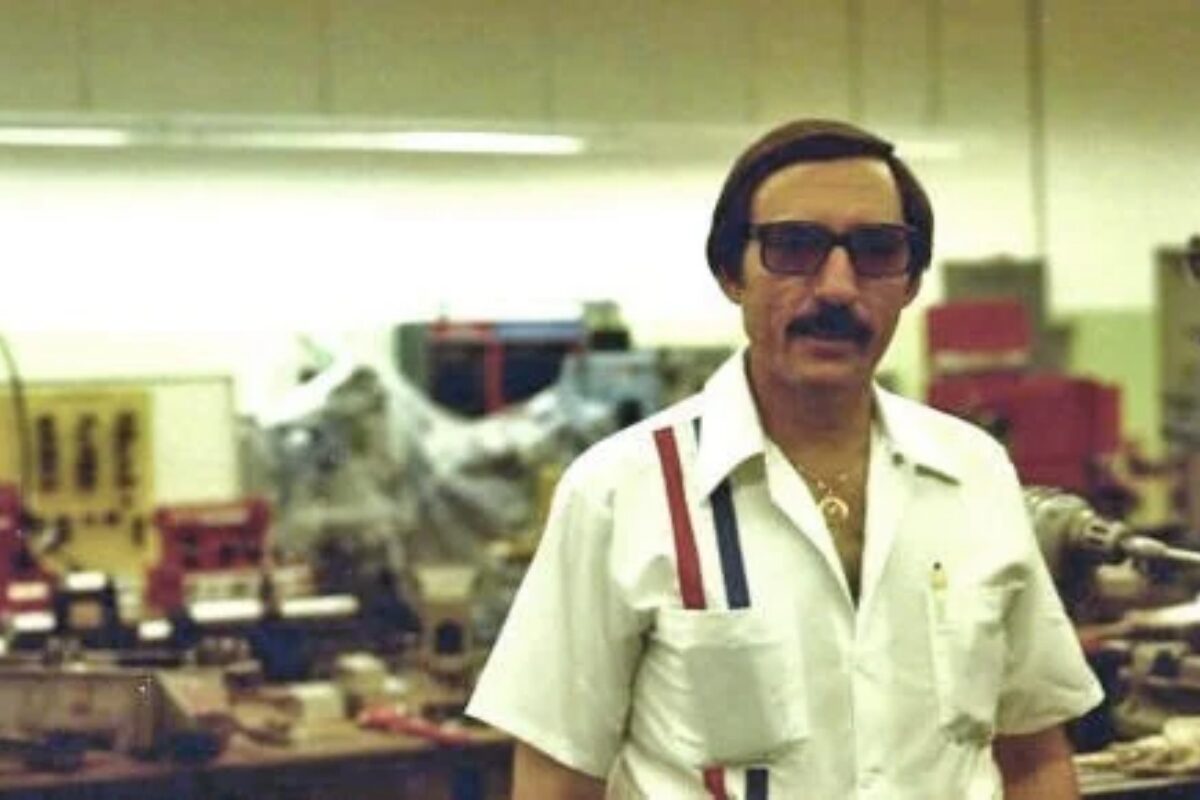
Mario Rossi spent more than two decades helping shape NASCAR from various places, be it from behind the wheel, inside the garage or under the hood. He worked with some of the biggest names in the sport, built winning cars and developed safety ideas that would remain relevant long after he left racing.
Watch What’s Trending Now!
Then, in late 1982, Rossi disappeared.
While there are countless theories about his whereabouts and his reasons for disappearance, an investigation connected to his life insurance policy sparked major questions. More on this later in the story.
Rossi’s fascination with cars started early. He built his first engine when he was only seven years old and later ran an automotive shop in Trenton, New Jersey.
In 1959, he entered the heart of NASCAR, working alongside major figures including Smokey Yunick and Bud Moore. His skills soon took him beyond the role of a mechanic. He became a crew chief and worked with drivers such as Glenn “Fireball” Roberts and Bobby Allison.
His teams recorded 13 wins in NASCAR’s top division. Eventually, Rossi started his own operation, Rossi Engineering, in Spartanburg, South Carolina, where he fielded cars for drivers including Donnie Allison, Darel Dieringer, Bobby Allison, and Dick Brooks.
The team was short-lived, but competitive during its run. Rossi Engineering collected five wins and 39 top-10 finishes in 78 starts, while also winning the 1970 World Champion Pit Crew award.
The 1971 Daytona 500 can be considered one of Rossi’s most notable moments. When other teams had moved away from the aero cars because of NASCAR’s engine rules, his team entered the competition with a heavily-restricted Dodge Daytona that had seen plenty of action in the late 60s. Dick Brooks drove the car and led five laps before finishing seventh. He lost two laps due to a collision with Pete Hamilton.
After working with DiGard Racing and having problems during that period, he left NASCAR in 1976, thus bringing the curtains down on a career not just consisting of race wins, but also a legacy of technical innovations.
Besides making race cars faster, Rossi was also deeply concerned about keeping drivers alive. His work on restraint systems began after fatal crashes involving drivers Joe Weatherly and Billy Wade while they were associated with Bud Moore’s teams. Rossi studied the way drivers were being restrained and developed a new configuration that added another strap to the existing seat-belt system.
The idea was to stop the lap belt from riding upward during a severe impact. His design became a forerunner of the more advanced seven- and nine-point restraint systems used in modern motorsports. He also developed headrest protection for stock cars.
That work is especially striking when viewed against NASCAR’s later safety history.
When Dale Earnhardt succumbed to the injuries sustained at the 2001 Daytona 500, it became one of the most talked-about safety moments in NASCAR history. The sport introduced major changes afterward, but Rossi had been thinking about restraint systems and driver protection decades earlier.
Therefore, his work is a part of NASCAR’s long development in driver safety which is often overlooked. His innovations were created in a very different era, but the problem was the same; he was trying to find better ways to protect drivers in violent crashes.
That was not the only safety innovation Rossi is associated with. He also helped speed up pit stops by developing a system for keeping lug nuts attached to the wheel before a tire change.
Rossi settled in Florida after he left NASCAR. He returned to New Jersey to spend Christmas with his family in 1982 before heading back south. His sister took him to Philadelphia Airport for his journey back to Florida.
That was the last confirmed sighting of him by his family.
They received a call on January 2, 1983. A woman had called to tell them that Rossi had died. According to the reports, the family was told that he had been flying a small aircraft near the Bahamas when it crashed.
An investigation by Prudential many years later, found that the plane Rossi was believed to have been aboard, had changed owners thrice after his disappearance. With no confirmed wreckage or recovered body, the circumstances surrounding Rossi’s final days (assuming he has passed) remain unresolved to this day.
Some reports also note Rossi to have been a skilled pilot, but this has not been officially verified.
Rossi helped winning drivers succeed, built his own competitive teams, developed innovations that influenced pit work and, perhaps most importantly, tried to make race cars safer at a time when driver protection was still in its early stages.
With his disappearance, he has left behind a legacy that is far easier to trace than the final chapter of his life.