
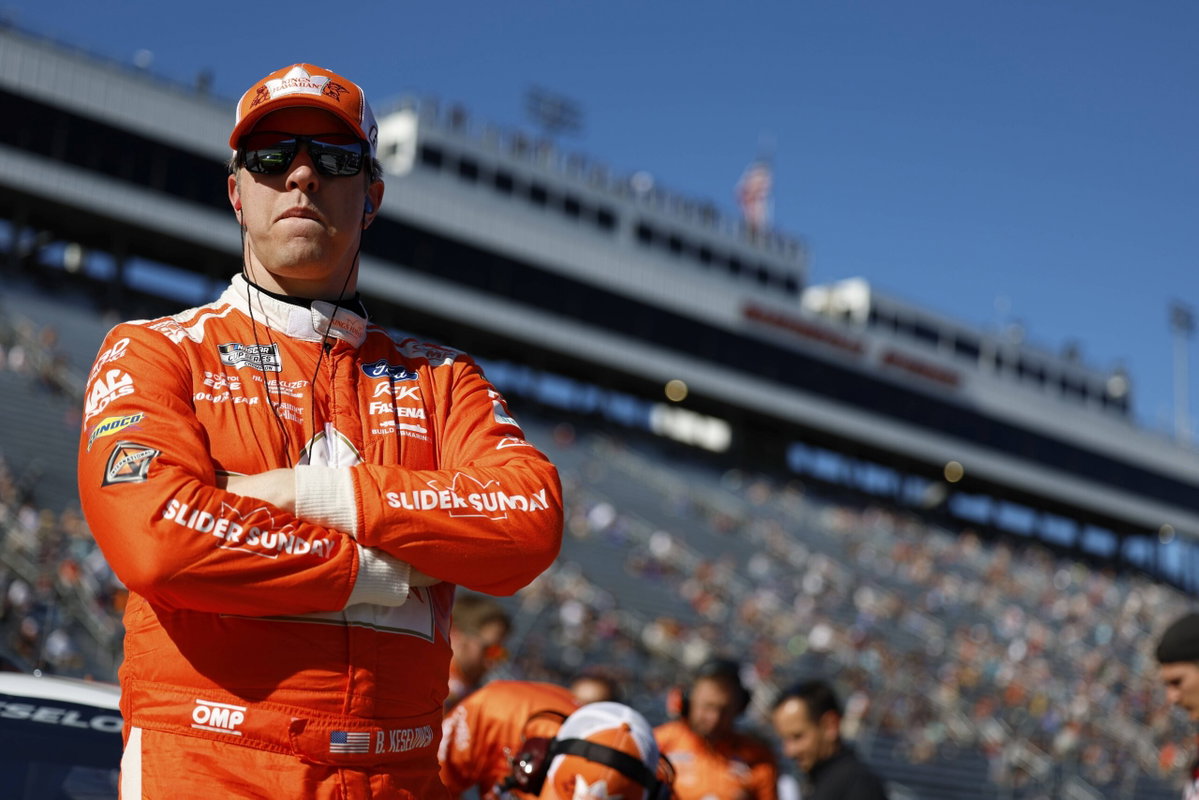
For Brad Keselowski, a Veterans Day celebration should be more than a moment for drivers to wear military-inspired liveries, thank service members and move on to the next race. The inaugural Proud to Honor Veterans Day Classic at Daytona was built around a different idea: bringing military families and the wider community together through motorsport, music and shared experiences.
Watch What’s Trending Now!
Keselowski believes that kind of connection can matter long after the checkered flag.
The (soon-to-be former) RFK Racing driver has spent much of his career working with veterans through his Checkered Flag Foundation. At the Daytona event, he was asked how occasions like this can move beyond a familiar “thank you for your service” and help people understand the weight of military service. His answer drew on what he said the foundation had learned through its work.
“Well, I think what Ford’s doing here and what they are doing is a way to actively engage our veterans. And, you know, through my foundation, one of the key learnings we’ve had is, you know, the suicide rate is just ridiculously high,” Keselowski told ATYL Media on X.
He argued that the problem is not always visible to the wider public, and that veterans can find themselves detached from the communities they served. “And more often than not, when you kind of go back and say, what happened here? It’s just a lack of engagement of our veterans. It’s a lack of, you know, ingraining in society and finding ways to bring them to the forefront.”
Keselowski’s comments land against a sobering set of national figures. The Department of Veterans Affairs‘ 2026 National Veteran Suicide Prevention Annual Report recorded 6,488 veteran suicide deaths in 2024, an average of 17.7 a day. It also found that 62% of veterans who died by suicide that year were not receiving VA healthcare in either the year of their death or the preceding year.
These figures describe a complex crisis; they do not establish that isolation alone causes suicide or that a motorsport event can replace professional care. They underline why reaching veterans who are disconnected from support matters.
For Keselowski, the value of the Daytona gathering was precisely that it gave people a reason to come out and spend time with others. He believes an event can provide something that a financial donation by itself cannot always deliver: an opportunity to reconnect, share an interest and feel part of a community again.
“And so events are so powerful because they bring a lot of veterans out. Events like this, they bring them out and they help them reconnect to the community. And it’s in some ways more powerful than giving money, like just get them back into the community and get them, you know, enthusiastic about something and see the world,” he explained. “And I think that really stands out to me about events like this. And I think it’s the most powerful thing you can do right now.”
That belief is tied to more than a one-day appearance. Keselowski founded the Checkered Flag Foundation in 2010 after visiting Walter Reed Medical Center the previous year. The visit inspired him to support service members injured in the line of duty.
The foundation’s mission extends to military personnel, veterans, first responders and their families, with more than $3.8 million raised since its launch.
A recent reflection from Ryan Blaney on grassroots racing offers another perspective on why community and recognition matter. The Team Penske driver spoke about the talented short-track racers he grew up competing against, many of whom never received an opportunity to reach NASCAR’s national divisions.
“I think that gets lost a little bit is just how much talent is out there that people might not get a shot,” Blaney said, recalling the people he raced alongside and looked up to every weekend.
His comments concerned racing rather than the challenges facing veterans, but they touched on a related idea: people outside the spotlight still deserve to be recognised and given opportunities to remain connected to something meaningful.
The Proud to Honor Veterans Day Classic was designed around a similar principle of bringing people together. Ford collaborated with NASCAR, Blue Star Families, IMSA and Historic Sportscar Racing to stage the inaugural event at Daytona on November 11.
Twelve Ford Racing drivers competed in six two-person teams representing the Army, Marine Corps, Navy, Air Force, Space Force and Coast Guard, driving Mustang Dark Horse Rs with military-inspired liveries.
Keselowski represented the U.S. Army alongside Joey Hand and finished fifth in the 30-minute race. Austin Cindric won for the Air Force after a late battle with Robert Noaker representing the Marines.
The event also featured music and a charitable fund supporting six organisations serving military members, veterans and their families. A portion of ticket proceeds went to Blue Star Families.
The fund included Blue Star Families, Camp Southern Ground, Disabled American Veterans, the Tragedy Assistance Program for Survivors, Team Rubicon and the Travis Manion Foundation. Their work spans military-family support, assistance for survivors, disaster response and services for veterans.
Keselowski’s message is not that a race, concert or community gathering can solve the veteran mental-health crisis. It is that support should not be reduced to a once-a-year ritual. His foundation’s work has convinced him that getting veterans back into the community and giving them something to connect with can be a powerful starting point.
At Daytona, he used the platform to ask for more than gratitude: he called for sustained engagement with the men and women who have served.