
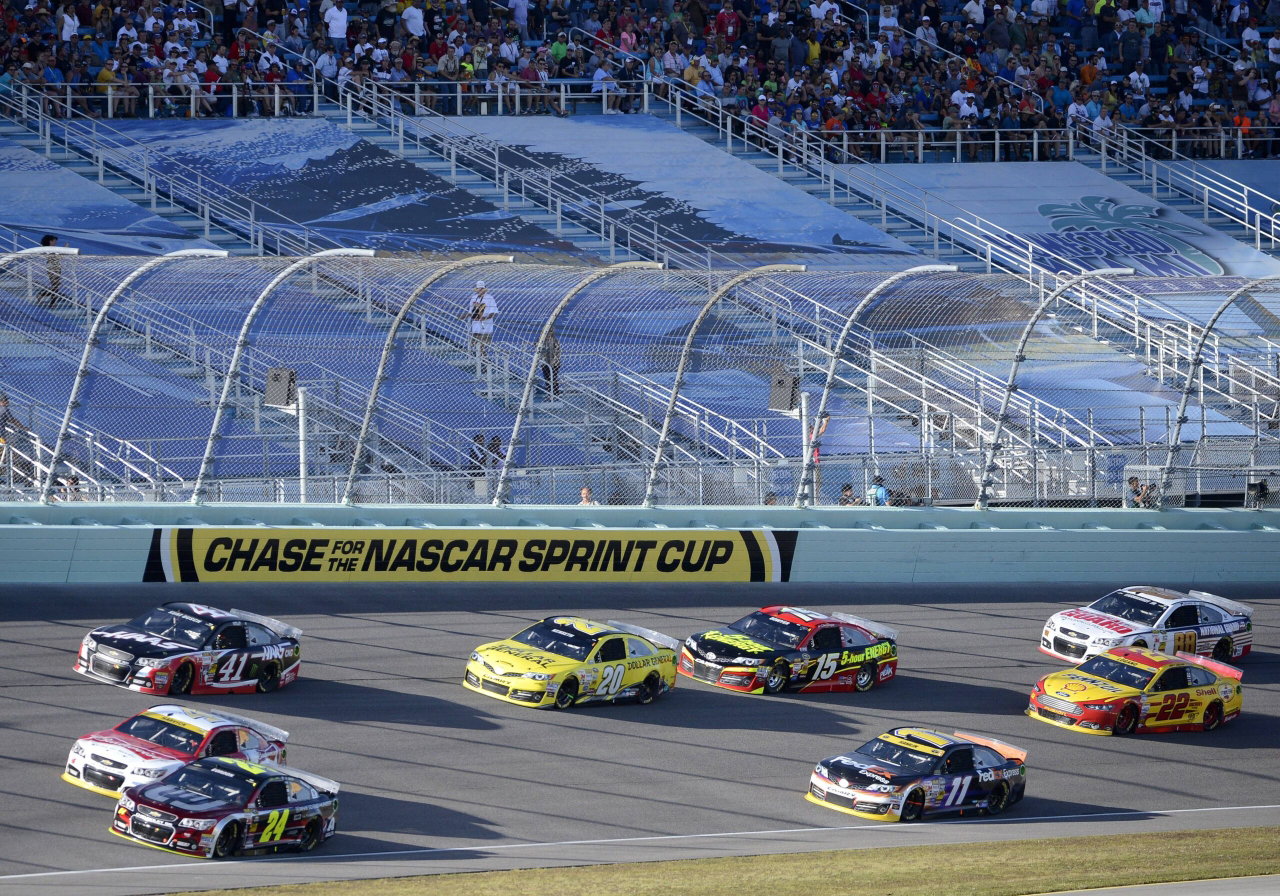
For 12 seasons, NASCAR’s championship came down to one night. One track, one race, and whoever won it took the title home. The sport called it the playoffs, and it surely was dramatic. However, a bit questionable was the fact that it gave out champions who barely had to win twice all season. NASCAR decided it had seen enough of that in 2026.
Watch What’s Trending Now!
The Chase is back. Ten races, no eliminations, one champion standing at the end. The title goes to whoever scores the most points across all ten rounds, starting at Darlington Raceway on September 6 and finishing at Homestead-Miami Speedway on November 8. What makes it genuinely difficult is what those ten tracks actually ask from a race car. No single setup is enough to carry through all of them. No single strength can play on all of them. The 16 drivers entering the Chase are not chasing one championship, but four different ones simultaneously.
The new rules of the game
Understanding how the points reset works is where everything starts. When the regular season closes after Daytona, the top 16 drivers get a fresh set of numbers. The regular-season champion starts at 2,100 points. Second place starts at 2,075. From there, each seed drops by five points, all the way down to seed 16, which begins at 2,000. The total gap between first and last is 100 points. That sounds significant; a win, though, is worth 55 points under the 2026 structure, up from 40 previously. One win over the No. 1 seed’s runner-up finish erases more than half the starting deficit.
Denny Hamlin comes in as the top seed. He carried a 77-point lead over Ryan Blaney after New Hampshire Motor Speedway, and his summer form backed up the number. His average finish through the season was at 8.1, tracking toward the best of his career. He won at Nashville, Michigan, and Pocono in three consecutive weeks. As the No. 1 seed, he starts the Chase at 2,100, while Blaney starts at 2,075. Twenty-five points separate the two best drivers of this regular season.
Blaney won at New Hampshire for the second straight year. He led 115 of 301 laps and did it after overcoming a difficult pit cycle. Over the previous ten races, he posted a Driver Rating of 99.5 or better five separate times, trailing only Tyler Reddick, Hamlin, and Kyle Larson. Joey Logano said he considers Blaney the best driver on the racetrack right now. This was back in May. His trajectory heading into the Chase may matter more than the 25-point gap he is trying to close.
The format creates two distinct championship levers. Ceiling, which is winning, and floor, which is avoiding catastrophe. A driver finishing consistently between fifth and eighth across ten weeks accumulates points that add up significantly. Stage points help too, with 10 available for a stage win down to one point for 10th place. Across ten races, a driver building steadily in stage scoring creates a cushion that matters when something goes wrong. And under this format, something will go wrong. A DNF does not cause elimination, but it does not disappear either. Consistency is going to be the name of the game for those hoping to lift the championship trophy.
Three Races, Three Different Problems
Darlington opens the Chase, and it has no interest in being gentle about it. The track measures 1.366 miles, runs on asphalt that has not been repaved in 18 years, and banks at 25 degrees in Turns 1 and 2, with Turns 3 and 4 sitting at 23. The asymmetry is part of what makes it hard. Goodyear brought a 2026 package specifically designed to produce more falloff, shifting the race from raw pace into something more complicated. A crew chief managing Darlington is constantly calculating when to pit, when to push, and whether a late caution should change the plan. Teams entered the spring race with 12 total tire sets, including 10 for the race itself. The track eats through them.
A Chase contender earns a solid result at Darlington, not a desperate one. Trying to force a win through unnecessary risk on a track this abrasive tends to end with tire failures and contact. This is the race that separates the teams with a genuine championship package from the ones still trying to figure out what they have.
World Wide Technology Raceway in Madison, Illinois, is a different kind of challenge entirely. At 1.25 miles, it looks like a smaller intermediate track on paper. On the ground, it behaves unusually because its two ends are built differently. Turns 1 and 2 bank at 11 degrees. Turns 3 and 4 sit at only 9. The long straightaways connecting them make braking and acceleration central to lap time in a way most ovals do not. Drivers have described managing both ends as requiring a mental adjustment from one corner to the next that few tracks demand.
The bigger strategic issue at Gateway is overtaking. The track has a history of producing races where passing becomes genuinely difficult. A driver who loses track position may simply not recover through speed alone. Fuel management becomes a real factor. Pit strategy shapes more of the outcome than at most other stops on the Chase calendar. A fast car restarting behind slower traffic can still finish outside the top ten because the track does not offer an obvious path through.
Bristol is the sharpest shift of the three. At 0.533 miles, with concrete through the steeply banked corners, it rewards mechanical grip and traffic management above most other qualities. NASCAR’s 2026 rules bring 750 horsepower to Bristol, part of a broader effort to increase tire wear and throttle movement at short tracks. The aero package uses a smaller rear spoiler, reducing downforce and putting more of the burden onto feel and car control. Laps are short enough that lapped traffic arrives almost immediately after a restart. The race runs 500 laps. Contact can happen on any of them. A Chase contender collecting grudges at Bristol can win the argument and still lose points in ways that matter much later in the season.
The points harvest
After Bristol, the schedule lines up three consecutive 1.5-mile races: Kansas Speedway on September 27, Las Vegas Motor Speedway on October 4, and Charlotte Motor Speedway on October 11. For any team with a strong intermediate program, this is the most productive three-week stretch on the Chase calendar. Denny Hamlin in particular is going to be in focus. He won the spring Vegas race, and had top 5 results at Kansas and Charlotte.
Kansas is the widest and most forgiving of the three. Its progressive banking, sitting between 17 and 20 degrees, allows multiple lanes to develop as the race runs long. Goodyear’s 2026 package introduced new right-side tire construction designed to create more falloff, which means the car that improves relative to the field as the rubber wears is more valuable here than one that is simply fast in the opening laps. Hamlin has four wins at Kansas and seven top-fives in his last nine starts there. Larson has three wins, nine top-fives, and 13 top-10s in 22 starts, and led 761 laps at the track between 2021 and the start of this season. That is more than double Hamlin’s lap-led total in the same period. Both of them understand Kansas in a way that most of the Chase field does not.
Las Vegas shares the same 1.5-mile dimensions and 20-degree banking, but it does not behave the same way under tire load. The track does not naturally produce enormous wear, so Goodyear designs the compound to shed rubber and generate heat through the tread compound instead. Setup choices matter more at Las Vegas than at Kansas because the car needs to build grip artificially while staying manageable over a full green-flag run. A team that simply copies its Kansas package and expects the same result tends to find the gaps in that thinking around lap 200.
Charlotte’s position in this sequence carries a correction worth understanding. NASCAR’s fall Cup race at Charlotte Motor Speedway returned to the 1.5-mile oval in 2026 after seven seasons on the 2.32-mile Roval road course configuration. NASCAR explicitly retired the Roval for the Cup Chase this season as part of its renewed emphasis on oval racing. What that means practically is that Kansas, Las Vegas, and Charlotte now form a coherent three-race intermediate block, not two ovals followed by a road course.
A team that arrives at Kansas already thinking about Charlotte can approach all three races as one extended development sequence. The setup lessons from the first carry directly into the third in a way the Roval never allowed. The spring Coca-Cola 600 gives every team a reference point heading into the fall race. The surface is the same. The aerodynamic demands are the same. An organization that left the 600 with good data on tire management and balance has a meaningful head start.
Where plans fall apart
Phoenix Raceway on October 18 is where the intermediate mindset has to be put away. The track sits one mile around and banks only 8 to 9 degrees in Turns 1 and 2, rising to 10 to 11 in Turns 3 and 4. The dogleg on the backstretch makes the layout genuinely unusual. The asymmetry between the two ends means a setup needs to work across several different corner types within the same lap.
Braking stability matters more here than at any intermediate on the schedule, and the balance shift between fresh and worn tires is extreme enough that short-pitting for fresher rubber can be worth significant track position. Phoenix rarely produces a straightforward strategy. Talladega on October 25 is the race that can end a championship plan built carefully over seven rounds.
At 2.66 miles and 33-degree banking, it runs on drafting dynamics where the pack shapes the car’s position more than individual driver skill in the conventional sense. NASCAR has brought a new superspeedway package with a shorter spoiler and decreased horsepower at Daytona. And there is a possibility that Dega uses a similar package.
A DNF at this stage costs a driver a full race’s worth of scoring against everyone in the top ten. The swing from one crash can exceed anything gained through a different setup choice all week.
Stage points offer a partial solution, but they create their own tension. A contender needs to run near the front to score them, which increases exposure to the crashes that tend to develop in the pack. This is the race where championship contenders have to be genuinely honest about how much they need the finish versus how much they can afford to risk. Drafting partners matter. Unnecessary aggression for one stage position can become the worst decision of the entire season.
Martinsville Speedway on November 1 closes the triad and brings the schedule back to short-track racing one final time. The track measures 0.526 miles, with concrete banking through the corners connecting asphalt straightaways. Goodyear introduced a softer left-side compound for 2026 to generate more falloff and create strategy opportunities. The spring race at Martinsville already showed how those opportunities can reshape an event. Chase Elliott won after Hendrick Motorsports split its final stage strategy, allowing Elliott to gain track position on fresh tires while Hamlin’s faster car stayed out. A single pit call changed the race completely. Fresh tires are worth so much time at Martinsville that teams can gamble on timing and win. The risk is a caution that erases the advantage the moment it is created.
The finish line
Homestead-Miami Speedway hosts the championship race on November 8, and it is the right track to end this. The 1.5-mile oval banks between 18 and 20 degrees, with the angle varying through the corners rather than staying constant. The surface supports multiple lanes. Drivers who can move from the lower groove toward the wall as the race evolves tend to hold pace better in the closing runs than those committed to one line. Adaptability is what Homestead rewards above most other qualities.
That adaptability is also what the entire ten-race Chase has been testing. Darlington tested tire management. Gateway tested track-position discipline. Bristol tested mechanical grip and patience. Kansas, Las Vegas, and Charlotte tested whether a team’s intermediate program is genuinely competitive. Phoenix tested braking and mechanical balance. Talladega tested risk judgment and survival instinct. Martinsville tested timing and strategic nerve. Homestead asks all of it again inside one race.
The 2026 champion will not have won every week. This format was not built for that. It was built to find the driver and organization that can produce results across four different types of racing, absorb the bad days that will come, and still hold the points lead in November. The winning organization is probably not the one with the single fastest car at any individual track. It is the one that makes the fewest major mistakes across ten very different examinations.
Hamlin enters as the benchmark. His schedule lines up favorably through the early and intermediate stages. Blaney enters as the most dangerous threat, if his team has resolved the pit-road problems that cost him 88 net positions through the first half of the year. Larson enters with a Kansas, Las Vegas, Charlotte sequence that fits his strengths almost perfectly, but with Talladega still standing between him and Homestead. The three of them, plus whoever emerges from a Chase field separated by only 100 points at the start, will spend ten weeks answering the same question in ten different ways. The answers will decide the champion.